Compost tea is not a fertilizer. Whatever nitrogen, phosphorus, and potassium end up in a finished batch came out of the small amount of compost you started with, and straining out the solids and diluting the liquid before you pour thins that already-small amount again. Set a gallon of it next to the same compost spread on the soil surface, or next to a balanced organic fertilizer applied at label rate, and the tea is a fraction of the meal. What it actually is: a root-zone microbial drench with real but modest and inconsistent soil benefits. Feed your vegetables with something else.
Stand at the bucket with me for a minute
Five-gallon bucket on the concrete by the balcony rail. Air pump clipped to the rail, tubing running down, an air stone ticking against the bottom. The water has been moving since last night. Put your hand near the rim and you feel the cool coming off it. Smell the surface: sweetish, faintly like a wet cellar, a little like the underside of a log. Reach in and lift the mesh bag, let it drain over the bucket, and feel the weight of it. That bag is everything you started with. The pitcher beside it holds what is left after the bag comes out.
Now watch your own hands do the rest of the job. You drop the bag in the compost bucket. You pour the pitcher through a strainer into a watering can. You add water to stretch it across six containers instead of two. Each of those moves is a subtraction, and none of them is written down anywhere. That is the whole problem with compost tea. The product has no label, so the arithmetic never gets done out loud, and an unbudgeted input tends to get promoted to a fertilizer in the gardener's head.
Where the nutrients in a gallon actually come from
Start with the brew I make. Two cups of finished compost, five gallons of water, a splash of molasses, twelve hours of air. The water contributes zero nitrogen, zero phosphorus, zero potassium. Every bit of plant food in that bucket is on loan from two cups of compost, and it is a loan with a low ceiling, because only the soluble fraction dissolves. Some humic and fulvic acids, some soluble salts, a thin film of fine particles that slip through the mesh. The rest, which is most of it, stays in the bag and goes back to the pile.
Then you dilute. A drench mixed one part tea to four parts water divides whatever you had by five. A spray diluted further divides it again. Now compare units. A fertilizer label is written in percent: a 5-5-5 is five percent nitrogen by weight, and two cups of it is a real dose. A tea analysis comes back in parts per million, which is a different order of magnitude entirely. That gap is not a detail. It is the reason a batch can look, smell, and feel like a product while delivering something closer to a rinse.
Feedstock decides the rest. Two batches brewed with the same recipe from two different piles are not the same product. Compost built from kitchen scraps and grass clippings is not compost built from manure and straw, and tea made from either one mirrors its source. Even from the same pile, spring compost and fall compost differ. So there is no batch-to-batch number you can count on, which is another way of saying there is nothing here to build a feeding schedule around.
Compost does the feeding. Water does the carrying
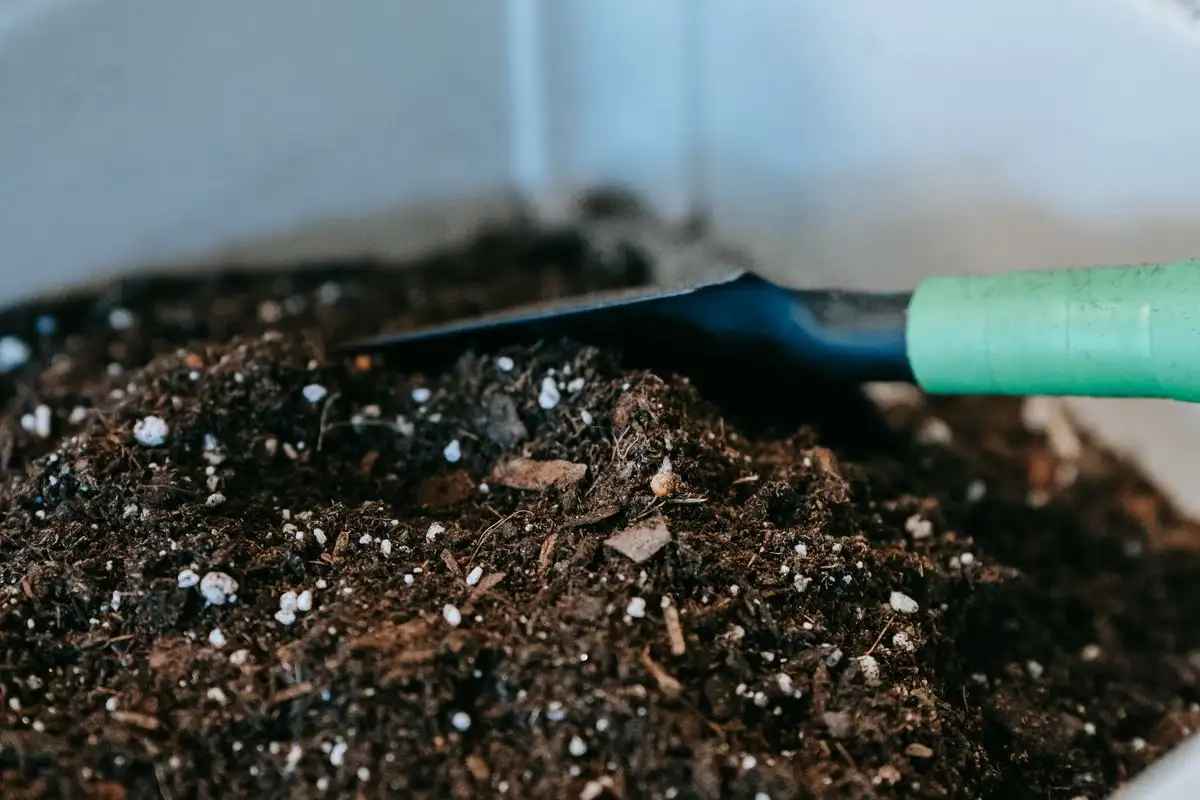
Scoop a cup of finished compost into your hand and squeeze it. Dark, damp, crumbly, with an avocado pit and a pepper stem still recognizable in it. Weigh that in your palm, then look at the pitcher of pale brown liquid next to it. That cup of solid material carries more total nitrogen, phosphorus, and potassium than the entire five gallons brewed from it, because the tea is only the portion that dissolved and the compost is all of it, delivered slowly as the biology in the bed breaks it down. When the goal is feeding vegetables, compost is the delivery vehicle. Water is only the carrier.
Here is the test that settles it for most people. Find a container plant with yellowing lower leaves, the classic look of a plant that is short on nitrogen. Drench it with tea. Then watch. Nothing changes in a way you can point to. Now think about what a soluble nitrogen source does to that same plant in four days: the new growth greens up, visibly, and you can see it from the doorway. That difference in response time is the difference between a meal and a drink. If your plants respond to tea within a day or two, they responded to the water.
Sugar in the bucket is not sugar in the bed
Molasses is in most recipes, and it is worth being honest about what it does. It feeds microbes in the water, not plants in the soil. That is fine, up to a point, because you are trying to grow a population in the bucket. Push the dose and you are feeding a bloom that eats oxygen faster than the air stone can replace it. Oxygen drops, the brew turns sour and smells like a drained swamp instead of a wet cellar, and now you are pouring something anaerobic into a container that has no buffer against it. More sugar is not more fertility.
Two other things worth knowing before you pour. Aeration does not sterilize. If the compost was not finished, or the pile got a visit from something you would rather not spread, tea is an efficient way to move it around and put it on leaf surfaces. And a tea spray on foliage is not a foliar feed in any meaningful sense, because the concentrations are too low to matter and the next rain rinses the leaves anyway.
What a drench can honestly claim
Which brings us to the part people get defensive about. Yes, you are transferring living organisms when you pour tea into soil. That part is true. What is not established is that those organisms reliably establish, outcompete what is already there, and rebuild a functioning soil food web on any predictable schedule. Field results are inconsistent, and inconsistent is the honest word, not a polite way of saying it fails. A bed that has been fed with compost for years already has a working population. A bed that has not is short on organic matter, and the fix for that is organic matter.
If you have an actual nutrient shortage, tea is the wrong tool and a soil test is the right first step, because it tells you which way to go instead of letting you guess in the dark. And the target matters. If the goal is biology, a drench puts the liquid where the roots and the soil life actually are. Spraying the leaves aims at the wrong address.
What I do with a batch now
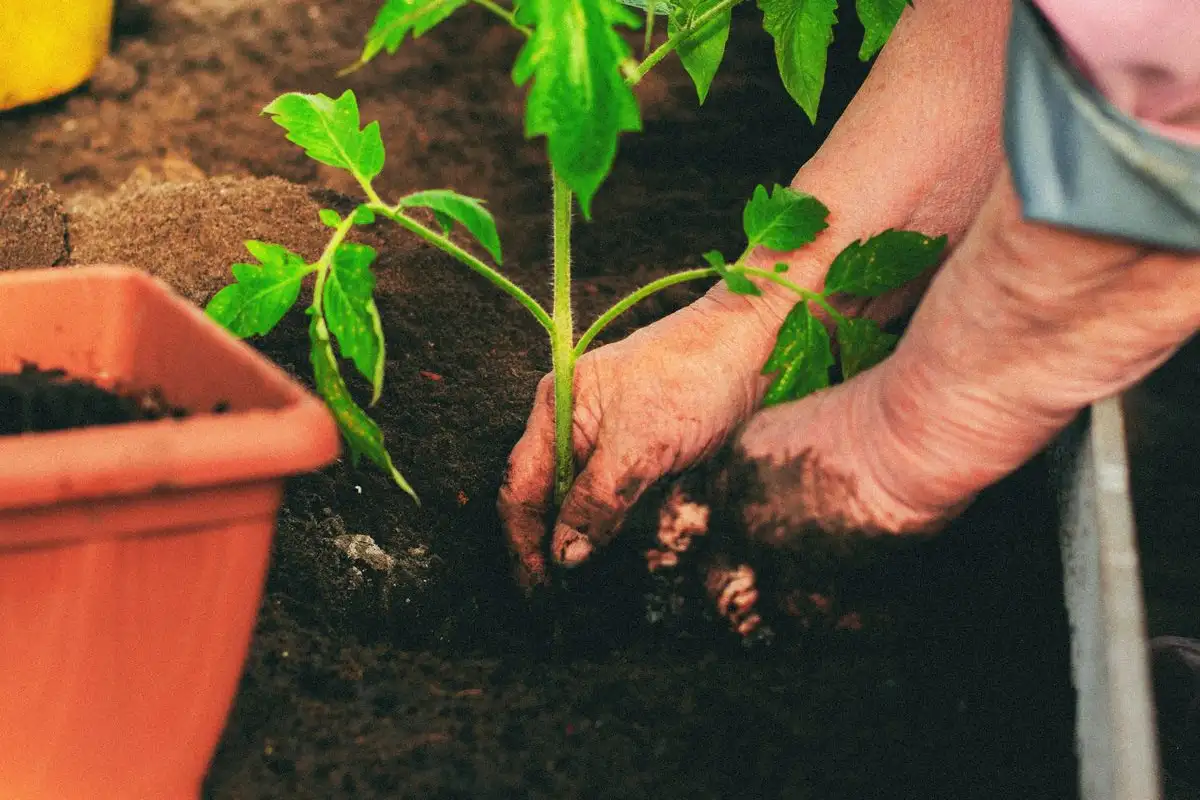
The honest version, after several seasons of this. Compost goes on the beds and into the containers as a topdressing, scratched into the top inch, and that is where the nutrition comes from. Containers get a balanced organic fertilizer at label rate, because a pot is a closed system with a small reserve and it will run out. And I still brew tea a few times a summer, mostly in July, and pour it as a drench around the base of the tomatoes and peppers. It costs me a bucket of water, a little electricity, and about twenty minutes of standing on the balcony.
I do not count it as feeding. I have never been able to prove it helped, and the summers I skipped it, the beds looked the same. What I can say is that it gets me out there with the plants at a point in the season when I would otherwise be inside, and I usually notice something that needs doing while I am holding the watering can. That is a real benefit. It is just not a nutrient one.
So the question is not whether compost tea is good or bad, which is how it usually gets argued. The question is what you are delivering, in what quantity, to what target. A small amount of dissolved compost and a population of microbes, to the root zone, at concentrations measured in parts per million. If a plant is hungry, that is not a meal. If the soil is already fed, it is a harmless drink and twenty minutes of your attention. Know which one you are doing, and the bucket stops being confusing.