
The first two days after a transplant goes into the ground decide whether it establishes or stalls, and the deciding factor is almost never the soil around it — it's whether the root ball itself actually got wet. Water the planting hole before the plant goes in, water again slowly after firming the soil, and then for the next week check moisture at the root ball rather than at the surface of the surrounding soil. Wilting that stands back up overnight is ordinary transplant shock and needs nothing. A plant that goes limp and stays limp is a root ball that never got rewetted, and no amount of watering the ground around it will fix that.
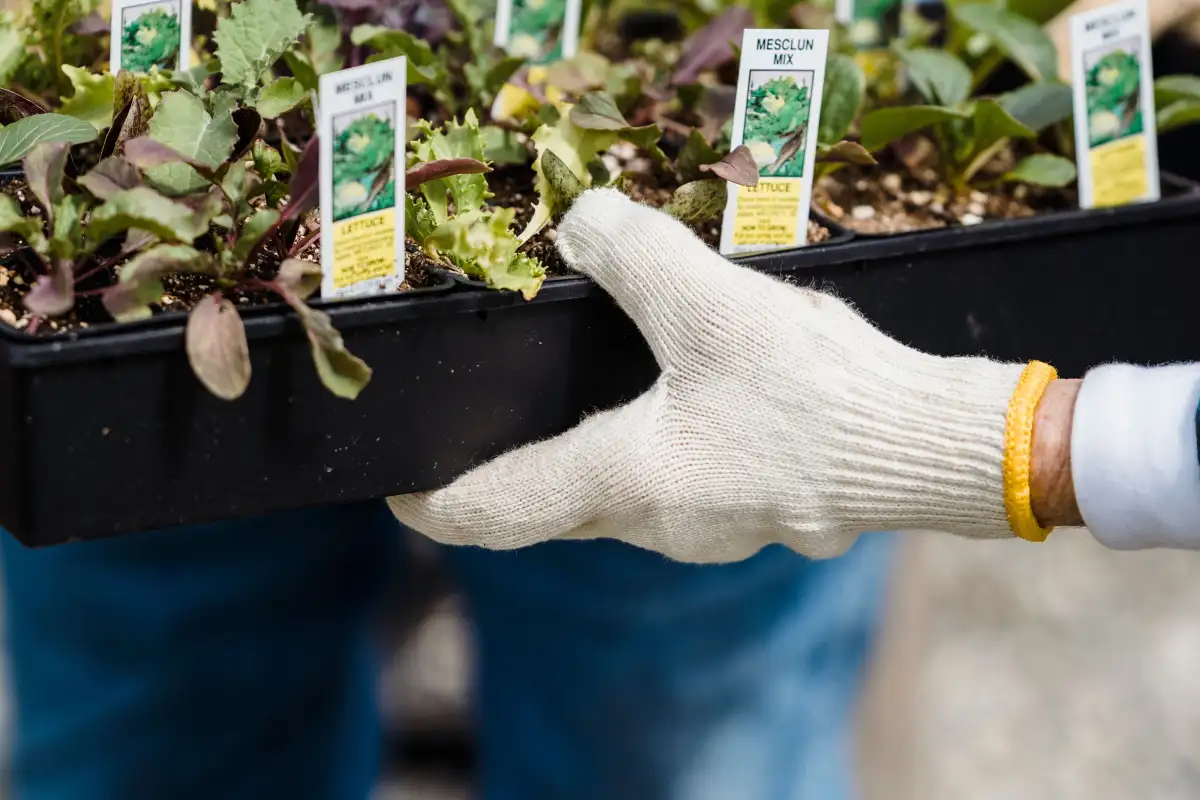
Kneeling at the edge of a raised bed with a tomato transplant tilted out of its pot, the thing worth watching is what water does when it hits the root ball. If the mix is bone dry, the water sits on the surface for a second, beads, and then slides off the shoulders and runs down the gap between the ball and the sides of the hole. The surface looks wet. An inch in, it's powder.
I have done this the wrong way more times than I want to count. Set the plant, watered it, watched it look fine for a day and a half, then came back to find it folded over like it had been cut at the base. Not wilted. Folded. There's a difference between those two, and it took me a couple of seasons to trust it.
Water the hole first, then the plant
The sequence that works is boring, and it's the whole game. Fill the planting hole with water and let it drain down before the transplant ever goes in. That charge of water in the surrounding soil is what the root ball drinks from while it's still too small to reach anything on its own. Then set the plant so the top of the root ball sits level with the surrounding ground — not proud of it, because a ball sitting above grade dries from the shoulders down and that's where the feeding roots are. Backfill around it, firm it with your hands, and water again, slowly, at the base, until the soil settles instead of puddling.
Firming matters more than people expect. Loose backfill leaves air pockets, and an air pocket is just a dry pocket — a root hair touching a bubble isn't touching water. But lean on it and you compact the structure you just built. Hand pressure, not boot pressure. On clay ground I'll firm in two passes, water between them, because the first watering drops the soil more than you think it will.
Water creeps sideways out of a wet root ball
Here's the part that explains everything else. A fresh transplant has almost no contact between its root ball and the surrounding soil. It's a cylinder of potting mix sitting in a hole, touching the native ground at a few points along the sides and across the bottom. Water in that ball does not rush out into the surrounding soil. It creeps sideways through whatever contact exists, and dry ground pulls hard on it the whole way. So the ball can be properly wet on day one and dust by day three while the soil two inches away still reads damp to the touch.
That's why the surface of the surrounding soil is a liar. You stick a finger in, it feels cool and dark, you skip watering. Meanwhile the root ball — the only thing the plant actually has — has gone from damp to dry, and the roots inside it have nothing to drink.
The check that works is to go straight down beside the stem, into the ball itself, an inch or so deep, and feel that. Not the ring of soil around it. During the first week those are two different places with two different moisture levels, and the plant lives in only one of them.
Wilt is normal. Collapse is not.
A new transplant going soft in the afternoon heat of the first couple of days is ordinary transplant shock. It lost the fine root hairs that were doing the drinking when it came out of the pot, its leaves are still transpiring at close to full rate, and it goes limp in the sun. That on its own is not a reason to flood anything. Flooding a shocked plant in heavy soil is how you turn a temporary problem into root rot.
The check that actually tells you something is the morning check. Walk out before the sun is on the plants, while the air is still cool and nothing is transpiring hard. A transplant that stood up overnight and is soft again by two in the afternoon is doing exactly what transplants do. It's working. Water on your schedule, not on the plant's midday drama.
A plant that is limp at dawn is a different animal. Especially if it looks collapsed — stem bent over, leaves dark and hanging flat rather than just drooping at the tips. That's the signature of a root ball that never got rewetted. It usually looks worse on day two or day three than it did on day one, because whatever water was in the ball when it came out of the pot is gone and nothing has replaced it. Newly set transplants rarely die of shock in the first 48 hours. They die of thirst inside a ball that everyone assumed was wet.
Why the ball never got wet
Peat-based potting mixes, once they dry out, don't readily reabsorb water. They go hydrophobic. Water hits the surface and sits there. It can sit there looking like a nice puddle while the interior of the ball stays dry as a brick. Mix that's been sitting on a shelf, or in a flat that got missed for a week, does this. The water runs off the shoulders, down the gap at the edge of the hole, and everything looks watered from above.
The fix has to happen before planting. If a root ball feels light for its size — pick the pot up and it weighs almost nothing — it needs to be soaked, not sprinkled. Set the pot in a bucket of water and let it sit until the surface of the mix darkens and the pot feels heavy in your hand, then let it drain before it goes in the ground. If it won't take water at all, score the sides of the ball with a knife, a few shallow vertical cuts, and water it in stages.
If the plant is already in the ground and you suspect this, don't dump a gallon on it. Slow drip at the base over twenty or thirty minutes, then a break, then once more. The pause is the point — the mix needs time to absorb instead of shedding. A second application an hour later does more than a flood, because the first one softened the surface enough to let the second one in.
Deep and less often, once it's wet
For the first week, water deeply and less often rather than lightly every day. This isn't really about the water. It's about where the roots decide to grow. Daily sprinkling keeps the top inch of the root ball damp and the surrounding soil dry, which is a perfect signal for roots to stay exactly where they are — inside the ball they arrived in. A deep soak that wets the ball and then wets the soil out past its edges tells the roots there's water out there worth chasing. They grow out into it. Once they're out, the plant is established and this whole problem stops being a problem.
There's a real limit to how far the schedule transfers, though. In heavy clay, a deep soak drains slowly and you can drown a transplant in a poorly draining hole — there, you may need to amend the hole or plant on a slight mound. In sandy ground, water leaves the root ball fast in every direction and you might be watering every other day for a week or two. The principle holds, wet the ball and then wet past the ball. The calendar doesn't.
And if you have the choice, plant in the evening or on an overcast day. Twelve hours of dark and cool lets the plant start the swap before it has to face full sun with a compromised root system.
What the two days are actually telling you
It comes down to this: the first two days are when you find out whether the ball is wet. After that, the roots have either started working out into the surrounding soil or they haven't, and the plant is telling you which one with its posture.
So the routine is short. Wet the hole before the plant goes in. Water slowly after firming. For the next week, put a finger down beside the stem into the root ball, not into the ring of soil around it, and water when the ball is dry an inch down. Check in the morning, not at two in the afternoon. Read collapse differently from wilt.
That's all of it. There's nothing clever in there. It just requires knowing that the root ball and the ground around it are, for the first week, two separate places with two separate moisture levels — and the plant only lives in one of them.