
Cold hardening and sun hardening are two different acclimations, and only one of them decides whether a transplant survives a late frost. Two weeks on a sunny porch will build a leaf that can take full sun and still leave you with a tomato that collapses the first night the forecast dips into the mid-30s. Light exposure hardens the leaf surface. Cold exposure changes what happens inside the cell. Do only the first, and you have not hardened the part that fails in a cold snap.
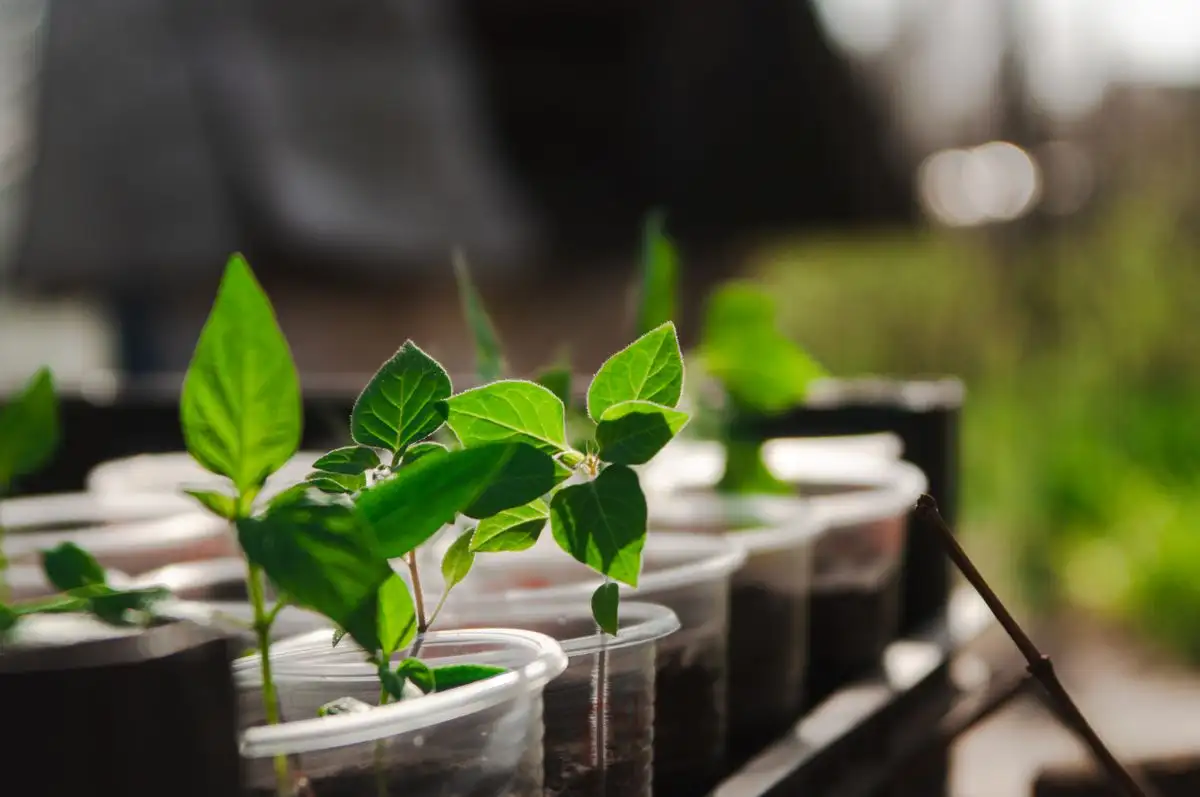
I want you standing where I was standing: a fifth-floor balcony at seven in the morning, coffee going cold on the rail, a flat of tomato seedlings that looked genuinely good — thick stems, flat leaves, no sulking curl — and a phone showing a low of 36 for that night. Ten days of sun had built all of that. Zero nights of cold had gone into it, and I did not know the difference yet.
I planted them out two days later. By the next morning the two end plants were dark and limp, the way a leaf goes when the water inside it has stopped moving. Not frozen hard. Just finished. The rest of the flat sat there sulking for a week and never caught the ones I held back, and the first tomatoes came off the survivors about ten days before anything off the front row. That gap was not luck. It was cold.
Sun hardening is a leaf job. Cold hardening is a cell job.
When a transplant sits in the sun, the plant builds a thicker cuticle, makes pigments that screen UV, and adjusts how its chloroplasts handle high light. All of that is about the leaf surface and the light it is taking in. It is real, and it matters — a greenhouse tomato dropped straight into June sun will scorch white patches on every leaf facing the sky.
Cold acclimation runs on a different system. Cell membranes shift the mix of fats they are built from so they stay fluid instead of going rigid when it gets cold. Soluble sugars rise, which lowers the temperature at which the cell contents freeze. Growth slows and tissue water content drops. None of that happens because a plant spent an afternoon in the sun. It happens because the plant spent nights cold, for several nights in a row.
That is why the standard advice — "put them outside for a week, bring them in at night" — can be followed to the letter and still leave you with a transplant that dies at 35°F. Bringing them in at night is exactly the half you needed.
What a cold-hardened transplant looks like is quieter than people expect. It is stockier. Often a little smaller. New growth comes slower, the leaves carry a heavier waxy sheen, and the whole plant feels less like a wet dishrag when you lift the pot.
What it does not look like is purple. Purple or bronze undersides on a tomato, and leaves that curl upward and go stiff, are chilling injury, not progress. If you see that during hardening, you pushed a night too cold, too fast, and the plant is telling you so.
Cold hardening is a schedule, not an afternoon on the porch
Think of the two weeks as two overlapping ramps. The light ramp climbs during the day. The cold ramp climbs at night, and it is the one you have to plan against your frost date.
In my own routine, days one through three are shade and a couple of hours of morning sun, back inside at night. That is sun work. Days four through seven, more sun, longer days out, but nights still somewhere around 55 to 60°F — a garage, a porch with a wall, an unheated mudroom. Days eight through eleven, nights drop into the mid-40s to low 50s, still under cover if rain is coming. Days twelve through fourteen, the plants spend their nights at roughly the conditions they will meet in the bed, and for cool-season crops that can mean nights in the high 30s.
Two things ride along with the temperature ramp.
Water first. I let the pots come to the edge of dry over the last week — not bone-dry, not wilting, but well short of the constantly damp pot I kept them in under lights. Less water in the tissue means less water that can freeze and tear cells apart.
And nitrogen. I stop the fish emulsion or whatever liquid feed I have been giving them about ten days before planting out. Nitrogen pushes soft, fast, watery growth, and soft fast growth is the exact opposite of what you are trying to build. Slower growth is the point.
The tradeoff is honest and worth naming: overdo either one and you stall the plant instead of hardening it. A transplant pushed too dry and too hungry will sit in the ground for two weeks doing nothing, and you lose the earliness you were chasing in the first place. Hardening slows growth on purpose. It should not stop it.
The numbers are different for brassicas and for tomatoes
This is where a single hardening schedule for everything falls apart.
Kale, cabbage, broccoli, cauliflower, lettuce, spinach, peas — these are cool-season transplants, and they can be acclimated at temperatures that would injure a tomato. Nights in the 30s during the hardening window are reasonable for them, and once they are in the ground many of them shrug off a light frost.
Tomatoes, peppers, basil, cucumbers, squash, melons, and eggplant are the other group. They want nights above roughly 50°F just to grow well. Nights in the 40s cause chilling injury — stalls, purple undersides, and often poor fruit set weeks later that people blame on pollination. Below about 40°F is where I stop treating them as plants that can be outside uncovered at all.
Hardening does not erase those numbers. It moves a warm-season transplant a few degrees further down the scale than an unhardened one, and that is it. A hardened tomato is not frost-proof. A hardened pepper is not frost-proof. If the forecast has 32 in it, the plant goes under cover or it comes inside, and no amount of prior hardening changes that.
Your balcony is lying to you about temperature
Here is the part that gets city growers specifically, and I say that as someone who has done most of my growing on concrete.
A balcony off a brick wall, a few floors up, is a warmer place at night than a garden bed at ground level. The building holds heat from the day and gives it back slowly after dark. The ground in an open plot does not give it back the same way, and cold air sinks and pools in low spots. So a transplant that spent fourteen nights on a warm balcony has not met the conditions waiting in a community garden plot across town.
Finish hardening at the actual site, or at least at ground level in the open, for the last three or four nights. If you cannot, know that you are skipping the final step and plan to protect the plants for the first week in the ground.
One more thing about numbers. Official overnight lows are measured at about five feet, in a sheltered instrument box. On a clear, still night, leaf surfaces and bare soil in an open bed run colder than that. A forecast low of 36 can easily mean frost on the leaves of a plant sitting in the middle of a lawn or a plot with sky above it. The number on your phone is not the coldest thing your plants will touch.
If frost comes after planting out, the cover has to be on before dark
A frost blanket works by trapping heat the soil gave up during the day. You are keeping that warmth around the plant, not generating new warmth. So a cover thrown on at six in the morning, after frost has already formed on the leaves, is doing almost nothing. It has to be down at dusk, before temperatures drop.
A few practical things I have learned the hard way:
- Put it on before sunset, not before bed. The soil heat you are trapping starts leaving as soon as the sun is low.
- Keep fabric off the foliage. Where a cover presses against a leaf, that contact point is where the damage shows up first. Hoops, stakes, or a tomato cage under the cloth solve this.
- Water the bed the day before, not the night of. Moist soil holds and releases more heat overnight than dry soil.
- Covers help most on clear, still nights. On a windy night they help, but they flap and tear and the edges need weighting.
- Uncover in the morning once temperatures are back above the danger line, especially for warm-season crops. A cover left on through a warm sunny day cooks what it just saved.
What hardening will not do
It will not make a warm-season plant safe in a frost. It will not let you ignore a forecast. It will not turn a 40°F night into a good night for a tomato, no matter how many nights that tomato spent in the cold beforehand.
What it does is narrow the gap between the shelter the plant grew up in and the place it is going. That gap is why transplants die in May. Sun hardening closes part of it, and it is the part everyone remembers to do because you can see sunburn. Cold hardening closes the other part, and you cannot see it at all — until the morning after a 35-degree night, when half the flat is flat on the soil and there is nothing left to do about it.
I still do the sun part on the balcony. I just do the cold part in the driveway now, at ground level, with a thermometer by the pots and one eye on the ten-day forecast.