
Trap crops beat companion planting for flea beetles because they work by concentration instead of repulsion. A trap crop is a plant the beetles prefer over the crop you want, sown close enough that the insects gather on it, and then removed or treated before they move back onto your cabbages. Companion planting is usually sold as a chemical shield, and against flea beetles there is no chemical shield to buy. One approach gives you something you can watch happen in a single afternoon. The other is a story people repeat because it sounds tidy.
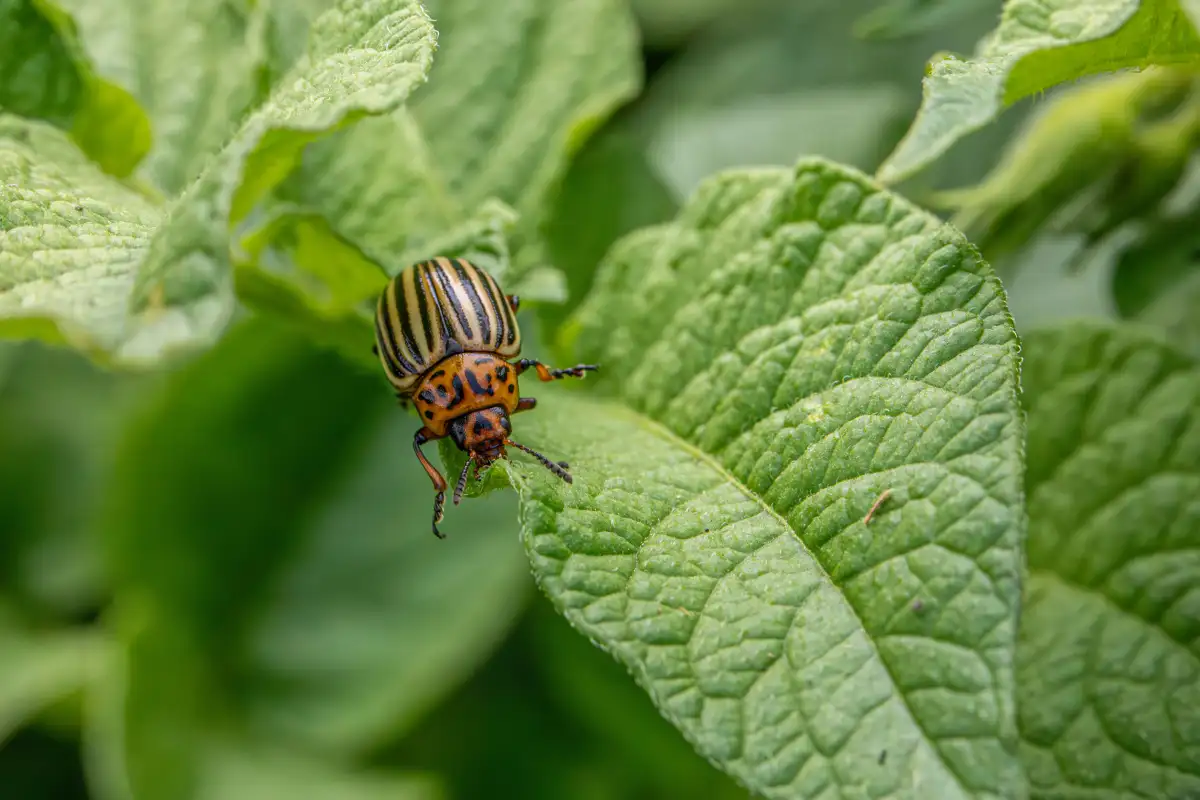
I'm kneeling at the edge of a four-foot balcony box on a Sunday morning in late April, coffee going cold on the rail beside me, and what's in front of my face is one radish leaf that looks like somebody attacked it with a hole punch. The radish is not the crop I care about. Two feet to the right, six cabbage transplants are sitting in clean leaves, and that is the trade I made on purpose.
The beetles are small, dark, and they jump the moment my shadow crosses the leaf, pinging off like popcorn. On the mustard leaf I count eight. On the cabbages, two.
The mechanism is removal, not repulsion
Flea beetles find brassicas by smell. Mustard oils are the signal, and these beetles are specialists that follow it. That is the entire basis of a trap crop: you put the strongest version of that smell into the ground early and let it pull the population away from what you intend to eat.
Arugula, mustard, and radish are all more attractive to flea beetles than cabbage or broccoli in my beds. Radish is the cheap version, up in three or four days in warm soil. Mustard comes up even faster and gives more leaf surface. I sow a narrow row ten days to two weeks before the transplants go in, along the side of the box the beetles arrive from, which I know from last season's notes and a yellow sticky card.
In a four-foot box, one row is plenty. If you fill a third of the box with trap crop, you have not trapped anything. You have made a bigger brassica patch and handed the beetles more room to lay eggs.
Timing matters more than species. The trap has to be up and tender before the main crop is worth landing on.
The step that decides whether it worked
Most people stop at the planting. They sow the mustard, watch it get shredded, feel like something happened, and leave it standing. That is the point where a trap turns into a nursery.
Flea beetle larvae feed on roots. Leave the trap crop in the ground long enough and the eggs laid on it hatch, the larvae feed on those roots, and the next generation climbs out of the soil a foot away from your broccoli. You did not concentrate the pest. You raised it.
So the trap row comes out. If the soil is loose, I pull the whole plant, roots and all, into a bag. If the roots hold, I cut at the soil line and lift the stumps with a hand fork in the same pass, because the roots are where the larvae are. Either way, nothing brassica-shaped stays in that box.
If you would rather not handle the plants, a dry morning and a handheld vacuum will do it. Disturb a leaf, they jump, you catch them on the soil surface. I have done both, and cutting and bagging is faster.
The swap point is a count, not a date. White paper plate under a leaf, tap the stem, count what falls. While the trap row carries more beetles per leaf than the cabbage row, it is still earning its space. When the trap leaves go leathery and chewed through and the beetles start drifting to the cabbages, it is finished. Pull it that day and sow the next row a week behind it, so the relay keeps running through the spring generation. A late-summer sowing does the same job for the fall flush.
What dill and alyssum actually do
Here is the honest half. I plant sweet alyssum under the brassicas. I keep dill in a pot at the end of the rail. Neither one repels a flea beetle. I have never watched a flea beetle change course because of an herb.
What those plants do is feed things that eat pests. Small, open flowers give hoverflies, parasitic wasps, and minute pirate bugs a nectar and pollen source during the weeks when prey is scarce. Alyssum is the best of the three in a tight bed: low, shallow-rooted, flowering for months, shading nothing. Dill is fine but it bolts. Fennel is a large plant with a reputation for suppressing its neighbours, so mine lives in its own pot where it cannot lean over the cabbages.
That is where the two practices genuinely overlap. The trap crop is pest removal right now, at a specific moment, on a specific row. The companion planting is predator support across the whole season, mostly against aphids and caterpillars. Both belong in the same box, and neither one replaces row cover over young transplants for the first three or four weeks, fall cleanup of plant debris, or fresh potting mix at the start of a container season.
The trade-off nobody mentions in a small garden
Dill and fennel get tall. In a four-foot balcony box backed by a wall, a stand of either one cuts airflow across the bed and holds humidity in the middle of it. My worst broccoli losses have not come from flea beetles. They have come from leaf spot in a bed that stayed wet because the herbs were crowding it.
There is an irony buried in that. Flea beetles do their best work in hot, dry, sunny weather, so a more humid bed is slightly less hospitable to them. In a small space the disease cost arrives faster and larger than any beetle benefit, so I keep the herbs low and at the edges and let the middle of the box stay open to the wind.
One failure mode deserves to be said plainly: any companion that is itself a brassica is a liability. Arugula used as a living mulch between cabbage plants. Extra mustard sown "to keep them busy." A stray radish that went to seed in the corner. That is not a trap crop. That is more food, more egg-laying sites, and it makes an infestation worse rather than better.
How this sits with everything else
Companion planting results swing by site and season. I have had years when the alyssum strip was crawling with hoverflies and years when it was just a green strip with nothing on it. That variability is exactly why it belongs alongside monitoring and sanitation as one tool, not in place of them. Sticky cards to see when the adults are out. Cover on the transplants until they can take some chewing. Debris and weedy mustards cleared in the fall, including the alley side and the unweeded patch next door, because that is where the overwintering adults come from. Fresh mix in the pots, since container soil is a perfectly good place to spend a winter.
The standard I use now is simple. If a plant is not catching beetles, feeding a predator, or sheltering one, it does not get space in a four-by-two box. Trap crops catch. Alyssum feeds. Dill gets a pot, maybe. The marigold story is for a garden with more room than mine.