
The habit that kills balcony pots is watering on a schedule. Not overwatering in the vague way people warn about, and not forgetting a day here or there, but the fixed weekly rhythm that works fine in a raised bed and quietly fails in a container. A balcony pot gets water when the mix one to two inches below the surface is dry, checked with a finger, a wooden skewer, or the weight of the pot. It does not get water because it is Sunday.
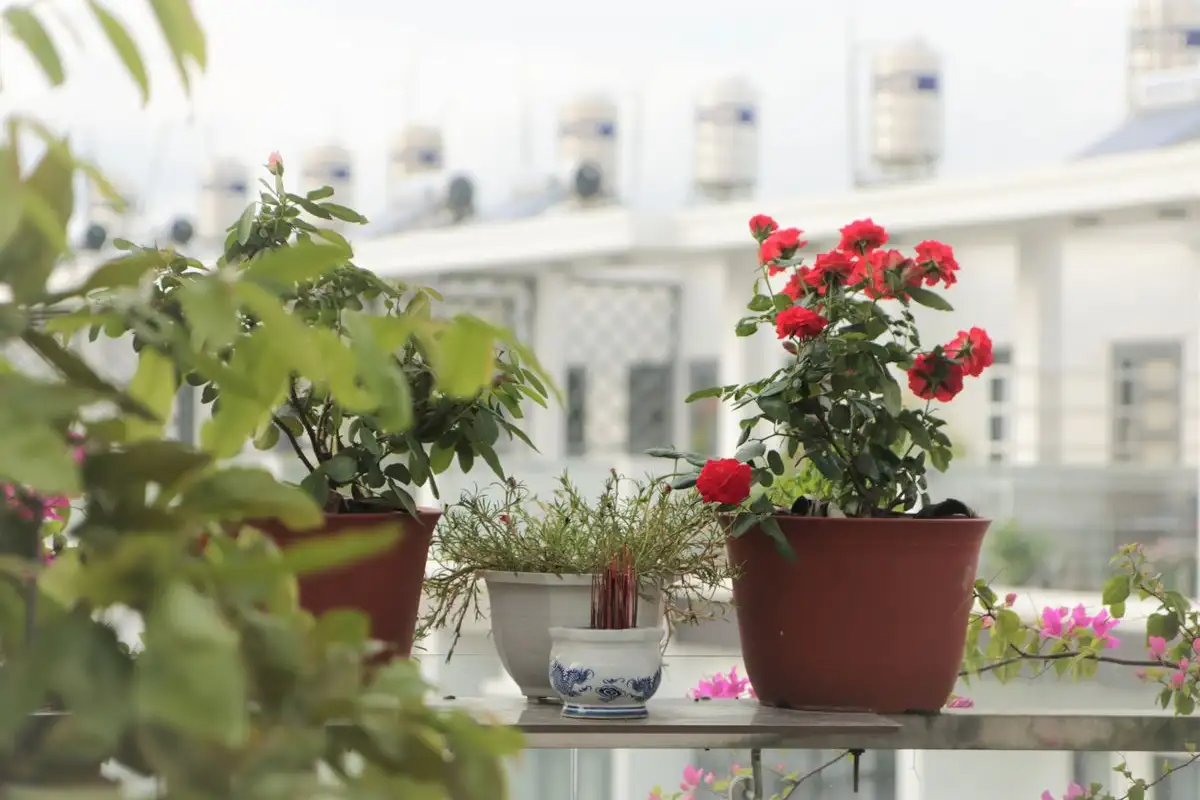
I keep peppers and a cherry tomato in five-gallon pots against a south railing, and one July I wrecked half a plant before I understood what I was doing to it. The routine was tidy. Every second morning before work, one full can, no thinking required. Then we hit a stretch of ninety-degree days, and that same mix was going from soaked to dusty in about a day, so the plant spent three days out of every four somewhere between parched and drowned. When I finally dumped the pot, the lower roots were brown and slick while the top two inches of mix were still dark and damp. Water had been arriving on my schedule, not the pot's.
What took me longer to notice was that the pot never looked dry. The surface stayed dark, because the surface is where water sits longest, especially once I started mulching. I had to learn to distrust the top inch completely and push a finger in past the second knuckle. That one change, dull as it sounds, was the difference between a summer of fruit and a summer of watching a plant sulk.
Why the bed schedule collapses in a pot
A garden bed is a reservoir with a lid on it. The soil volume is enormous, the surrounding ground buffers temperature swings, and roots can travel down and sideways into moisture that never evaporates because it sits well below the surface. That is why the familiar rule of thumb for beds, roughly an inch of water a week, can work. Something else is doing the scheduling for you.
A container is the opposite of every one of those things. It holds a small fraction of the soil volume of the same footprint in a bed, and every wall of it is exposed to air. Water leaves a pot from the surface and from the sides. In an unglazed terracotta pot it leaves through the wall itself, which is why the outside goes pale as the mix dries. Set that pot on sun-warmed pavement with a brick wall behind it, and you have added heat from below and reflected heat from behind. There is no subsoil to fall back on. What is in the pot is all there is.
So bed advice does not just need adjusting for containers. It has to be replaced, because the thing bed advice relies on, a large stable reservoir, is the thing a pot does not have.
The check that replaces the calendar
The routine I use now has three questions and no dates.
Is the mix dry one to two inches down?
For a five-gallon pot, that is roughly to the second knuckle. Dry mix at that depth feels gritty and light, and it does not feel cool against your finger. Mix that is still moist feels cool, looks darker, and clumps a little when you pinch it. If it is moist, put the can down and come back tomorrow.
If you do not want soil under your nails, a plain wooden skewer works. Push it in to about two inches, leave it a minute, pull it out. Damp and dark means wait. Clean and dry means water. For big pots that are awkward to reach into, lift the pot instead. A dry five-gallon pot is startlingly light next to one that was watered this morning, and after a few weeks your hands learn the difference better than any gadget.
What is the pot made of?
This is the part most watering advice skips. The same mix, the same plant, the same balcony, in three different pots, will need three different intervals.
Unglazed terracotta is porous and wicks moisture through the wall, so it dries fastest, and it also advertises its dryness by going pale. Glazed ceramic and plastic hold moisture longer because the wall is sealed. Fabric grow bags dry from every surface, sides included, and dry fastest of all once the roots fill them. If you learn your interval on a terracotta pot and then apply it to a plastic one, you are watering a pot that was never dry.
How much heat is the pot taking today?
The interval is not a property of the pot. It is a property of the pot plus the day. In May, a tomato in a five-gallon pot on my balcony might go three or four days between waterings. In August, in the same pot and the same spot, it can need water every morning and sometimes a second pass in late afternoon. A windy day pulls moisture out almost as fast as a hot one. A cool rainy stretch means the can stays inside.
That is the real reason a calendar fails. Not only because the pot dries faster than a bed, but because the rate changes, often within the same week, and a fixed day cannot follow it.
Midday wilting is not the same as thirst
Here is the mistake that turns a heat-stressed plant into a dead one.
On a hot afternoon, big leaves droop. The plant is losing water through its leaves faster than the roots can pull it up, so it curls and hangs to reduce the loss. If you check the mix at that moment and it is still damp an inch or two down, the plant is not thirsty. It is hot.
I used to panic and top off the pot with a quart of water at two in the afternoon. By seven, the plant was standing up again, which told me it had never needed the water. Do that all summer and you keep the bottom of the pot saturated day after day. Roots need air as much as water, and roots that never dry out are roots that start to rot. So the plant that wilted from heat ends up dying of rot, and at the end it looks like a watering problem in the wrong direction.
The way I handle it now: if the leaves droop at two, check the mix before doing anything. Dry two inches down means water it. Damp means leave it alone and look again once the sun is off the railing. If the plant is still drooping at nine at night and the mix is damp, that is a different problem, and more water will make it worse rather than better.
When you do water, water all the way through
A quick sprinkle wets the surface and leaves the bottom of the pot dry. Do that for a few weeks and you get a shrinking wet zone near the top, a dry layer underneath, and a ring of salt residue where the water stopped. So when the check says water, water until it runs out of the drainage holes, then empty the saucer. Roots sitting in a full saucer are roots without oxygen, and the dissolved salts you just flushed out will wick right back into the mix if you leave them there.
One exception is worth knowing. If a pot has gone bone dry, the mix can pull away from the inside wall and turn hydrophobic. Water then runs straight down that gap and out the bottom while the root ball stays dry. On a pot like that, water in two or three passes with a minute in between, so the mix has time to take it up.
Mulch, and the buffering that buys you slack
A one-inch layer of straw or compost on the surface of a container is one of the cheapest things you can do on a balcony. On hot pavement the difference is easy to see. The top inch stays dark longer, and the pot goes an extra half day before it needs checking. It does not replace the check. It just widens the margin.
Self-watering containers and drip lines on a timer work the same way at a bigger scale, smoothing the swing between soaked and dusty, which matters most for full-sun crops pushing fruit in July. They change the question from when to water to whether the reservoir or the line is still doing its job. Neither one makes the check unnecessary. A reservoir runs dry during a heat wave, and a clogged emitter looks exactly like a plant that is not being watered at all.
The part I actually changed
I stopped thinking of it as watering the plants on a schedule and started thinking of it as reading the pot. Fingers in the mix, hand on the rim to feel the weight, a glance at whether the terracotta has gone pale, a thought about what the day is doing to that patch of pavement. Then water, all the way through, and tip the saucer.
Every balcony is a little different, which is the honest limitation here. Orientation, wind, pavement, pot size, and crop all move the interval around, so no schedule written by anyone else, including me, will hold for your railing. The check will. Two seconds with a finger beats a calendar every time.