An amendment and a fertilizer are two different tools, and the calendar, not the label on the bag, tells you which one to reach for. Fertilizer exists to supply nutrients and it carries an N-P-K analysis. An amendment is added to change soil structure, pH, or biological activity; it may contain nutrients, but that is not its job. The difference that actually decides whether you see a result is placement and timing. A slow-release mineral amendment has to be worked into the root zone weeks before planting, where soil microbes and acidity can chew it into a form roots can take up. A soluble fertilizer can go on mid-season and show you something within days. Surface-applied phosphorus, whether it is bone meal or rock phosphate, barely moves into soil at all, which is why a midsummer topdressing so often looks like nothing happened.
You and I are standing on a third-floor balcony in the third week of March. There is a milk crate of last year's pots stacked against the rail, a bag of compost slumped on the concrete, and a plastic cup of granular fertilizer sitting on the bucket lid where I set it down. We just dumped a pot out. The root ball comes apart in a wedge, and the mix behind it is gray-brown and crumbly. Squeeze a handful: it holds together for a beat, then falls apart. That is fine structure. What it is not is fed. Everything that pot grew last summer pulled nutrients out of that small volume, and every watering pushed the rest down through the drainage holes onto the concrete slab.
So the real question is not amendment or fertilizer. It is amendment and fertilizer, at which points on the calendar.
Start with the test, not the shelf
The recommendation table on a soil test is the closest thing to a straight answer you will get, and it is the only thing that should decide what actually goes down. Your state extension office runs soil tests or points you to a lab that does, and the report comes back with numbers plus a table of how much lime, phosphate, and potash to apply per area for whatever you are growing. Those numbers exist because applying an amendment and a fertilizer that both carry the same nutrient in the same week is a real and common mistake. You double up on phosphorus, say, and do nothing at all about the potassium you were actually short on. One nutrient goes into excess, which has its own consequences, and the deficiency you set out to fix stays right where it was.
I read the table first, then decide which materials map to it. That is the whole discipline. Everything below is just the mechanics of when each one goes down and where it ends up.
What goes in before planting, and how deep
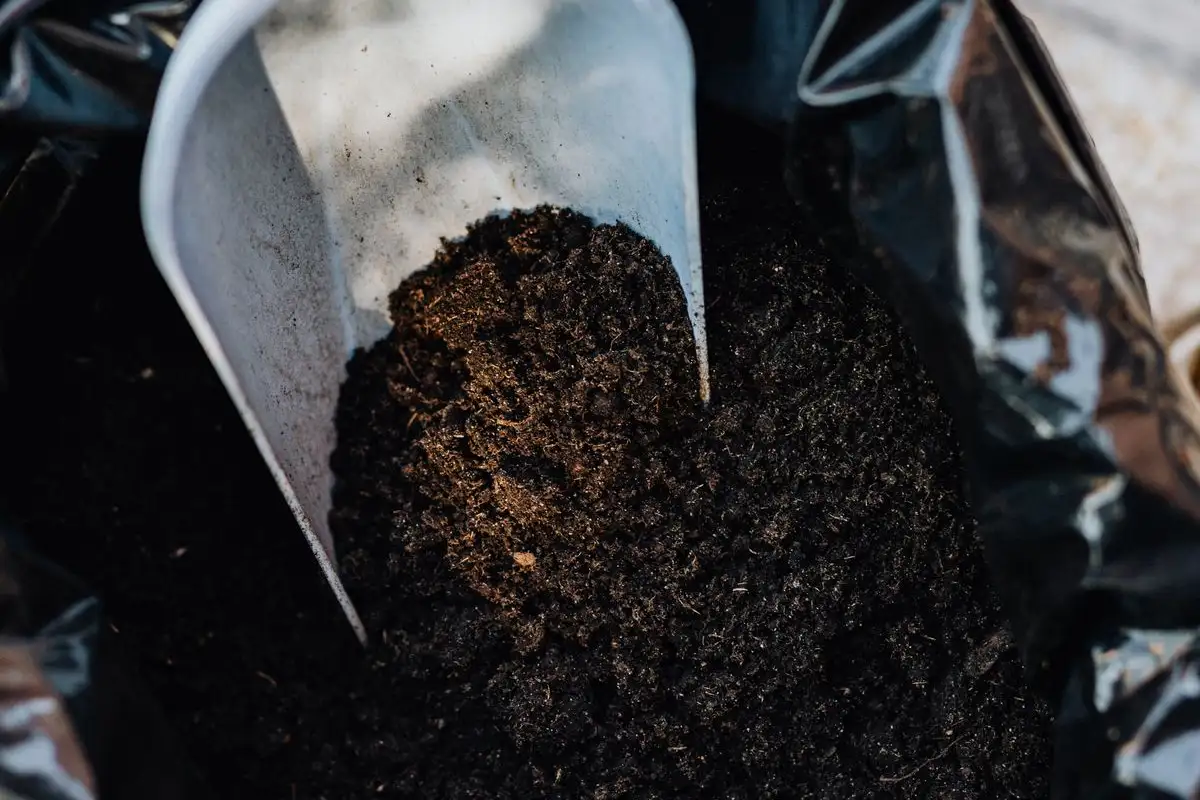
Granular amendments go into the top 4 to 6 inches. Not sprinkled. Worked. Lime, rock phosphate, bone meal, gypsum, all the slow material gets spread across the bed, turned in with a fork or a hand cultivator, raked level, and watered. In containers the same idea happens in miniature: dump the spent mix into a tub, add the amendment, stir it through the entire volume with your hands or a trowel, and repack.
You will know you did it right when the material is no longer visible as a distinct band. If you can still see a pale layer of bone meal sitting an inch under the surface, you built a shelf, not a soil.
The depth matters, and not only for root access. Materials like rock phosphate and bone meal release their phosphorus slowly, and only after microbial activity and soil acidity have broken them down. That process is not instant. Extension guidance on these materials generally puts the useful release window at weeks to months, not days. Which means before planting is not a suggestion. It is the entire mechanism. The amendment needs contact with moist soil, at root depth, with a living microbial population around it, for long enough that the release happens while the plant is still growing.
Why surface-applied bone meal does nothing
Here is the part I wish someone had handed me years ago, back when I was buying bone meal by the tub and dusting it around the base of my tomatoes in July like I was feeding chickens.
Phosphorus does not move. In soil, phosphate binds to clay and organic matter and stays essentially where it lands. Unlike nitrogen, which is mobile and travels down with water, phosphorus has no vehicle. So when you scatter bone meal or rock phosphate on the surface in the middle of the season, you get three things: a dry crust that the next watering washes into the mulch, a very slow breakdown at the surface where microbial contact is thinner, and close to zero delivery to the roots sitting four inches below.
I have done it. I have done it, then watched the plants look identical for six weeks, then assumed the product was bad, then bought a different one. The product was fine. I put it in the wrong place at the wrong point in the season and expected speed from a material whose whole nature is slowness.
If you genuinely need a mid-season phosphorus push, the realistic route is a liquid or otherwise soluble source that can be watered in and taken up through the roots. And honestly, most established beds and potting mixes are not phosphorus-short to begin with. The test would have told you either way.
Fall is the window for lime and the slow minerals
Lime is the clearest case, and it is the one I plan my whole year around. Fall application is standard practice because winter does the incorporation for you. Moisture moves the material down through the profile, and freeze-thaw cycles work it into the soil structure. Spread it in October, turn it into the top few inches, and by spring the pH has moved, or is moving.
My plot is small, so spreading means a two-gallon bucket of pelletized lime across a bed the size of a door. This is not a farm and it does not need to be. The logic is identical at any scale, and it is the same reason slow mineral amendments go down in fall whenever you can manage it: you are buying time, and winter hands it to you for free.
Miss the fall window and spring still works, but you have to accept that a slow amendment applied in April is doing most of its work in July and August. For a long-season crop that is acceptable. For a sixty-day one it is a waste.
Mid-season is where a soluble fertilizer earns its place
Once plants are in and growing, the only questions left are about speed. A tomato that is setting fruit and dropping pale lower leaves needs nitrogen now, not in six weeks. Compost is not the answer here. Compost releases its nitrogen only as it mineralizes, which is governed by the same slow microbial timeline as everything else organic. Adding more compost to correct a nitrogen shortage in July is like throwing firewood into a cold room. Heat comes eventually. The cold is happening now.
What works is a soluble source watered in, or a fast-acting granular fertilizer banded into a shallow trench a few inches out from the stems, a sidedress, then watered. That is the standard extension recommendation for a mid-season nitrogen need in a vegetable bed, and it is the one moment all season when I want something quick. I keep the band narrow, I keep it off the stems, and I water it in so it does not sit on the surface as salt.
The container problem
Containers are where this whole distinction gets sharp, because there is no soil volume to absorb a mistake. In a raised bed or a yard bed, over-application gets diluted through a large mass of soil and buffered by the clay and organic matter in it. In a five-gallon bucket of potting mix, the same spoonful is concentrated into a fraction of the volume.
Over-apply amendments, especially anything carrying soluble salts, and you will see it: scorched leaf margins, growth that stalls out, and a white crust ringing the inside of the pot where water evaporated and left the salts behind. The plant is not hungry. It is sitting in a brine.
The fix is slow. Flush the container thoroughly with plain water, several times, letting it drain completely between passes, and add nothing else for a while. Next round, measure. In containers, half the rate on the label is usually the more honest starting point, and it is far easier to add a second small dose than to undo a big one.
Reading the bag for what it actually is
A fertilizer bag tells you the ratio of nitrogen, phosphorus, and potassium. It may tell you how fast the material is designed to release. It does not tell you whether your soil needed any of it.
An amendment bag tells you what the material is and roughly how to apply it. It does not tell you that the phosphorus in it will sit exactly where you put it for the rest of the season.
Both gaps get closed by the same three questions, and they hold at every stage: what did the test say, what does the plant need this month, and where will this material physically end up. In the root zone before planting, or on the surface after. Weeks, or days. Get those two sorted and you have covered most of what people get wrong.