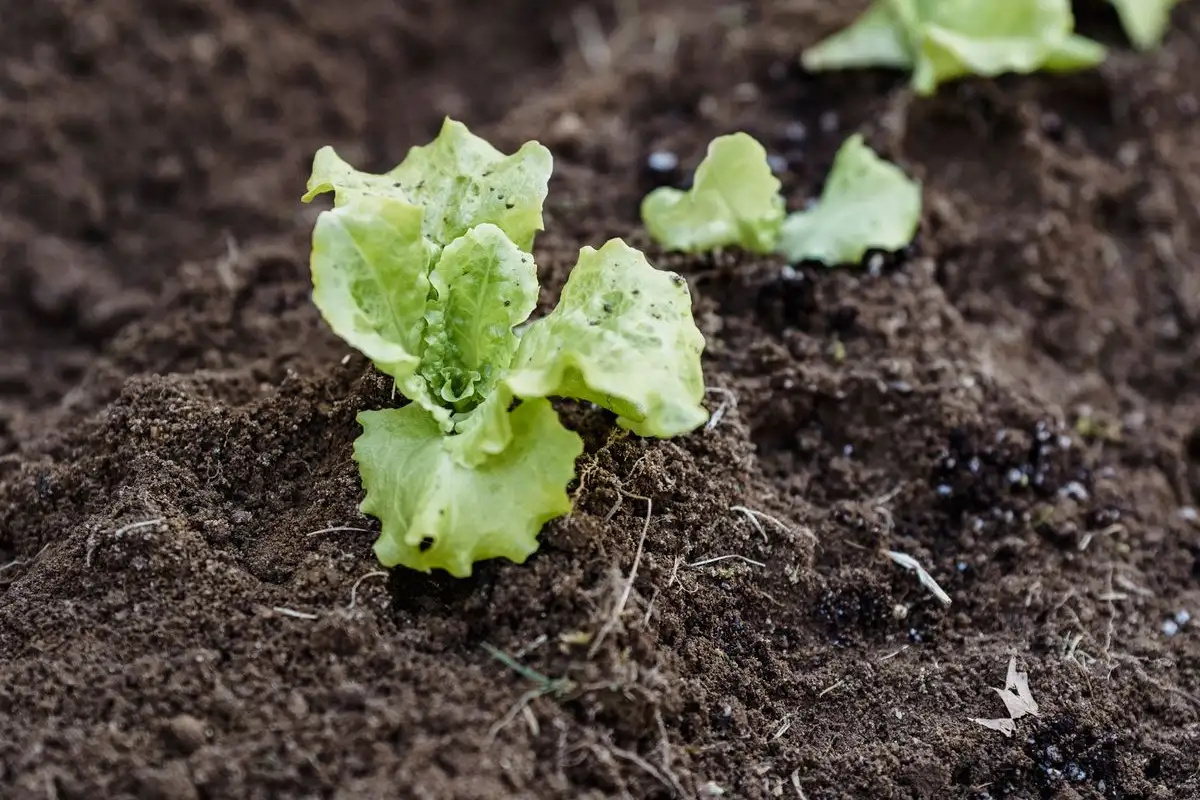
The right way to amend a small growing space is to name which of four things the medium is actually short on — structure, pH, mineral nutrients, or biological activity — and then apply one amendment class that closes that gap, at a rate and an incorporation depth set by whether you're working a container, a raised bed, or a small in-ground plot. Amendments change the physical, chemical, or biological properties of a growing medium; fertilizers only supply nutrients. Two different problems, two different tools, and in a space the size of a balcony or a single 4-by-8 bed nothing gets diluted by acreage, so the wrong choice shows up fast.
I keep the lab report flat on the kitchen table until I've made the call, because I only want to make it once. Next to it sits a mason jar of soil I pulled from four spots in the bed — the jar is for me, the report is for the soil. Tip the jar and watch how it comes apart: crumbs that hold their shape, or a clod that hits the table like a piece of chalk. Shake it with water, set it down, and an hour later the sand has dropped to the bottom while the clay is still hanging in the water. That alone tells me whether I'm working with something that drains or something that's gone to brick.
Then I read the report. Same rows every time: pH, buffer pH, phosphorus, potassium, calcium, magnesium, and cation exchange capacity.
What the report is telling you, and the one line that matters
The number everyone reads first is pH. The number that decides what I actually load into the car is buffer pH.
Measured pH tells you where the soil sits today. Buffer pH tells you how hard that soil will resist moving — it reflects the reserve acidity held on clay and organic matter — and it, not the measured pH, is what a land-grant lab's lime recommendation is calculated from. Two soils can both read 6.1 and need wildly different amounts of lime to reach 6.5. Skip the buffer number and you're guessing at a rate on the one amendment that's genuinely hard to walk back.
Most vegetables grow best between pH 6.0 and 7.0. Outside that band, nutrients can be sitting right there in the soil and still be chemically unavailable to the roots, which is why a plant can look starved in a bed that tests fine for phosphorus.
Cation exchange capacity is the other line I care about in a small space. It measures how well the medium holds onto positively charged nutrients instead of letting rain and irrigation wash them past the root zone. A low-CEC sandy fill holds almost nothing, so whatever you add is this season's feeding and nothing more. A high-CEC clay holds more, but it's slower to change. In a raised bed, CEC is something you build over years with compost, and it's the quiet reason a bed gets easier to manage in year four than it was in year one.
When a soil test won't help you
Not every small space can be read this way. A container full of soilless potting mix is a manufactured product, not a mineral soil, and lab methods calibrated for field soils translate poorly to a peat- or coir-based mix. So for pots I diagnose by behavior instead: how fast water runs through, how heavy the pot feels two days after watering, whether the mix has shrunk away from the sides, whether the surface has crusted over, whether roots are circling the root ball or rotting at the bottom.
Four gaps, one amendment class each
The trouble in a small space is that all four gaps look similar from above. Yellowing lower leaves can be nitrogen shortage, or pH lockout, or roots sitting in water. That's why the diagnosis comes before the shopping, and why the answer is usually one class of amendment rather than a cart full.
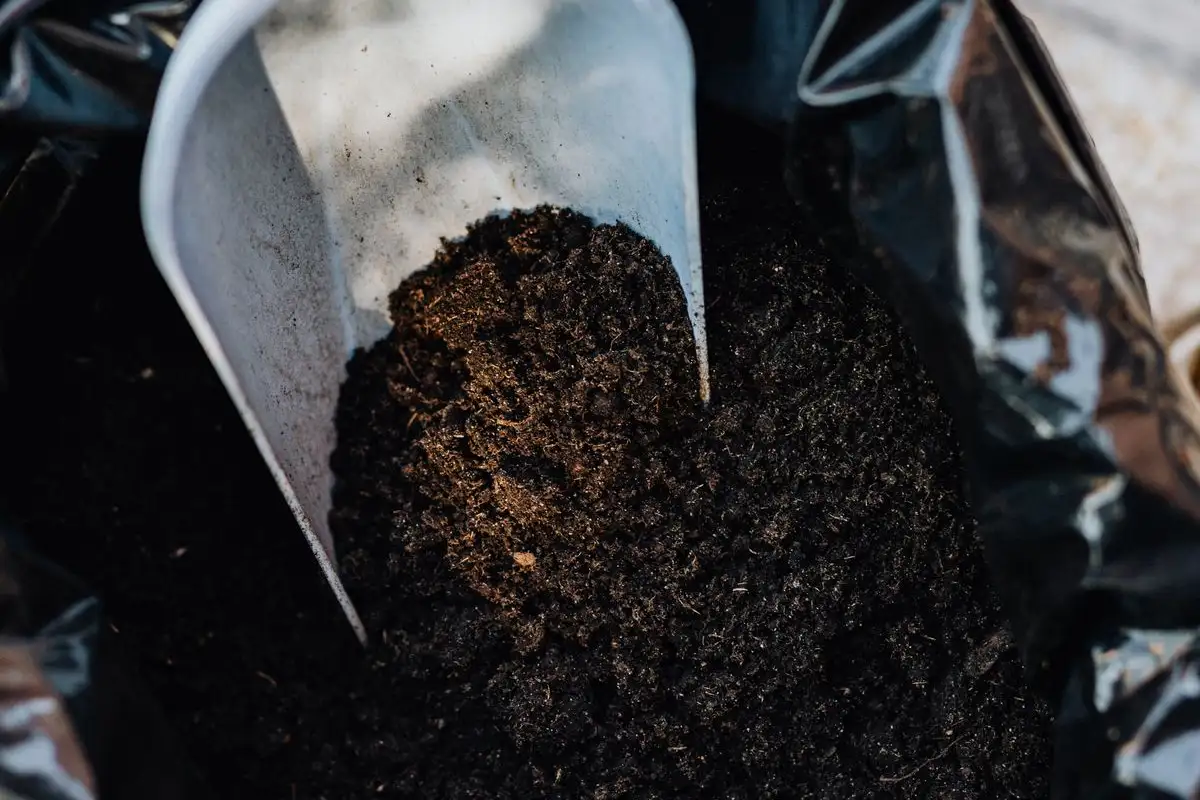
Structure. Water pools on the surface for an hour after you water, or the medium sets up like concrete as it dries, or a trowel won't go in without a fight. The fix is organic matter that has already finished decomposing: compost, aged manure, leaf mold. In a bed, compost goes on at 1 to 2 inches and gets worked into the top 6 inches, not piled on the surface. What must stay out of the bed is the high-carbon material — sawdust, wood chips, straw. Those tie up nitrogen while soil microbes work them over, and in a planting bed those microbes are competing with your plants for the same nitrogen. Wood chips make an excellent mulch sitting on top, where the tie-up happens in a thin layer you can push aside. Rototilled in, they're a problem.
pH. Lime raises it, elemental sulfur lowers it, and the rate comes off the buffer pH. Both are slow. Lime applied in fall is doing its work by spring; sulfur can take a full season. Wood ash raises pH quickly and brings potassium with it, but it's alkaline and it's salty, so a light scattering on a garden bed is the ceiling. In a container, it's a good way to burn roots.
Minerals. If the test flags low phosphorus or potassium, you're choosing between fast and slow. Fast is a fertilizer, which feeds the plant this month and leaches away if CEC is low. Slow is the rock minerals — rock phosphate, bone meal, greensand, rock dusts. These only become available through microbial activity and acidity, which means two things: they have to be incorporated into the soil before planting rather than topdressed, and they are close to wasted in a soil already sitting at pH 7 or above, where phosphorus stays locked up with calcium. Broadcast, dig in, and expect a season or more before you see anything.
Biological activity. Soil that's been bare, tilled every spring, and fed only with soluble fertilizer goes inert — no aggregation, no worm channels, nothing that smells like much of anything. The fix isn't a bottle. It's compost, leaf mold, worm castings, and a mulch layer that keeps the surface from baking. Fungal inoculants sold for vegetables have a poor track record in soils that already carry decent phosphorus, so I don't spend there.
Rates and incorporation depth, by growing situation
This is where small spaces stop behaving like farms. A rate that's a light dusting across 1,000 square feet is a heavy dose in a 5-gallon pot, and there's no subsoil for a mistake to drain into.
Containers
Soilless mix is not amended the way garden soil is. It's refreshed. Digging garden soil into a container mix destroys the drainage that mix was engineered for. Mineral soil particles are far finer, they fill the pore spaces between bark and peat, and in a pot the water has nowhere to go but up.
What I do instead: scrape off the top inch or two of spent mix and replace it with finished compost, or blend compost into the mix when I repot. Compost is usually worked in at roughly a quarter to a third of the total volume; past that, the mix holds too much water and collapses as the compost keeps decomposing. I also scratch in a slow-release nutrient source at repotting rather than pouring liquid fertilizer on a schedule.
Do the volume math once and it stops being abstract. A 5-gallon pot holds about two-thirds of a cubic foot, so a ten percent refresh is roughly two quarts. Two quarts of compost is a modest scoop. The most common way people kill a balcony tomato is by treating a five-gallon pot like a garden bed and applying a garden-bed rate to it.
One container-specific problem: soluble salts from fertilizer accumulate, because there's no rain to flush them and no subsoil to drain into. A high-salt amendment or an over-generous feeding schedule concentrates in a small volume and burns roots. Running plain water through the pot until it flows freely out the bottom, a few times over the season, resets that.
Raised beds
Compost at 1 to 2 inches, incorporated into the top 6 inches, is the standard. That's the depth where feeder roots actually are, and it's why piling compost on the surface makes mulch rather than an amendment. Useful, but a different job.
Volumes are where people get surprised. A 4-by-8 bed is 32 square feet. One inch of compost over that is 32 divided by 12, about 2.7 cubic feet, roughly a tenth of a cubic yard. Two inches is about 5.3 cubic feet. Extension guidance often gets quoted as 1 to 3 cubic yards per 1,000 square feet, and it's worth doing the arithmetic before ordering: 1 cubic yard spread over 1,000 square feet is only about a third of an inch, and 3 cubic yards is about an inch. So a recommendation of 1 to 2 inches and a recommendation of 1 to 3 cubic yards per 1,000 square feet are describing two different jobs — a light maintenance dressing versus a full incorporation. Working a genuine 2 inches into 1,000 square feet takes closer to 6 cubic yards. Know which one you're doing before you buy.
Slow mineral amendments go into a raised bed the same way: broadcast across the surface, then turned into the top several inches before anything is planted. Scratch rock phosphate into the surface of an established bed and it mostly stays where you put it, unavailable.
Small in-ground plots
Same compost rate, deeper incorporation — 6 to 8 inches if the plot allows — and more attention to when you dig. Working soil that's wet smears the structure you're trying to build, and in a small plot you don't have spare square footage to sacrifice to a compacted corner. If a spade hits a hard layer a few inches down, water is going to sit above it no matter how much compost you add, so breaking that layer matters more than the amendment itself.
The advantage of in-ground is that a large volume of subsoil buffers your chemistry, so pH moves slowly and lime rates are bigger. The disadvantage is that the same buffering means a mistake takes longer to correct. In a small plot I lean on structure and biology first, because those turn around within a season, and treat chemistry as a multi-year project.
Timing, and the burn problem
Anything organic should be aged or fully composted before it touches a planting bed. Fresh manure, unfinished compost, and high-salt amendments can burn roots, and in a container the roots have no escape route. If a pile is warm in the middle, smells like ammonia or sour milk, or still has recognizable leaves in it, it isn't finished.
Manure has a timing floor, too. Organic standards require 90 to 120 days between manure application and harvest, with the longer window for crops that touch the soil. That's a minimum, not a target to aim for.
Lime and slow minerals go down in fall, so winter freezing and thawing plus a few months of microbial work have them ready by spring. Compost can go in either season. Fall is better on clay, spring is fine on sandy ground, and either way give it a couple of weeks to settle before you plant into it.
The five-minute decision
Stand at the bed. Look at the medium rather than the plants, because the plants are describing a symptom and the medium is the cause. Read the report, and read the buffer pH and the CEC line as carefully as the pH. Name the single gap. Pick one class of amendment. Apply it at the rate that matches your container, bed, or plot, and incorporate it to the depth that matches, too. Then leave it alone for a season before deciding it didn't work.
When several things are wrong at once, structure is almost always the one to fix first, because drainage and root room gate everything else. And two honest caveats: if you rent and might move within a year, don't spend money correcting pH — fix structure, which pays off in weeks. And if your bed was filled with a manufactured raised-bed blend last spring, it may need nothing at all, which is a thing a soil test will tell you and a habit won't.