The harvest hour is the one post-harvest variable you decide before anything else happens, and in most US summer conditions the useful window closes around 10 a.m. What you buy by picking inside that window is not a flavor opinion — it is refrigerator life, because the plant comes off the stem turgid and already cool instead of carrying a load of field heat that will keep driving respiration and water loss all the way back to the kitchen.
Field heat is a load you can decline to carry
Stand in the plot at 6:40 in the morning and the air is still heavier than the soil. The leaves hang stiff with dew, cold against the back of your hand. You close your fingers around a tomato and it is cool on the palm — not cold, just cooler than you are.
Come back at two in the afternoon and do the same thing. The fruit is warm all the way through and your hand is now the cold object in the exchange. That warmth is not cosmetic. It is a metabolic engine you just put in a basket.
Picked tissue keeps respiring, burning its own sugars and starches, and the rate is temperature-driven. As a rough rule for most of what we grow, respiration about doubles for every 10°C — 18°F — of warmth in the tissue. Water loss through stomata and cut surfaces climbs with it, because the vapor pressure gap between the leaf and the air gets wider as the tissue warms. A pepper picked at 88°F air temperature is already running hot when it hits the basket; a pepper picked at 62°F is coasting.
And you cannot undo it. Cooling a warm-picked tomato back down does not restore the condition it would have had if it had come off the vine cool. You are not resetting a clock; you are stopping a bleed that already happened.
The gap after picking matters more than the clock on the wall
Here is the honest version of the rule, and the part most people skip. Air temperature at picking sets your starting load. The delay between picking and cooling sets how much of that load gets spent.
A 7 a.m. basket that rides around in a hot car until noon will lose to a 9:30 basket that goes straight into cold water and then the refrigerator. The morning pick only pays off if you finish the job.
Which changes the order of operations in a way I had to learn slowly. Do the cooling before you do anything else. Before the photo, before breakfast, before walking the rest of the plot. In my garden that means the basket comes inside first, the sink gets filled with cold water while I am still in my shoes, and the social part of the morning — the inspecting, the deciding, the standing around — happens after.
Dew is the tradeoff nobody puts in the same sentence
Everyone says pick early. Almost nobody says the thing that makes it complicated: water on a leaf is a highway for fungal spores and bacteria, and every time you brush a wet leaf against the next plant, you are moving inoculum around the plot.
So the ideal is not "as early as possible." It is the narrow band after the dew has lifted and before the air has warmed — which in a humid climate might be 8:30, and in a dry one might be 7:00. On a morning when it never fully dries, I pick anyway and simply don't touch a wet plant with a wet plant. Everything goes into one basket and stays there. The washing and the cooling happen at the sink, not out in the row.
That is the honest limitation. You can't always get both low field heat and dry foliage, and on those mornings you choose, deliberately, which risk you are taking.
Crops that punish you, and crops that shrug
This is where the 10 a.m. rule separates into two different rules, and treating all crops the same is a waste of your own mornings.
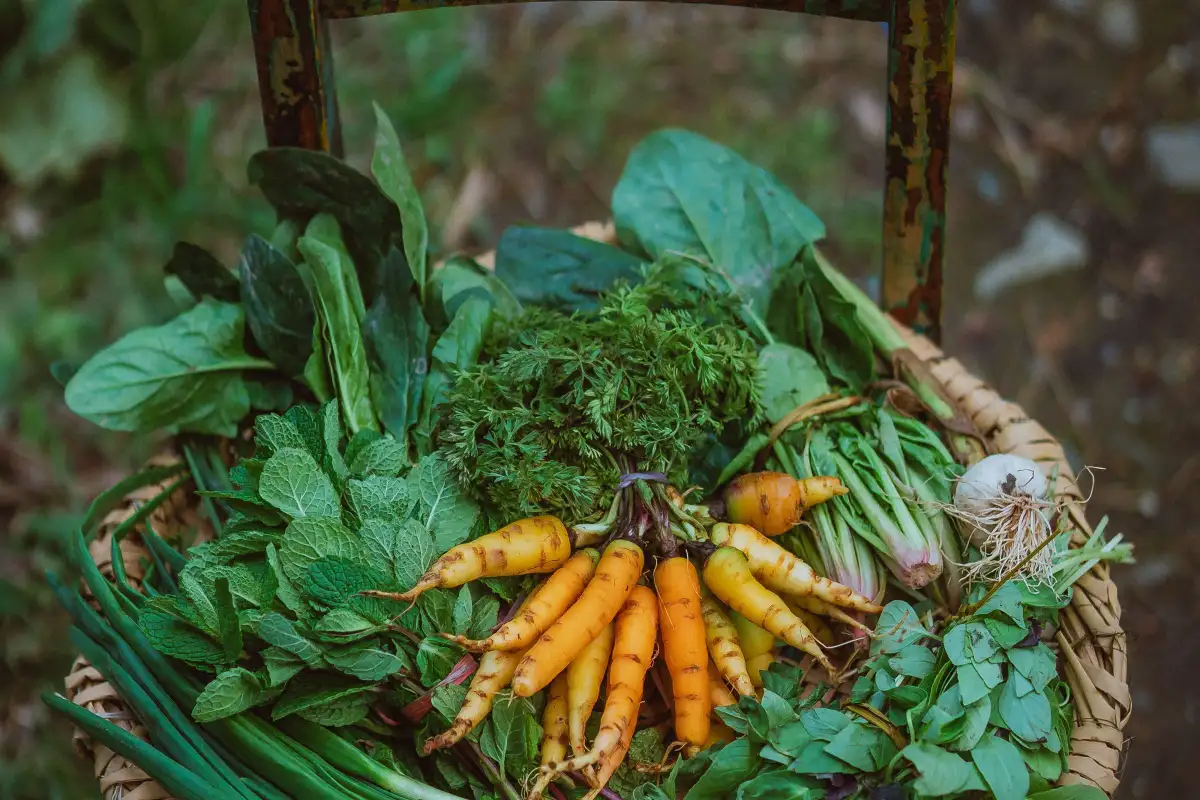
The ones that punish a mid-afternoon pick are thin, high-surface-area, fast-respiring things. Leaf lettuce, spinach, arugula, chard. Soft herbs — cilantro, dill, parsley, basil. Shell and snap peas. Green beans. Sweet corn. Broccoli and its relatives. Pick those at 2 p.m. in July and you can watch the difference by evening: limp, warm, already going yellow at the edges.
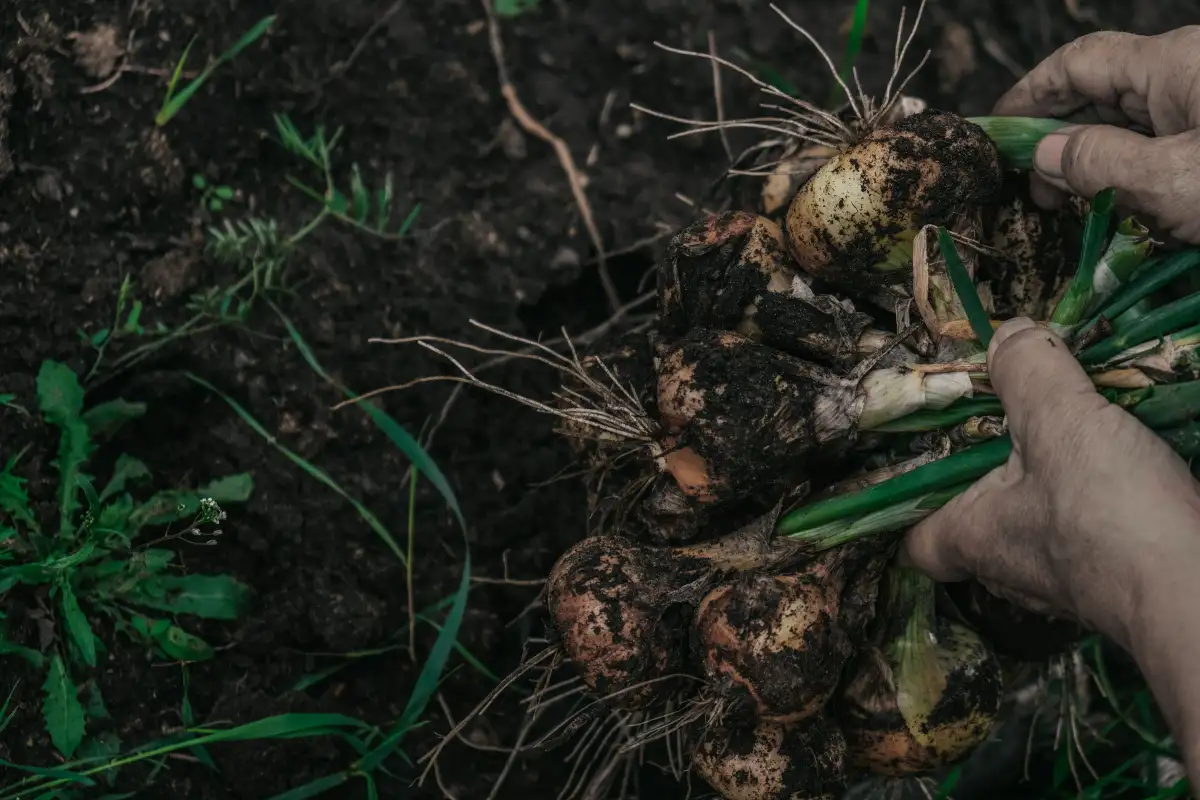
The ones that shrug are the ones built with armor or a slow metabolism. Carrots, beets, turnips, potatoes, onions, garlic, winter squash. They have skin, low respiration, or a storage cure ahead of them that makes the harvest hour close to irrelevant. I have pulled carrots at noon in August and they were fine.
Cucumbers sit in an interesting middle, and they split according to what you intend to do with them. The small ones you take for pickling come off young and thin-skinned, with a lot of surface for their volume, and they are far more fragile than a full slicing cucumber, which has a rind doing real work. Same plant, same afternoon, two very different tolerances to a warm basket.
Hydrocooling, at kitchen scale
Commercial growers run hydrocoolers, vacuum coolers, forced-air tunnels. You have a sink.
Cold water is the one that translates, because water conducts heat out of tissue far faster than air does. A rinse in cold water — genuinely cold, not tap-warm — is the fastest cooling most home growers have access to, and it does double duty on soil and on the field heat. Greens and herbs dunked, swished, drained, and moved straight into the refrigerator will hold noticeably longer than the same greens set on the counter to "dry off first."
Two exceptions worth knowing. Don't dunk berries; the water you can't shake out is the water that grows fuzz. And basil is the odd one out in the other direction — cold water and cold storage both turn the leaves black, so it gets the coolest non-refrigerated spot you have and a short shelf life no matter what you do.
Tomatoes deserve their own note, because they are the case where the clock barely matters. You shouldn't be refrigerating them at all; cold damages the volatiles that make a tomato taste like a tomato. A tomato picked at 6 a.m. and held at room temperature for three days beats a 2 p.m. tomato in the crisper. The morning rule is a rule about crops that go into cold storage. The ones that don't are playing a different game.
What 10 a.m. actually is
It is a proxy, not a law. Underneath it are two things you can measure directly: air temperature, and how turgid the plant is. Extension guidance generally puts the window in the early morning for most US summer conditions, but that is describing a typical day, not every day.
On a foggy coastal morning the window stretches past ten easily. In a Texas August it may slam shut by 8:00. And a plant that has been drought-stressed or heat-stressed is less turgid at six in the morning than a well-watered plant is at nine — the hour tells you less than the plant does.
So the useful habit isn't setting an alarm. It's knowing which half of your garden you're harvesting, and what the two numbers are doing when you walk out the door.