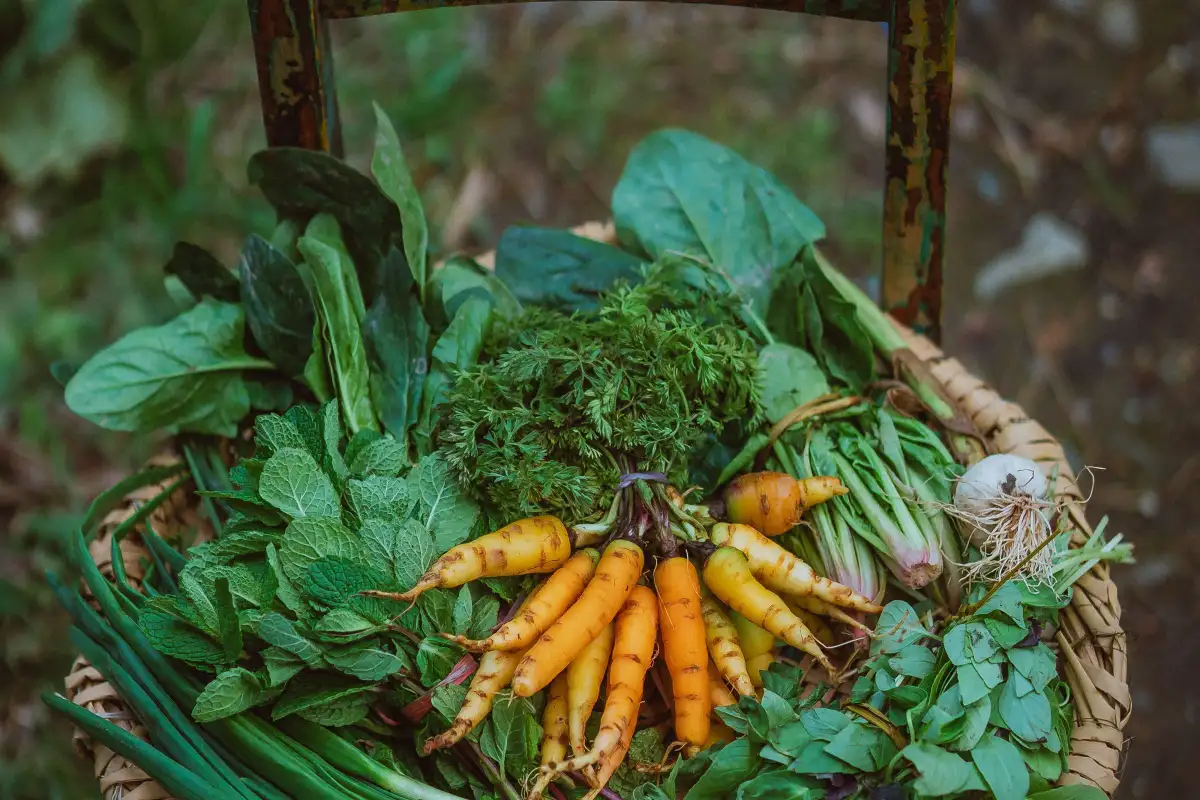
Curing is the two-to-three-week drying step between harvest and storage, and skipping it is why onions that looked flawless in August are soft and moldy by December. Onions and garlic want roughly two to three weeks of warm, dry, moving air until the necks are completely dry and the outer skins turn papery. Winter squash and pumpkins want one to two weeks of warmth to harden the rind and heal cuts, with one to two inches of stem left attached. Potatoes want one to two weeks in a dark, humid place around 50 to 60 degrees Fahrenheit so the skin sets and the small wounds seal. All three are doing the same job — healing surface wounds and thickening skin, which is what actually reduces storage rots later — but they need different conditions to do it, and different conditions again to keep.
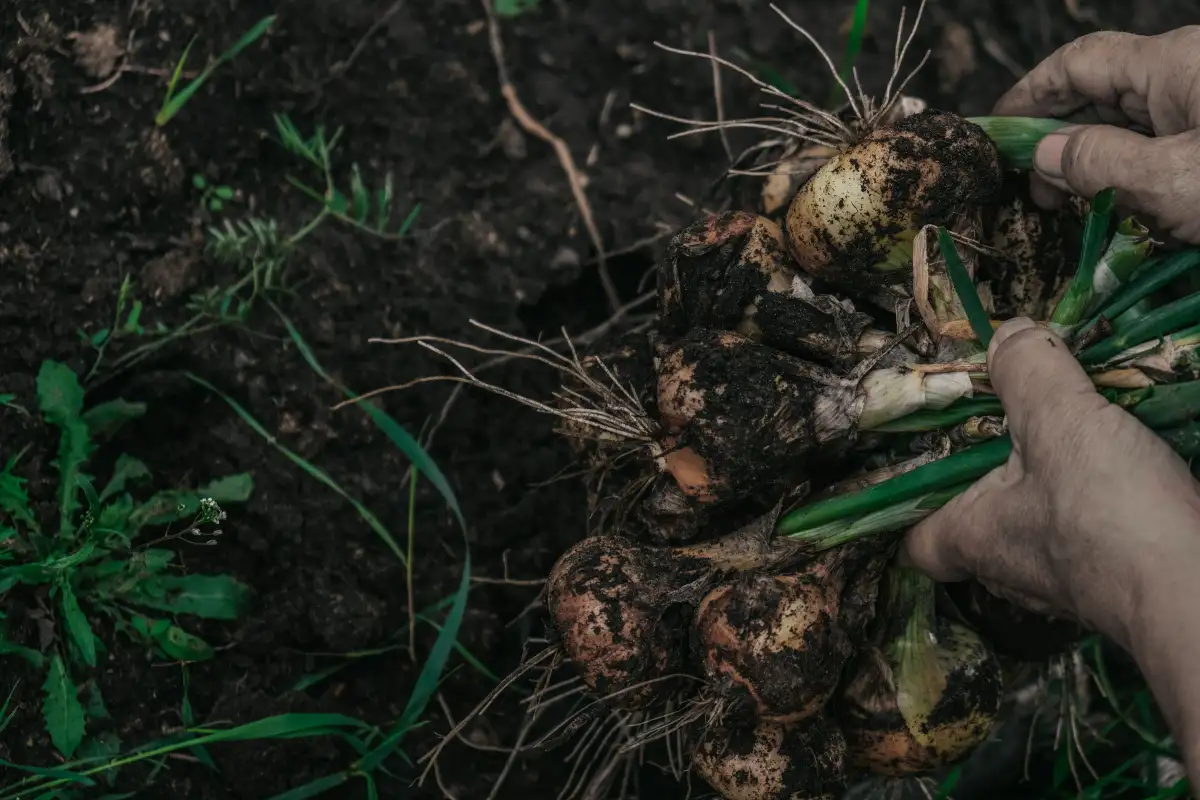
Walk into my apartment in the third week of July and the first thing you notice isn't the smell of onions. It's the smell of onion dirt — sulfur, dust, and something faintly like a basement — coming off a folding table in the second bedroom, where fifty-odd bulbs lie in a single layer with their tops still on. A box fan sits on the floor angled at the underside of the table rather than at the bulbs, because I want air moving across them, not blowing on them. On the kitchen counter, a butternut squash sits by itself on a wire rack. Under the sink, in a cardboard box lined with newspaper, twelve pounds of potatoes are in the dark doing nothing at all.
Three crops, three corners of a small apartment, none of them sharing a shelf. That arrangement is the whole point.
What the two weeks actually do
A nick from a fork, a cut neck, a thumbnail scrape — none of those look like much at harvest, and every one of them is an open door by October. What curing does is trigger the tissue just under the wound to form a corky layer, a new skin over the break. Call it a scab, call it wound periderm, it's the same event: the plant seals itself shut while it still has the reserves to do it, and once it's sealed, rot organisms have nothing to get in through. At the same time, the outer scales dry and tighten into paper, which is a second barrier sitting on top of the first.
The neck of an onion is the part people underestimate. It isn't a stem you can cut and forget; it's a channel that runs down into the middle of the bulb. If the neck is still green or still damp when the onion goes into storage, moisture keeps moving down that channel and the bulb rots from the inside, top first. You don't find out for six weeks, and by then the rot has moved to the neighbors in the crate.
So the test isn't "it looks dry." Roll the neck between your fingers. It should feel like a dried twig all the way down to the bulb, with no slip and no give. The skin should rustle like paper, not peel like a rubber glove. For squash, press a thumbnail into the rind — if it dents, put it back on the rack. For potatoes, rub the skin with your thumb; if it slides off, they aren't finished.
Three crops, three sets of conditions
This is where a lot of short guides fall apart. They hand you one shelf and tell you to put everything on it. Onions and squash don't want the same air, and potatoes want neither.
Onions and garlic: warm, dry, and moving
Two to three weeks, warm, dry, well ventilated. Leave the tops on while they cure, then cut them back to an inch or so once everything is genuinely dry. Don't wash them — brushing off dry soil afterward is all they need. Direct sun is the one thing to avoid, because it scalds the bulbs, softens the skin, and leaves pale patches that rot first. Shade plus airflow beats sunshine every time.
Humidity is the variable nobody controls and everybody should. In a dry climate, two weeks does it. In a humid summer, three weeks may not be enough, and when the necks still feel soft at the end of it, those are the bulbs that come into the kitchen first instead of into the crate.
Winter squash and pumpkins: warm, short, and gentle
One to two weeks somewhere warm, and then they're done. Leave one to two inches of stem on every one of them. The stem is the plug; cut it flush and you've made a hole. Carry them by the body, never by the handle, because a squash that loses its stem in your hand is a squash with an open wound, and that one gets eaten first instead of stored.
Once the rind won't take a fingernail dent, it's cured. Some extension guides suggest a brief bleach dip for pumpkins going into long storage; I've never bothered, and I haven't lost a squash for the lack of it.
Potatoes: dark, damp, and around 50 to 60
One to two weeks in the dark at 50 to 60 degrees Fahrenheit, with humidity high enough that the tubers don't shrivel. This is the one crop where "dry" is the wrong word. Don't wash them, don't leave them in the sun for even an hour, and don't cure them anywhere light can reach. Light is what turns potatoes green and pushes solanine up, and green skin is bitter no matter what you do with it afterward.
Where each one lives once curing is over
Onions and garlic move into storage at roughly 32 to 40 degrees Fahrenheit, dry, dark, and ventilated. That's colder than most apartments, so city growers lean on an unheated garage, a stairwell, or the refrigerator — and the fridge only works if the humidity problem is handled, since a wet onion is a rotting onion. Mine go into a paper bag with a few holes punched in it for exactly that reason.
Winter squash and pumpkins want the opposite end of the thermometer: about 50 to 55 degrees, moderate humidity, dark, and not stacked on top of each other. They need air around the rind. I set them on a shelf with a couple of inches between them and check them weekly, because one squash going soft will take the ones touching it along for the ride.
Potatoes want dark and about 38 to 40 degrees Fahrenheit for long keeping, still humid. Any light at all is a problem, which is why the box under my sink has a lid on it.
And keep the onions away from the potatoes. I've read enough explanations of why to be suspicious of every one of them, but I've also pulled sprouted potatoes out of a box that was fine until an onion crate landed beside it. Whatever the mechanism is, the practical rule has held for me: separate corners.
The things that undo the two weeks
Direct sun, in any amount. Washing before curing. Heaping crops instead of laying them in a single layer. Cutting onion necks too close. Moving squash into a cool room before the rind has set. And the one I still get wrong: moving everything into cold storage too early, because cold stops the healing rather than pausing it. A potato that goes into a 40-degree garage on day three never finishes building its new skin.
Curing is two weeks of doing almost nothing in the right conditions. It's the cheapest insurance in the garden, and it's the step that decides whether the August harvest is still food in February.