A soilless potting mix has almost no buffering reserve, so its pH can travel a full unit inside a single season, and the two biggest inputs are pulling it in opposite directions the whole time. Ammonium-based fertilizer acidifies the root zone as it converts. Hard tap water does the reverse, depositing calcium and bicarbonate every time the pot dries down. With no clay and no real organic reserve to hold the reaction steady the way field soil does, correcting a container means blending something through the volume of the mix or replacing part of it at replanting. Lime scattered across the surface of a pot never reaches the roots, and overdo it in a small volume of medium and you lock out iron and manganese within a couple of weeks.
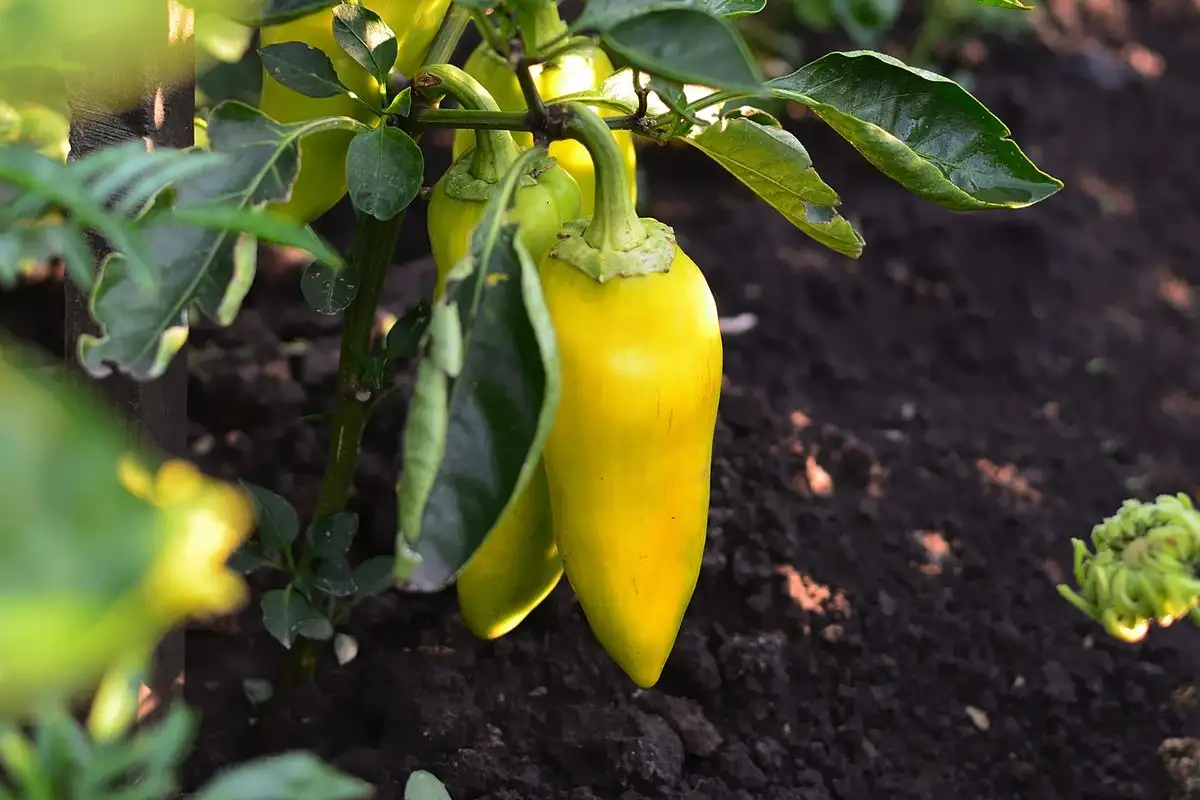
I figured that out the slow way, standing on a balcony in the middle of July with a pepper plant that had quietly quit on me.
Look at the rim before you look at the plant
Set the pot down where the light hits it and tilt it toward you. On mine there was a chalky white ring an inch above the mix line, and a crust across the surface you could scrape up with a fingernail. The pot felt heavier than it should and the mix smelled flat, like old cardboard. That crust is the receipt for everything your tap water has left behind since spring.
The plant told the same story from the top down. New leaves came in small and yellow between green veins, which is what iron and manganese look like when they are sitting right there in the mix but chemically unavailable. The old leaves stayed fine for a while, and that lag is the part that fools you.
I have seen the opposite too, and it looks nothing alike. When the mix slides down too far, growth stalls at the growing tip, lower leaves yellow and drop, and the whole plant sits there looking overfed and underfed at the same time. That is the low end of the drift, and on my balcony it showed up faster in seasons when I was feeding heavily than in seasons when the water was the main story.
Either way it is a pH problem, and neither version shows up in a bed of field soil at that speed.
Why a container has nothing to lean on
Field soil resists pH change because it holds clay particles and decomposed organic matter with real cation exchange capacity. The mix in your pot has almost none of that. It is built on peat or bark, then blended and pre-charged with lime at the factory so it lands somewhere between 5.5 and 6.5 by the time it goes in the bag. That lime charge is finite. It is the entire buffer system you bought.
Once it is spent, nothing holds the line. A full unit of movement across one growing season is normal in a container, and it is not a sign that the mix was bad. It is what happens when a small volume of low-exchange medium gets watered forty times and fed fifteen times with no reserve to absorb the difference.
That is also why the laboratory buffer tests you read about do not transfer here. Those tests are built around field soil, and they assume the sample will push back against the reagent. A soilless mix does not push back. The test itself moves the sample.
Two inputs walking the number in opposite directions
Ammonium fertilizer runs a slow acid drip
When your feed supplies nitrogen as ammonium, the plant takes up the ammonium and releases hydrogen ions into the root zone in exchange. Nitrification in the mix does something similar from the other side. Either way, weeks of feeding with an ammonium-dominant source push the medium down. You will not see it day to day. You will see it in August.
A nitrate-dominant feed reverses that pressure. Nitrate uptake pulls hydroxide out and the number creeps upward instead. This is the most useful lever you have, because it changes direction rather than adding something you cannot take back.
Hard tap water pushes back up and leaves salt behind
Every watering with hard water adds calcium and bicarbonate. The plant takes the water and transpires it away; the minerals stay. Bicarbonate lifts pH and buffers the medium upward, and the salts accumulate in the root zone because a container has nowhere to leach to unless you deliberately flush it. That white ring is one season of that process, condensed onto the rim.
Which one wins depends on your water and your feed
On my balcony, hard municipal water plus a light feeding schedule meant the pots drifted upward and the interveinal yellowing showed up first. In a season where I fed harder with an ammonium-heavy source, the same pots went the other way. There is no law that says containers always drift down, and anyone who tells you that has probably never scraped a crust off a rim in September.
Testing a container without a lab
Equal parts mix and distilled water, by volume. Two scoops of each in a clean jar, stir it, let it stand about fifteen minutes, then measure the liquid. Strips or drops both work. Whatever you already own is fine, as long as you keep using the same one so the numbers are comparable to each other.
The distilled part matters. If you slurry with your tap water, you are partly measuring the thing you were trying to isolate, and hard water will pull every reading upward.
Pull the sample from a couple of inches down, in two or three spots around the pot, not from the crusty surface. Mix the cores together before you split them with the water.
The probe meters you shove straight into a pot are a different animal. They respond to moisture as much as anything else, and in a peat mix they wander. I stopped trusting mine the afternoon it gave me two readings a full point apart from the same pot twenty minutes after watering.
Slurry the fresh mix once when you fill the pot and write the number on a plant tag. That baseline is worth more than any single reading later, because the useful question is never "what is my pH." It is "how far has this moved since April."
One honest caveat: home slurry numbers are approximate. Treat three-tenths of a point as noise and a full point as real. You are tracking direction, not decimals.
Correcting mid-season without wrecking the medium
Whatever you add has to end up in the root zone, and in a small volume it has to be small. Those two rules eliminate most of the advice people hand out about this.
Top-dressed lime does not work in a container. It sits on the surface, it does not migrate down through a peat mix on its own, and it dissolves too slowly to matter before the season ends. Scratch it in and get the dose wrong and the medium swings up, and iron and manganese go unavailable in a hurry. That is the same yellow new growth you started with, arriving from the other direction. In a five-gallon pot, a single tablespoon is a real dose. The same spoonful diluted through a cubic yard of soil is a rounding error, which is exactly why the container is the risky place to guess.
So here is what I actually do.
If the mix has drifted low, I change the feed direction first. Switching to a nitrate-dominant source lets the medium come back up on its own over a few weeks without putting any solids into a pot packed with roots. It is slower than lime and it does not overshoot.
If the mix has drifted high, the first move is a flush. Carry the pot somewhere you do not mind staining, run plain water through it until several times the pot's own volume has come out the bottom, and watch the first runoff come out the color of weak tea. That is salt leaving. Then feed again lightly, because you just washed some nutrition out along with it.
If it has drifted high and the plant is visibly suffering, I accept that this pot is finished and plan the replant instead of trying to drag five gallons of peat back down in July. There is no clean way to acidify a container quickly without risking the roots or overshooting into manganese toxicity.
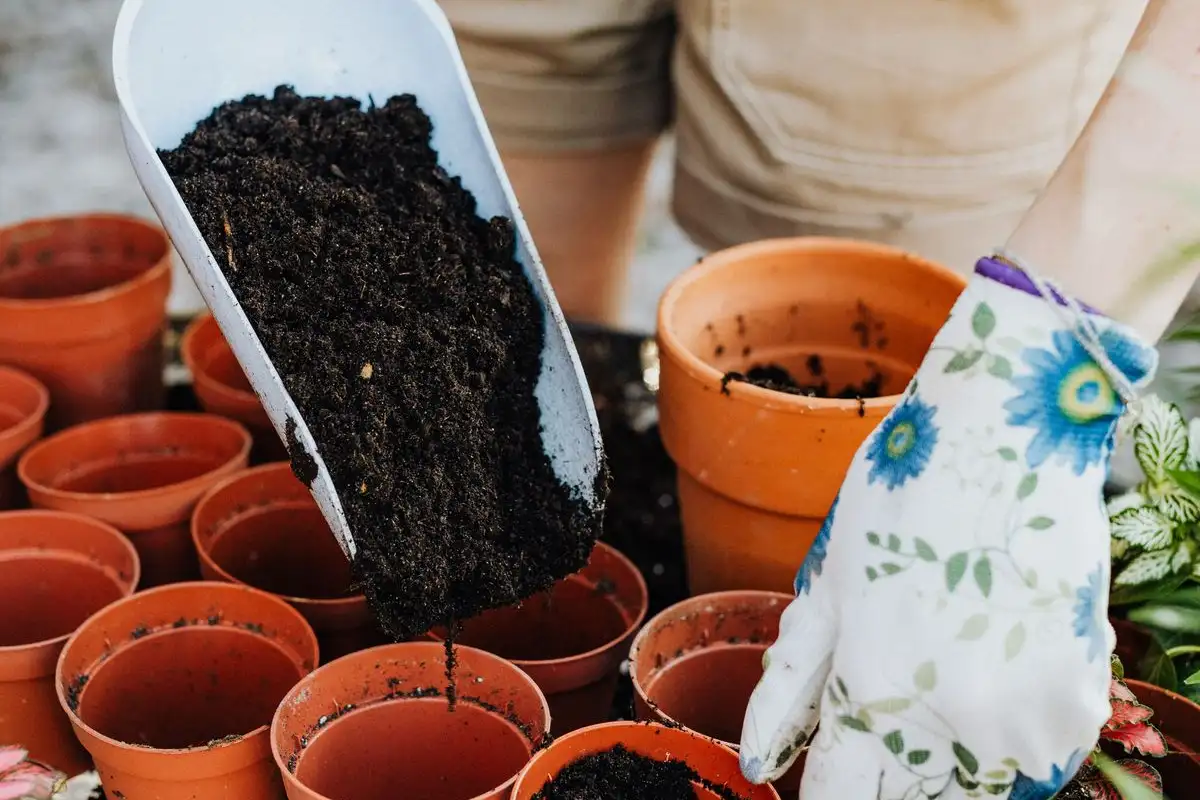
The clean correction happens at replanting. When I rebuild a pot, I replace part of the medium, usually the bottom third where the salts have concentrated, and I blend any lime or amendment evenly through the fresh mix before it goes in. Even distribution through the volume is the entire point. A pocket of amendment is worse than no amendment at all.
What a season actually looks like
Fill the pot. Slurry it. Write the number on a tag. Feed. Watch the rim and the new growth, not just the older leaves.
Halfway through, slurry again and compare. If it moved a little, do nothing. If it moved a lot, change the direction of your feeding or flush the pot, and write down which one you did so next year's version of you has something to work from.
At the end of the season, dump the mix or work part of it out and rebuild. Do not carry a spent, salt-loaded medium into a second year and expect the lime charge to come back on its own.
None of this is precise. A balcony pot is not a lab bench and you will not hold one at 6.2 through September. But knowing the number is drifting, knowing which direction your water and your feed are pushing it, and knowing that a correction has to happen inside the volume of the mix instead of on top of it, that is enough to stop losing a plant in July and wondering why.