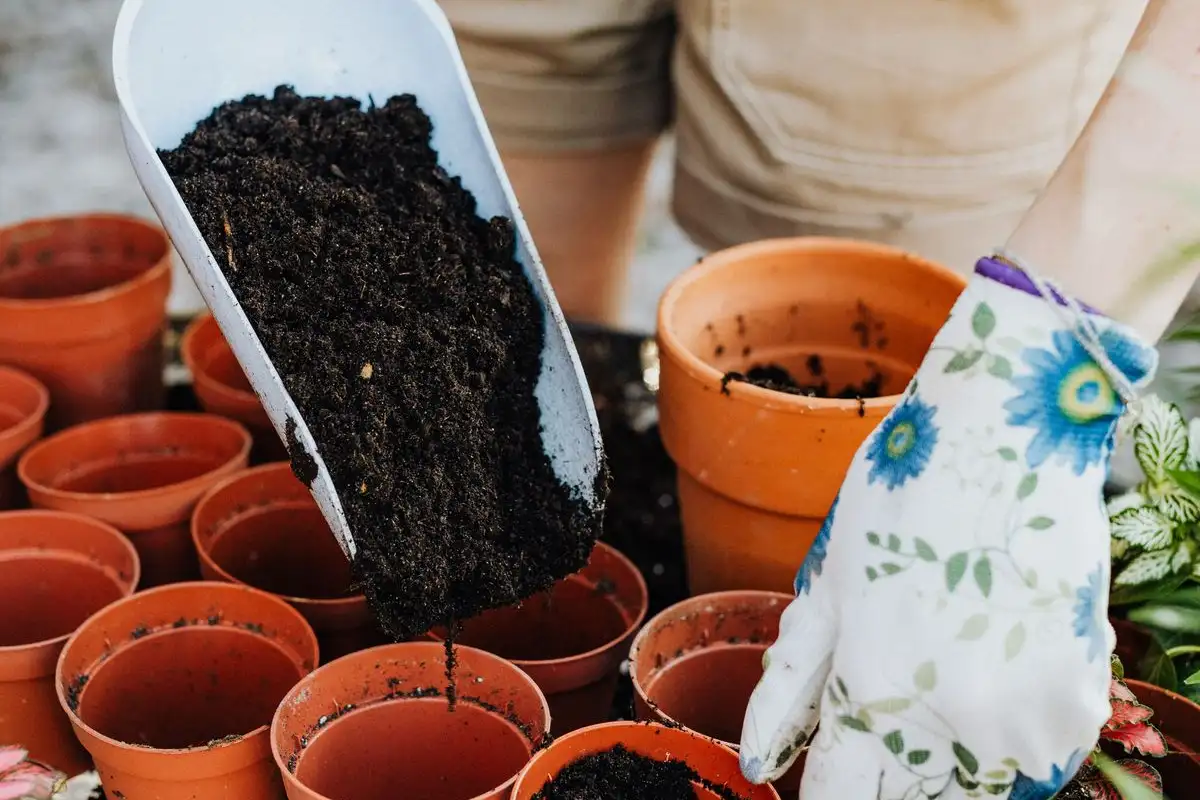
Choose crops by the width of the pH band they tolerate, then match that band to the soil already sitting in the bed. A bed reading 5.2 or 7.4 does not have to be rebuilt before it can be planted. It has to be planted with the crops whose tolerance actually reaches your number: potatoes and sweet potatoes low in the acid range, brassicas, spinach, beets, onions and asparagus up past neutral, carrots, radishes and parsley in the mildly acid middle. The narrow-band crops, tomatoes, peppers, cucumbers and lettuce, are the ones that get moved to a container or another bed. Not the soil.
Come stand at the edge of my strip bed with me, the one that runs along the concrete foundation of the building. Put a trowel in and feel how it comes up: clods with old roots threaded through them, a pale crust on the surface after a dry week, slick on top when it has just rained. This is the bed I cannot rebuild. It is three feet wide, it belongs to the building, and nobody is dropping eight yards of topsoil so I can grow a tomato in it.
So in early April I test it. Clean trowel, six spots down the length, all of it into a bucket, mixed, spread on the counter to dry overnight. Then the drop kit. Soil in the vial, a few drops of indicator, cap it, shake, wait, match the color to the chart. The first read landed between two squares, so I mixed a second vial and ran it again. Same answer both times: a little past 7.4. Alkaline, and not marginally so.
Two seasons ago I would have taken that as a verdict. Too alkaline, needs fixing. Now it is just a starting condition. The kit does not tell me what to do. It tells me which crops are already at home there and which ones I would be fighting all summer.
Read the band by its edges, not by its middle
Most pH charts hand you a range per crop, and almost everyone reads the middle of it. The middle is not what counts when the soil cannot move. What counts is how far the edges of that range sit from your number, and how the plant behaves when you are outside them by a little versus a lot. Half a unit outside the band, most vegetables just grow smaller and slower, and in a small bed you may never notice. A full unit out, and they stall. Leaves go yellow or purple, the plant sits there doing nothing for three weeks, and by the time you are certain it is the soil, the season is half spent.
Once I started reading the bands by their edges, my crop list sorted itself by how much room each plant gives you.
The acid end gives you the most room
Potatoes and sweet potatoes will crop down to around 5.0, further into acid than nearly anything else headed for a vegetable bed. That is not a problem to solve, it is a potato bed. Below 5.5 the organism that pits potato skins with scab is suppressed, so acid I cannot correct is doing me a favor. I plant potatoes there and stop thinking about lime for that ground entirely.
Carrots, radishes and parsley come next, comfortable from roughly 5.5 to 6.5, and they make no fuss anywhere inside it. My second bed, a raised box I filled with a peat-heavy mix years ago and never limed, reads about 5.4. That is a carrot bed, a radish bed, a parsley bed, and a potato bed. It is not a tomato bed, and no amount of wishing changes that.
The narrow middle, where plants stall instead of dying
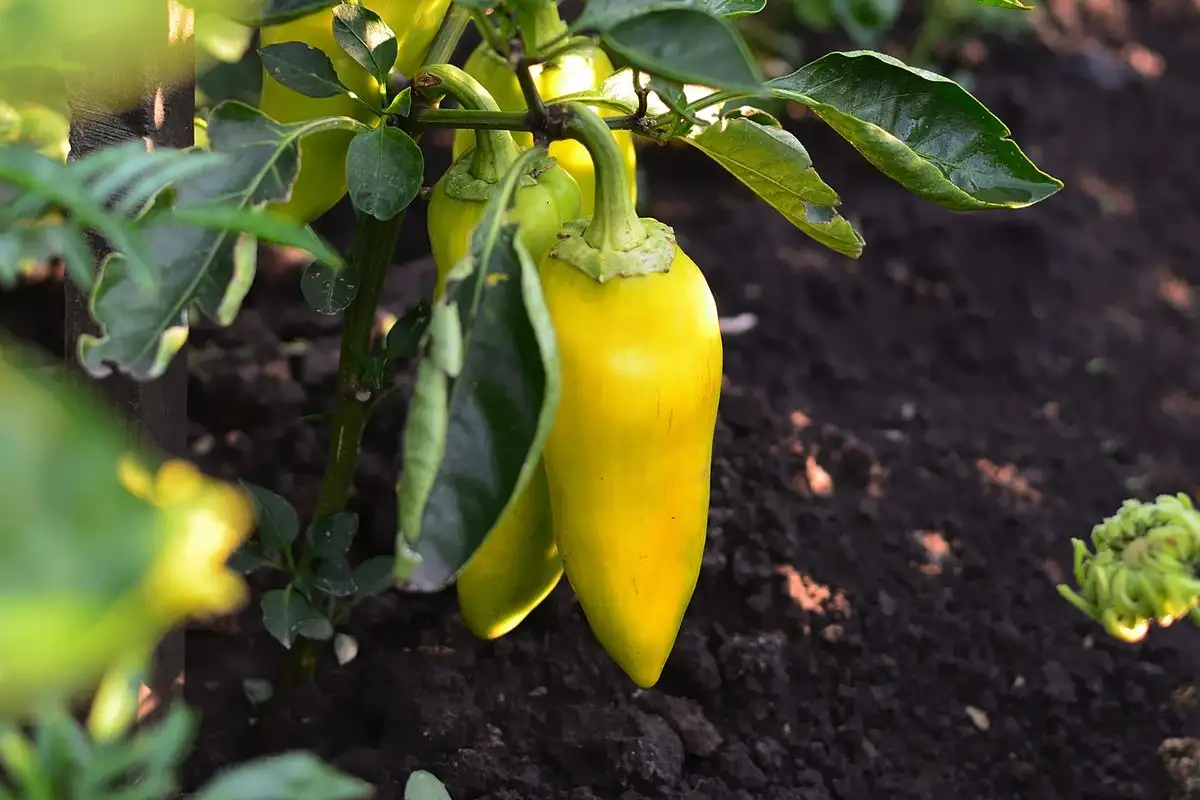
Tomatoes, peppers, beans, cucumbers and lettuce want 6.0 to 7.0, and they lose vigor when the soil sits more than half a unit outside that band. In the 5.4 box that is most of a unit low. A tomato will germinate in there. It will look fine for two weeks and then quit. Stem dark, no new growth, lower leaves going yellow or purple between the veins. The first year I blamed the weather, then I blamed my watering. It was the number in the soil the whole time.
Peas and beans deserve their own note, because they are misleading. The plant is a legume, and the rhizobia bacteria in the root nodules are sensitive to acidity. Nitrogen fixation is most efficient near neutral, which is why peas do their best work in the neutral-to-alkaline bed, not in the acid one. In a bed at 5.4 you can get a bean plant that grows perfectly well, flowers, and then never fills a pod the way it should, because the partnership underground is not working. Inoculant does not cure that. The bacteria are still sitting in acid.
Past neutral, on the alkaline side
Brassicas, spinach, beets, onions and asparagus will hold up to about 7.5. That is my foundation strip, and it is why that bed is the most reliable part of the garden. Kale and collards go in against the wall, spinach and beets just off it, onions wherever there is a gap. None of them care that the number is 7.4.
My tomatoes would sit about 0.4 units above their band in that same bed. Less than half a unit. This is the honest, it-depends part. They would not die. They would be mediocre: smaller, slower, more prone to whatever is going around that year. Some seasons I plant two there anyway and accept the trade. Most seasons I do not, because I would rather have them in a container where I set the starting mix myself.
One bed is not one pH
The other thing testing taught me is that a single number does not describe a whole bed. In the strip along the foundation, the sample I took twelve inches from the concrete read higher than the sample from the outer edge. The concrete is pushing the number up where it meets the soil. I took those two samples a week apart, then a third one in the middle to make sure I was not fooling myself, and the pattern held.
That changes planting more than it changes chemistry. Brassicas, spinach and beets go in the twelve inches closest to the wall, where the number runs highest. Potatoes or carrots go on the outer edge, where it drifts down toward neutral and a little past. Same bed, same season, no amendments, two different crop groups. It is the cheapest pH management I have ever done, and it cost nothing but two extra samples.
What I still won't do
Choosing crops is not the same decision as amending soil, and I try not to let the two blur together. A drop kit gives me a number. It does not give me buffer pH, which is the figure that tells you how hard the soil will resist a change, and it says nothing about texture or how much organic matter is holding that number where it is. If I were going to spend real money on this bed, I would want a lab test through the extension service first, because buffer pH is what decides whether lime or sulfur is even worth buying. On a bed I rent, I usually do not spend it. I plant the band that fits and put the money into containers instead.
Two caveats for anyone trying this. A container is not a rebuild. It is a different bed with a starting number you choose, so the narrow-band crops are not locked out of your garden, only out of that particular piece of ground. And pH is one axis among several. Drainage, light, and how much root room a plant has will beat pH in a bad year. Sorting by band width fixes the problem you cannot move. It does not fix the ones you can.
The seed order gets written off the chart now. I read the number, find the crops whose band covers it, and only then start thinking about what I actually want to eat that year. It is less satisfying than buying a bag of something and hoping. It just does not waste a season.