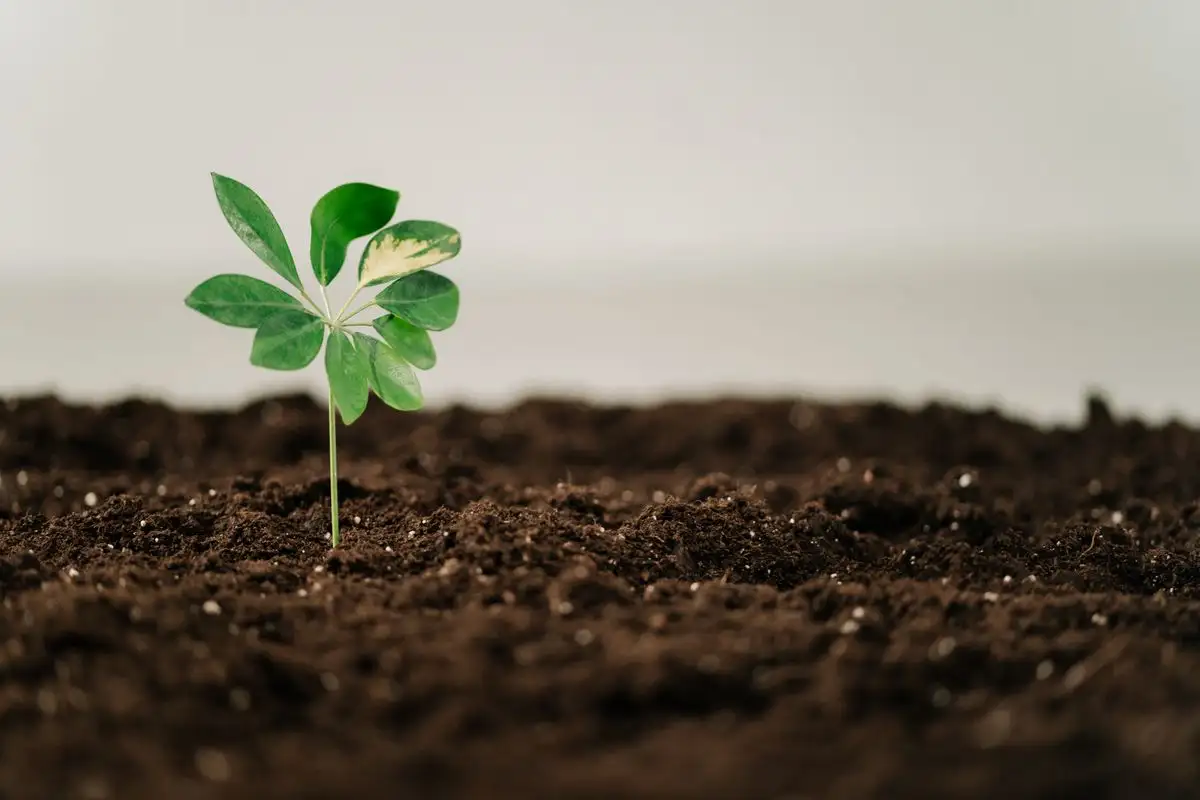
Potting mix pH matters less than garden soil pH, and it matters for different reasons. A bag of soilless mix is already buffered with limestone during manufacture and usually starts somewhere between 5.5 and 6.5, and most vegetables in containers grow well from roughly 5.8 to 6.5, so a new pot is almost always in range before anyone touches it. The real issue is that the reading most people take from a pot is not a pH measurement at all, and the thing that actually moves a container's pH over a season is not the mix. It is the water going into it.
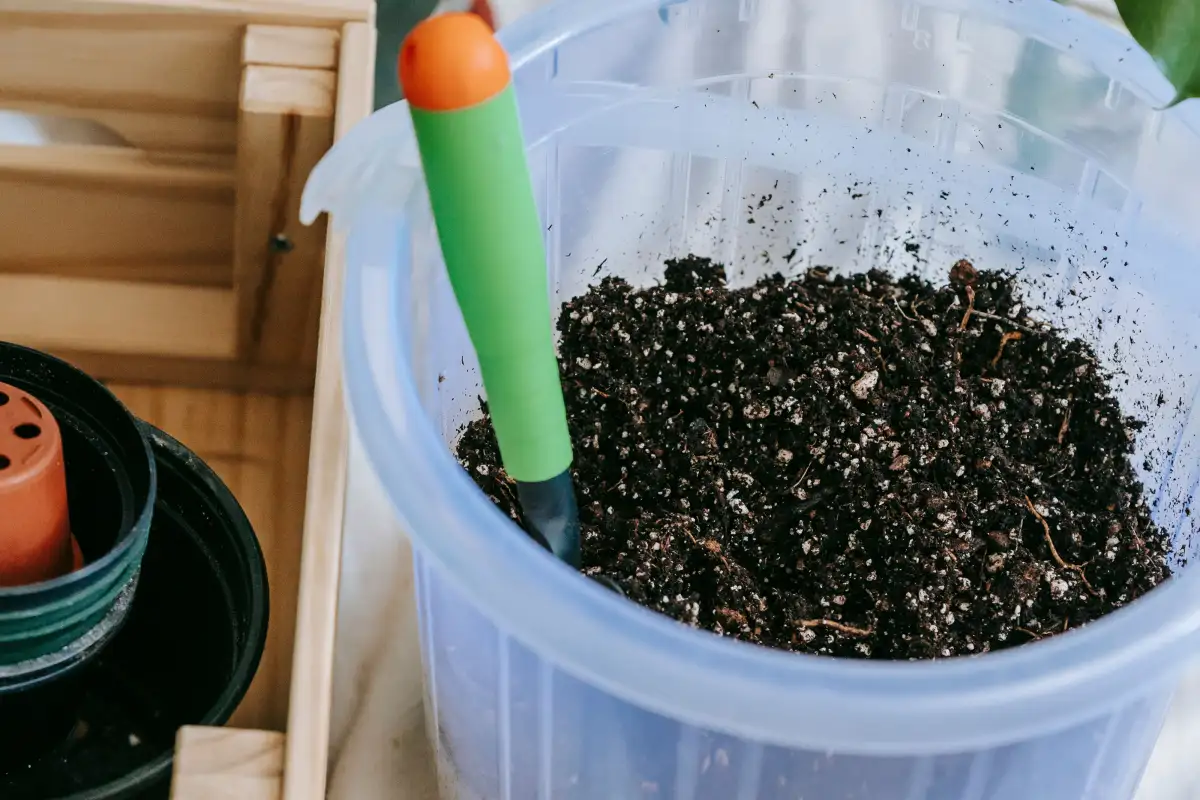
I keep a two-prong meter in the bottom drawer, and I remember exactly why it lives there. Early on, growing tomatoes on a third-floor balcony, I pushed those prongs into a pot and watched the needle settle at 7.6. Something felt off. I pulled it out, wiped it on my jeans, pushed it back in two inches away, and got 6.1. Same pot, same afternoon, same plant. A third push near the rim gave me 5.8.
Three numbers, three answers, none of them about hydrogen ions.
That meter works off electrical conductivity between the prongs. In a soilless mix, what it is really picking up is moisture and dissolved salts. Water the pot and the number drops. Fertilize it and the number climbs. The mix could be sitting at a stable 6.2 all week and the needle will still wander up and down the dial depending on how damp the bark is that afternoon. In dense garden soil the same tool is crude but at least in the neighborhood. In potting mix it is measuring something else entirely, and it is measuring it confidently.
What is actually in the bag
Peat, coir, or bark, plus perlite for air, plus a starter nutrient charge, plus limestone. That last one is the part that matters here. Manufacturers blend calcitic and dolomitic limestone into the mix at the plant for one purpose: to pull naturally acidic peat up into a range where roots can function. That charge is the buffering, it is finite, and it is why a fresh bag generally does not need adjustment.
Which is also why the bag is not a guarantee. Lime rates differ between manufacturers, and a bag opened last spring and left in a humid garage through summer is not the same material as the one you open in April. The starting condition is a design target, not a promise.
Getting a reading you can actually compare
If the prong meter is out, the question becomes what to use instead. The answer that has held up for me across a lot of pots is a slurry, made the same way every single time.
Half a cup of mix and half a cup of distilled water in a clean jar. Equal volumes, not equal weights. Stir it, let it stand twenty minutes or an hour, stir again, then let the solids drop for a few minutes. What you end up with is a jar of cloudy water sitting on top of a dark layer of sediment. Put a calibrated pen or a strip into that water above the sediment, not into the mud, and read it. Wipe the probe between pots.
Distilled water is not optional. Tap water carries carbonate and dissolved salts that will dominate a sample that small. The by-volume ratio is about repeatability: a measuring cup is easier to match to itself than a kitchen scale is for most of us.
The absolute number off a home slurry is not the same as what a lab would report from a saturated media extract, and it is not meant to be. What it gives you is a trend line inside your own pots. Same method, same water, same season-to-season comparison. That is the value. A reading you cannot compare to last May is just a number.
Two things will wreck it. Sampling right after feeding, when fresh fertilizer salts are still loose in solution, will pull the value around; wait a few days after a feed or sample right before the next one. And an uncalibrated pen will give you the same confident wrong answer every time. If your meter takes pH 4 and pH 7 solutions, use them, and pay attention to when it last happened.
The method that measures something else
The pour-through method is the other legitimate option, and it is what commercial greenhouse growers lean on. Saturate the pot, wait a set interval, collect the leachate, and measure that. It tells you about the solution sitting in the root zone at that moment, which is a genuinely different thing from the mix's own buffering capacity. It works, but only if you standardize it: same volume poured, same wait, discard the first fraction.
So there are three tools and three different targets. The prong meter measures neither. The slurry measures the mix. The pour-through measures the root zone today. Knowing which question you are asking is most of the skill.
What actually moves the number
Three forces are at work between spring and fall, and they push in different directions.
The first is water. Pull your utility's annual water quality report and look at total alkalinity as calcium carbonate, not pH. Water at pH 8 with almost no alkalinity does very little to a pot. Water at 7.4 with high alkalinity deposits carbonate into the mix at every watering, and over one season that is a bigger lever on container pH than anything happening inside the mix itself. If the report comes back high, the fix is a different water source, which in practice means collected rainwater.
The second is the plant. Roots take up nutrients by exchanging ions with the surrounding solution, and the exchange runs both ways: pulling in cations releases hydrogen ions and pushes pH down, while nitrate uptake pushes it the other direction. Ammonium-based fertilizers nitrify and acidify. Different weeks, different winners. Meanwhile the peat and bark keep decomposing, organic acids accumulate, and the limestone charge that was protecting you gets slowly spent.
The net effect is not dramatic, but it is one-directional enough to matter. A pot that slurries at 6.2 in April can be sitting near 7 by September with nobody having done anything wrong.
When the number earns a response
Between about 5.8 and 6.5, close the lid and go water something. That band covers most vegetables in containers, and there is nothing productive to do inside it.
From 6.5 to 7.0, make a note. Check the water report before you check the plant.
Above 7.0, the first suspect is irrigation water, not the mix. Above 7.5 with pale, yellowing, unhappy growth, look at the water source before you look at anything else.
Below 5.5, suspect your own reading first. Recalibrate, retest, and see if the number holds. If it does hold and the plant looks fine, leave it alone. If it holds and the plant is stunted, that is a repotting problem, not a mid-season problem.
And this is the part people skip: you cannot steer a pot's pH with a splash of anything. The buffering capacity of the mix and the volume of water moving through the pot mean a liquid amendment gets shrugged off within a few waterings. The levers that actually work are changing the water source, changing how you fertilize, or starting the next round in fresh mix. Mid-season, the honest answer is usually to write the number down and act at repotting.
A note on acid-lovers: blueberries, gardenias, and a handful of others are genuinely pH-driven and need their own plan. They are not a good test case for the general rule.
Where testing earns its keep
Reused mix. Test it before each new season rather than after something goes wrong, because mix pH drifts slowly and does not correct itself. A pot that has run two seasons on hard water is worth a slurry in March, when you can still do something about it, rather than in July, when you are standing over a plant that has already told you.
The last thing I would say is that the plant outranks the number. A pot reading 6.9 with a healthy, dark-leaved, fruiting plant beats a pot reading 6.2 with one that is sulking. The measurement is there to explain a problem you can already see, not to invent one you cannot.