The test worth trusting is the one matched to the decision already in front of you, not the one with the most impressive packaging. If the only question is whether liming is warranted, a color kit or soil strip read from a properly collected composite sample answers it. If the question is how much lime to apply, only a laboratory suspension reading with a buffer pH or lime index answers it. A hand-held meter earns its keep as a calibrated trend line under a fixed protocol, and not as an oracle. The three routes differ mainly in precision, not in what pH means — and sampling error, the gap between one handful and the average of the whole bed, is usually wider than the differences between the methods themselves.
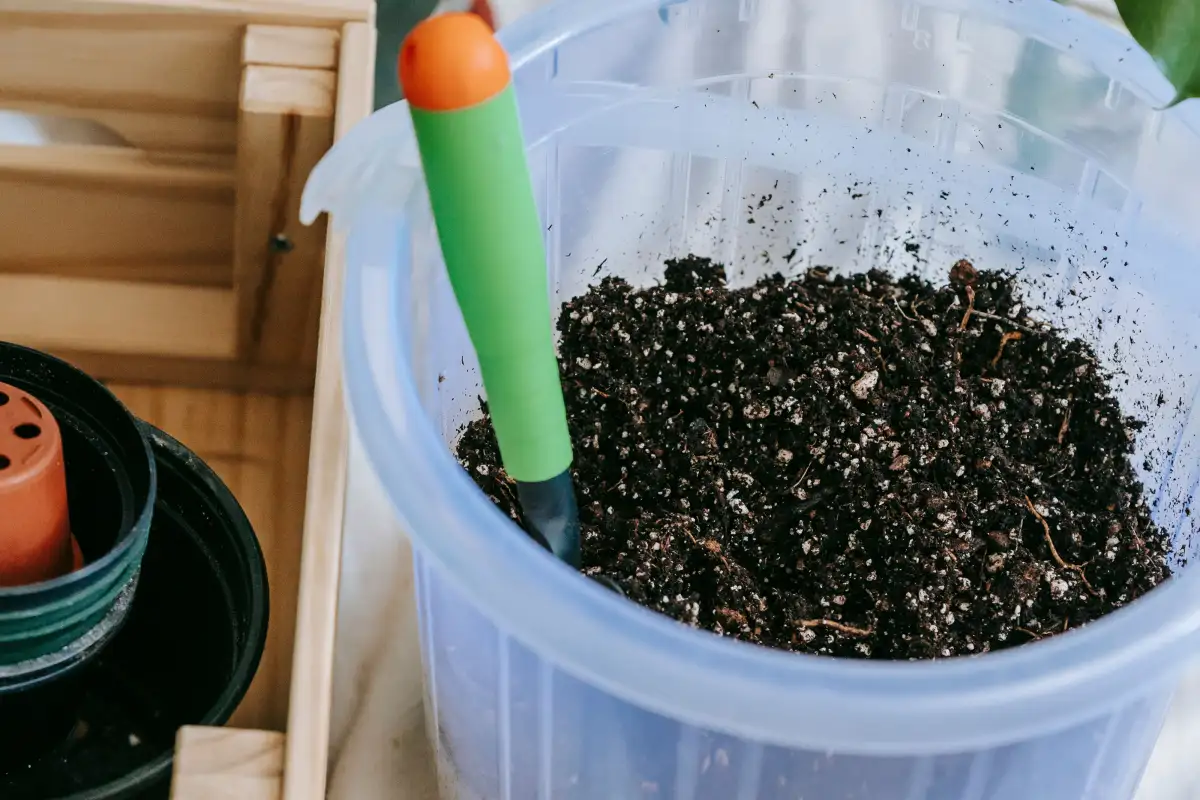
I want you standing where I usually stand on a cold morning in late winter, before anything is in the ground. The soil in the raised bed is wet enough to clump in your fist but not dripping, and it smells like the inside of a bag of leaves. You have a trowel, a clean plastic bucket, and a zip-top bag. You are not going to take one scoop and call it a sample. You are going to walk the bed in a rough zigzag, push the trowel down to about six inches, and pull eight or ten narrow cores from spots you would not normally choose — the corner near the downspout, the middle where you always plant tomatoes, the edge next to the path. Wipe the trowel first; anything galvanized sheds zinc into the sample. Tip every core into the bucket, break the clods with your fingers, mix the whole thing like you are tossing a salad, and then fill the bag from that mixed pile. The bag is now the bed, or as close to it as you are going to get.
That bucket is the part people skip, and it is the part that decides whether any number you get afterward means anything.
The three routes, and what each one is actually built to decide
Sit the bag on the kitchen counter next to a clear jar and a bottle of distilled water, and think about what you are asking before you open anything.
Color kits, strips, and the DIY indicators
A colorimetric kit or a soil strip is a comparison against a printed chart. You make a slurry or a filtrate, you dip, you wait the stated time, and you match a color. Best case, on a good day, with decent light, you are resolving to about the nearest half pH unit. That sounds crude until you remember what you are deciding. Most vegetables sit happily between roughly 6.0 and 6.8, and lime decisions hinge on crossing a threshold — is this bed sitting down around 5.5, or is it basically fine? A half unit is enough for that. It is not enough to fine-tune anything, and it will never tell you a rate.
The improvised indicators are even coarser, and it helps to be honest about what they are. Red cabbage or purple bean water gives you a broad color shift — the liquid leans one way or the other. A spoonful of soil in vinegar fizzing tells you carbonates are present, which means the soil is already on the alkaline side of the ledger. Baking soda and water foaming tells you it is acidic. Neither of those tells you how much lime to add, because neither measures buffer capacity, which is the whole variable a lime rate depends on. A DIY indicator is a yes-or-no signal. A lab buffer pH is an arithmetic input. They are not the same tool wearing different prices.
Hand-held meters
Here is where I slow down, because this is the route that produces the most confident wrong numbers. A real glass-electrode meter measures a voltage across a thin glass membrane that responds to hydrogen ion activity. It needs two-point calibration against reference buffers, usually something near pH 4 and something near pH 7, and it needs its electrode stored wet in a potassium chloride storage solution. Storing the probe in distilled water is a slow way to ruin the reference junction, because distilled water pulls salts out of it.
And the two-prong metal probe you push straight into moist soil is not doing that measurement at all. It responds to moisture and dissolved salts as much as to acidity. It will move when you water. It will move when you fertilize. It will give you a number every time, which is the problem.
Even a good meter has a habit worth knowing: it measures the liquid. Soil pH is not a property of dry crumbs. You make a slurry — 1:1 soil to distilled water by volume is the common extension method — stir it, let it stand, and read the liquid. Because you are measuring a solution, the ratio becomes part of the measurement. If you mix one part soil to one part water in March and one part soil to two parts water in September, the two readings are not comparable, no matter how steady your hand was.
Laboratory suspension and the buffer step
A lab does essentially the same slurry you would make, but with dried, sieved soil, a calibrated electrode, temperature control, and a fixed extractant. Which extractant matters more than most people realize, and it is the single most common reason a home reading and a lab reading on the same soil do not match. In a dilute calcium chloride solution, the same soil commonly reads somewhere between 0.3 and 0.6 units lower than it does in distilled water. Same soil. Same pH. Different number, because the salt solution is suppressing some of what water alone would liberate.
That is not a discrepancy to be argued away. It is why recommendation tables are extractant-specific, and why you should know which one your report used before you compare it to a threshold someone quoted you.
Then there is the second number, the one that is not pH at all. A buffer pH, sometimes reported as a lime index, measures how hard it will be to move the pH — the soil's resistance. Two beds can both read 5.8 and need wildly different amounts of lime, because one is sand that shifts in a season and the other is heavy clay with years of compost in it. No measurement of current pH alone can produce a lime or sulfur rate. Not yours, not a lab's without the buffer step.
Why the same raised bed reads two different numbers
The reason is almost never the meter. It is almost never the kit, either. It is the sample.
Put a handful from one spot in one jar and a composite from the whole bed in another, and they can sit nearly a full pH unit apart. Ash, lime, and fertilizer do not distribute themselves evenly, and a bed that got a bag of compost dumped in one corner two springs ago is a patchwork.
Then layer the smaller effects on top. Tap water instead of distilled water, and the alkalinity in it nudges the reading toward neutral — a real effect in a small slurry. A different soil-to-water ratio than last time. A different settling time. A meter calibrated last month, or not at all. A sample pulled right after liming and never fully mixed. A core taken from the top inch where the lime sits versus one from six inches down.
Every one of those is bigger than the difference between a good kit and a good lab on the same sample.
The order I go in now
If I am deciding whether to lime at all, I composite properly, mix 1:1 with distilled water, and use a color kit or strips. I write down the ratio and the wait time in the same notebook as the date, so that next year's number is comparable to this year's. A half unit of resolution is fine here.
If I am deciding how much to apply, the sample goes to a lab and I ask for the buffer pH or lime index. That is the only route that ends in a number I can act on with a spreader.
If I am watching a container or a bed drift over a season, I use the meter, calibrated, same ratio, same routine, and I look at the direction it moved, not the absolute value. A trend from a mediocre instrument under a consistent protocol beats a single pristine reading you cannot repeat.
And if a plant looks sick this week, I do not reach for any of it first. pH moves slowly. Yellow leaves on a Tuesday are usually water, drainage, roots, or light. The soil test answers a question about months, not days.
The part that does not sell kits
The precision you can buy is capped by the precision you can sample, and no instrument on the market fixes a bad bag. One trowel, one spot, one reading is a story about that spot. The composite is what you can actually trust, and it costs nothing but ten minutes and a bucket.