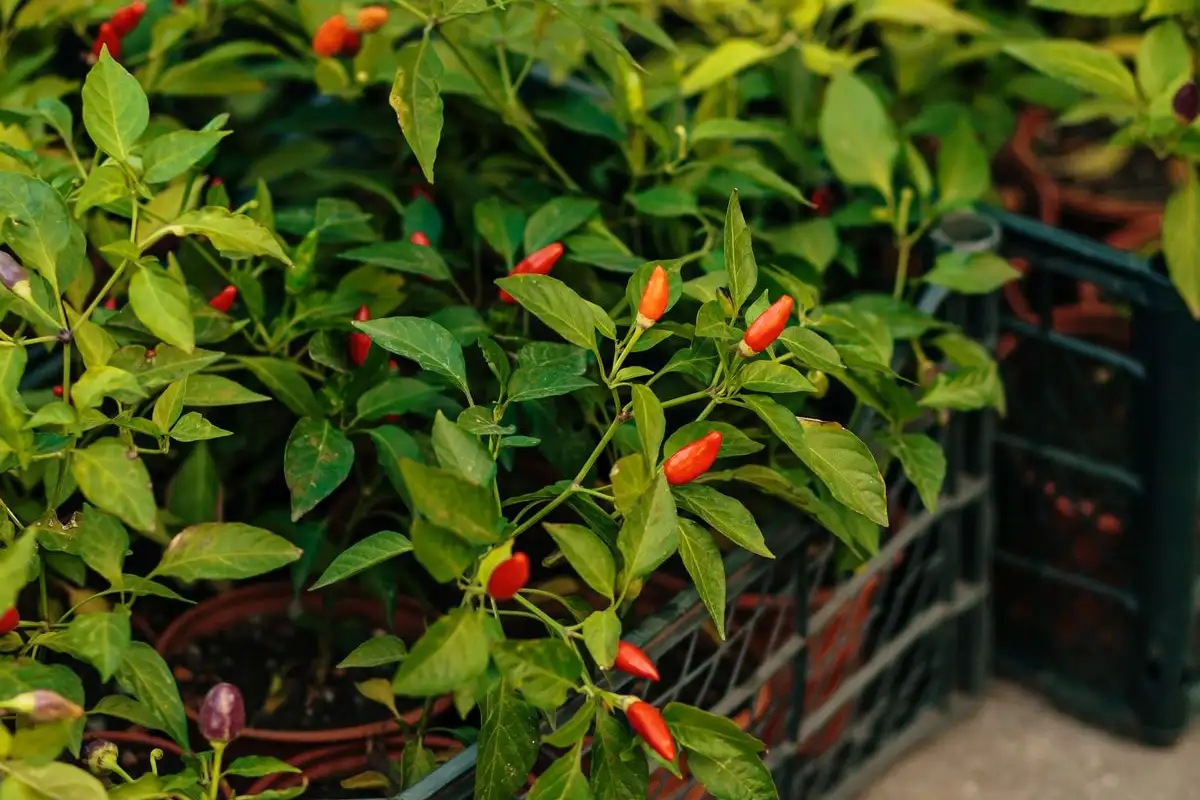
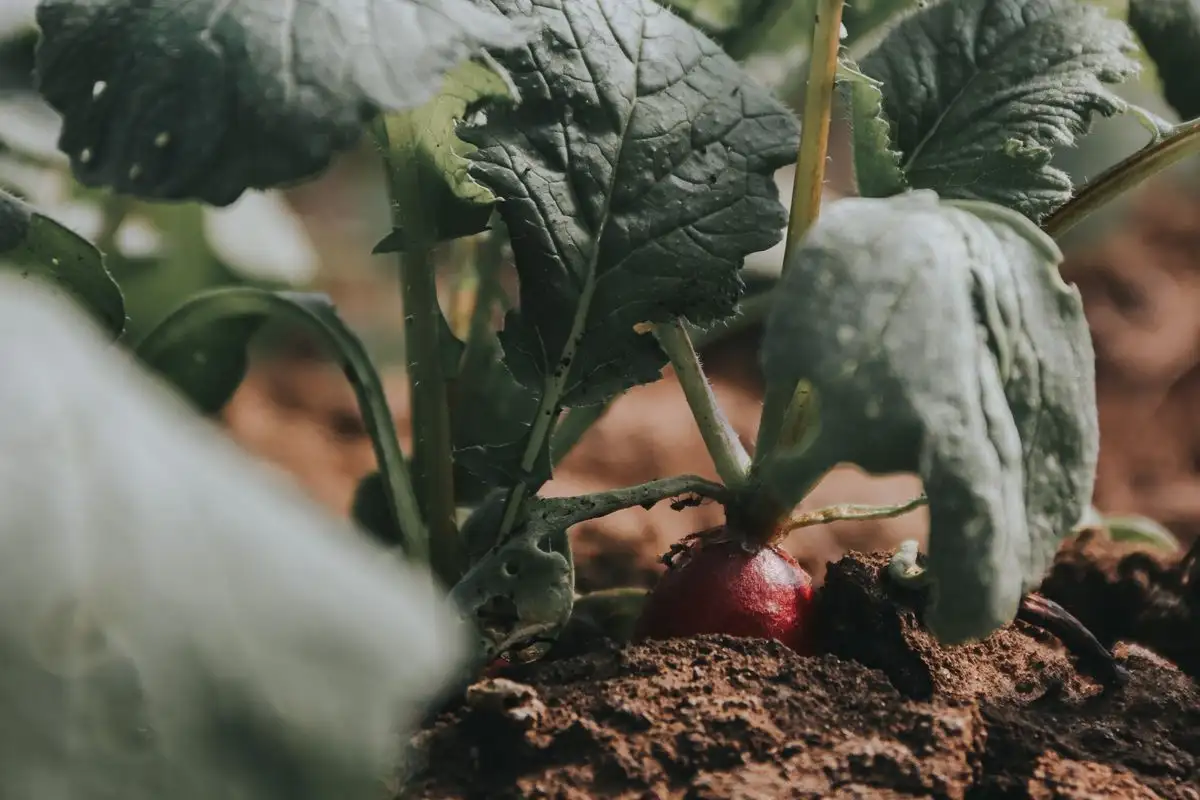
Extension soil guides answer the rotation question with a sequence rather than a list. Heavy feeders such as tomatoes, peppers, broccoli, and cabbage go into the bed holding the freshest fertility. Light feeders such as carrots, onions, beets, lettuce, and most herbs follow once that hunger has drawn the bed down. Legumes close the loop, fixing atmospheric nitrogen through rhizobia bacteria in their root nodules and leaving a nitrogen credit behind for the next heavy feeder. Cover crops such as crimson clover and winter rye carry the same sequence through the off-season, and containers are the one setting where rotation order barely moves the needle, because potting mix runs out of nutrients long before it runs out of places to put plants.
It is late September, and you are standing with me on a third-floor balcony that fits four grow bags, two fabric pots, and a wooden frame bed I built badly in my first year. The tomatoes have gone brown to the shoulders. One green pepper is still hanging on out of pure stubbornness. There is a printed extension guide folded in my back pocket, a paper bag of crimson clover seed on the deck chair, and a notebook page with three empty rectangles drawn on it.
Those rectangles are the whole reason I care about rotation order. Not the theory of it. The rectangles.
The order is arithmetic, not etiquette
The section of the guide I keep coming back to is short and dry. It sorts vegetables by how much nitrogen, phosphorus, and potassium they pull out of a bed over a season, then says to put the largest withdrawal where the largest deposit just happened. Tomatoes and brassicas at the front of the line, roots and alliums behind them, peas and beans after that. That is the entire idea, and it took me two seasons to stop reading it as advice about tidiness and start reading it as a ledger.
Heavy feeders are not villains. They are expensive. A single tomato plant in a full season pulls more out of a bed than a row of carrots will, and a cabbage the size of a bowling ball is mostly nitrogen and water. Light feeders are the crops that can finish a season on what is left in the till. Legumes are the ones that make a deposit instead of a withdrawal. Rhizobia bacteria inside the root nodules convert atmospheric nitrogen into a form the plant can use, and when that plant is cut and left on the bed, a good share of the nitrogen goes back into the top few inches of soil.
Why the legume goes before the tomato and not after it
Put beans after the tomatoes and the nitrogen they fix lands in a bed that is about to be recharged with compost anyway. Put them the season before, and the credit has somewhere to go. Extension guides generally estimate that a legume ahead of a heavy feeder cuts the additional nitrogen you have to supply by 20 to 50 percent. What I can tell you from my own beds is narrower and less impressive: in the second year I ran this sequence, the tomatoes in the pea-following bed were noticeably darker green in June than the ones in the cabbage-following bed, same mix, same watering can, same amount of neglect.
Two things I got wrong before I got them right.
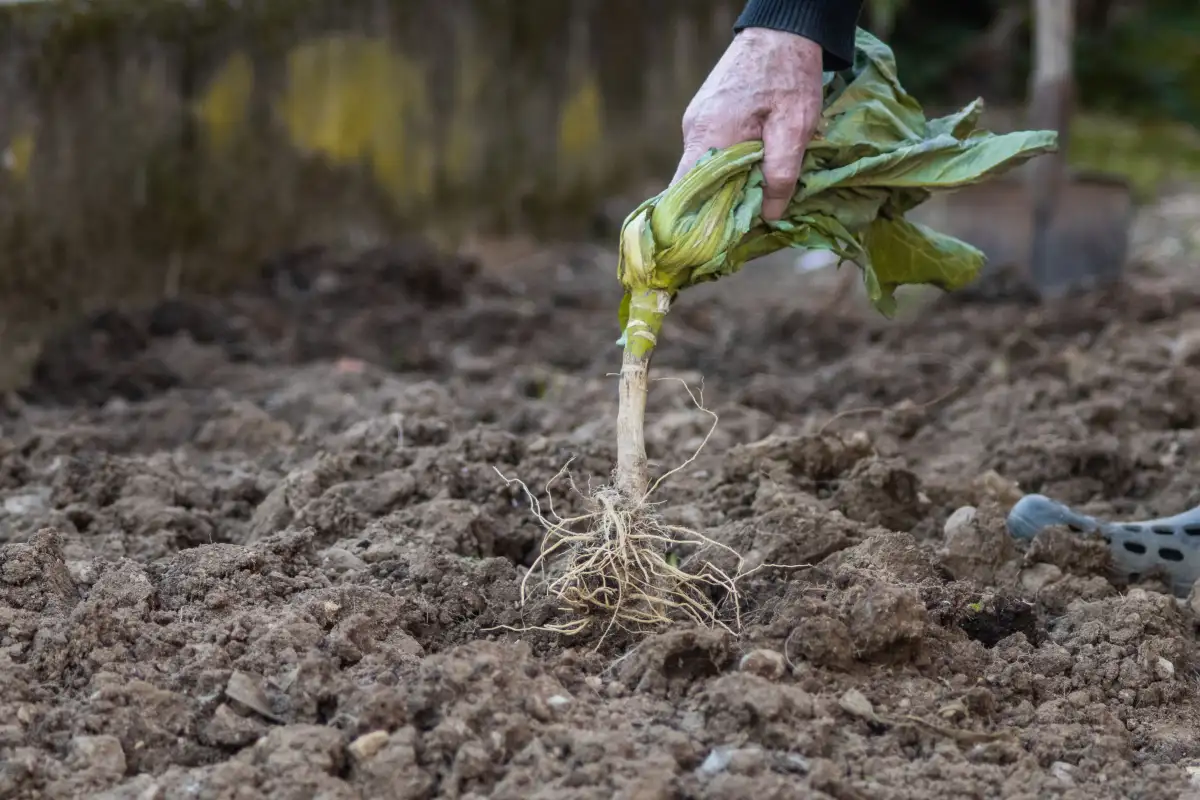
The credit lives in the residue, not in the pods. If you pick the beans and carry them inside, most of that nitrogen walks off with you. Cut the plants at the soil line after the last harvest and leave the tops lying where they fall. The roots and the nodules stay put, and the leafy growth breaks down into the surface layer where next year's transplant roots will actually reach it.
Rhizobia are specific. Peas, beans, and vetch each want their own strain, and in a bed where that legume has never grown, the nodules may not form at all, which means you get the plant without the deposit. A dusting of the right inoculant on the seed costs almost nothing. After three or four seasons of the same legume in the same bed, I stopped bothering, and the nodules kept showing up on the roots when I pulled them.
Light feeders are not filler
Here is the part that gets skipped in most rotation write-ups. Carrots and onions are not the reward for good behavior. They are a second stage of the same withdrawal schedule. Root crops and alliums run on lower nitrogen than a tomato does, and if you push them into a bed that was just heavily amended, you get exactly what the guide warns about: forked carrots, huge leafy tops on small roots, onions that bolt. Running them behind a heavy feeder does two jobs at once. It lets the residual fertility get used instead of leached, and it gives you the crop that actually performs on that level of nutrition.
The guide's shorthand for a bed over four seasons looks like this. Fresh compost and a heavy feeder. Then a light feeder on the leftover. Then a legume to refill the nitrogen. Then back to the heavy feeder with the credit waiting for it. In a garden the size of mine, that is not four beds. It is one bed on a two-year loop and two other beds doing something slightly different, and I will get to that.
Cover crops when you have no spare bed
Standard cover crop advice assumes a bed you can take out of production for a whole season. On a balcony, every square foot is producing something from March until the first hard frost, so the cover crop has to live in a gap that already exists. There are three gaps worth knowing about.
The shoulder-season gap is the obvious one. After you pull the last summer crop in September or early October, that bed would otherwise sit bare until spring, which means bare soil, winter rain washing nutrients down through the mix, and nothing growing. Crimson clover or winter rye sown then covers the ground, holds the root zone together, and gets turned or cut in before spring planting. Crimson clover usually winter-kills in colder zones, which is a convenience, since it lies down into a mat you can plant through. Rye does not. It survives the winter, keeps growing in early spring, and needs to be cut or turned before it goes to seed.
The undersowing gap is the one I use most. Broadcast clover seed under brassicas or under the last of the tomatoes in late summer, when the canopy is still shading the soil, and it germinates in that shade and then takes over the bed once the main crop comes out. You never lose a week of production. You just have two crops in the same square foot, staggered.
The container gap is real but limited. A five-gallon pot that would sit empty all winter can grow rye. Sow it thick, cut it at eight to ten inches, and leave the clippings as mulch. What you should not expect is a meaningful amount of organic matter out of a bucket, and rye roots mat densely enough in a small volume that they are annoying to turn. I do it because bare pots in January bother me more than the mat does.
One caution that never makes it into the cheerful cover crop articles: cereal rye residue suppresses small seeds for a few weeks after you cut it. Carrots sown straight into fresh rye residue sulk and come up patchy. Give it two to three weeks, or move the carrot bed somewhere else that year.
Containers break the rule almost completely
Rotation in a fabric pot is a disease and pest tactic, not a nutrient tactic. Potting mix starts with a small nutrient reserve to begin with, and every watering pushes soluble nitrogen and potassium out the drainage holes. A tomato in a five-gallon pot is being fed by you, not by last year's beans. Rotating what goes in the pot can interrupt a root rot or a persistent pest cycle, and that is worth doing. It does not change the fertilizing schedule by much of anything.
What actually helps in containers is replacing a third to a half of the mix each year, topdressing with compost, and watering slowly enough that you are not flushing the pot every single day. I keep the rotation logic for the frame bed and the two big fabric pots, and I treat the grow bags as what they are: a media I am going to refresh anyway.
The compromise the guides leave to you
Extension guides rotate on two axes at once. One is nutrient demand, which is what this whole article has been about. The other is plant family, because tomatoes, peppers, and potatoes share soil-borne disease problems, and following one with another is how you build up a pathogen population. A four-bed farm plan can satisfy both axes without much trouble.
A balcony cannot. If your carrots need to go in the only bed that was not recently amended, and the family axis says something else, you satisfy one and let the other slide. That is the tradeoff nobody writes down, and it is the one that matters most in small spaces. What I do instead is put the disease pressure on cleanup and fresh material: pull the whole plant including the roots, do not compost the diseased material, and topdress with finished compost between crops so the biological side of the soil gets reset even when the physical layout does not change much.
What is on the notebook page
So, back to those three rectangles. Bed one gets peas in early spring, cut and left, then tomatoes. Bed two gets the heavy feeder first, since it has last year's compost, then carrots in the fall slot. Bed three gets brassicas, then a light feeder, then clover over winter. Pencil, not pen, because I redraw it every February after I see what actually survived.
Under the rectangles I write the date I sowed the cover crop and the date I cut it. That one habit has done more for my soil than any rotation chart, because it tells me whether the clover actually had time to fix anything or whether I sowed it so late it just sat there.
The seed rattles in the paper bag when I tip it out. The mix in the frame bed is dry and gritty between my fingers, and the clover goes down unevenly, heavier on the sunny end, the way everything on this balcony ends up. I scratch it in with a hand rake, water it once, and put the guide back in my pocket. The order is written down now. What happens next is mostly up to the weather, the rhizobia, and whether I remember to cut the rye before it seeds.