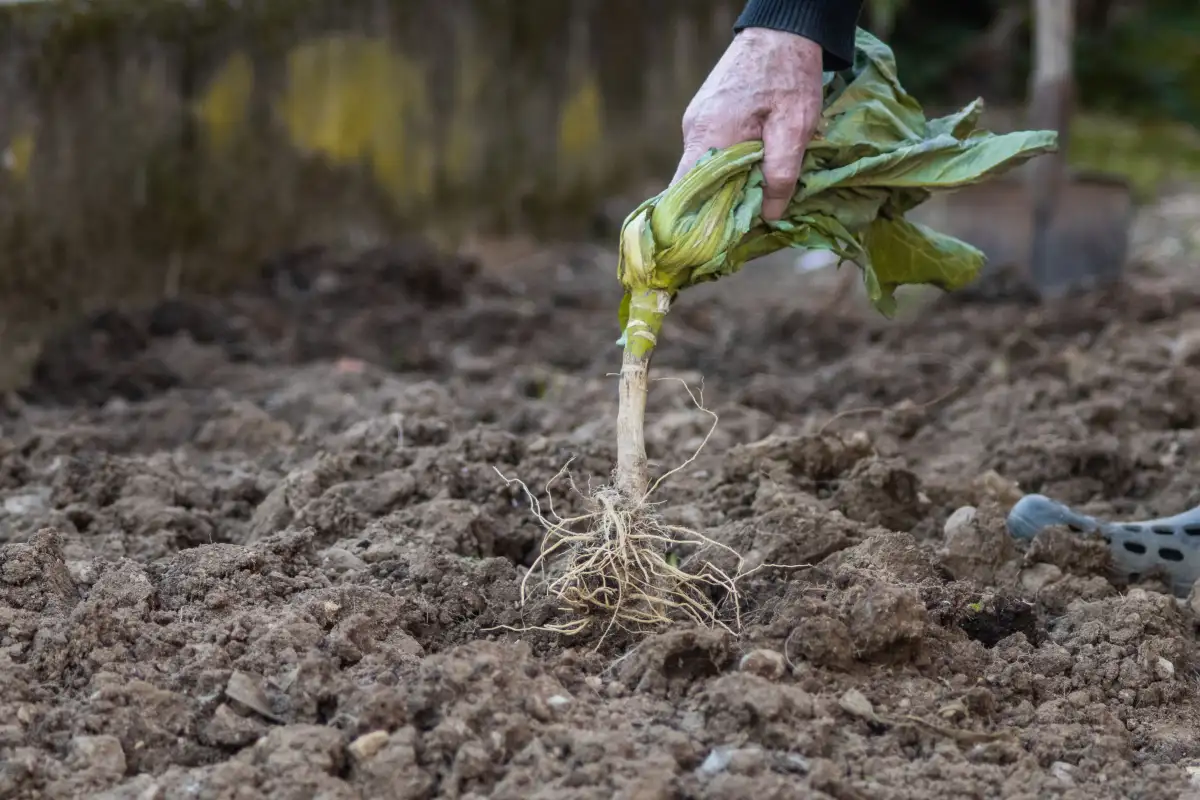
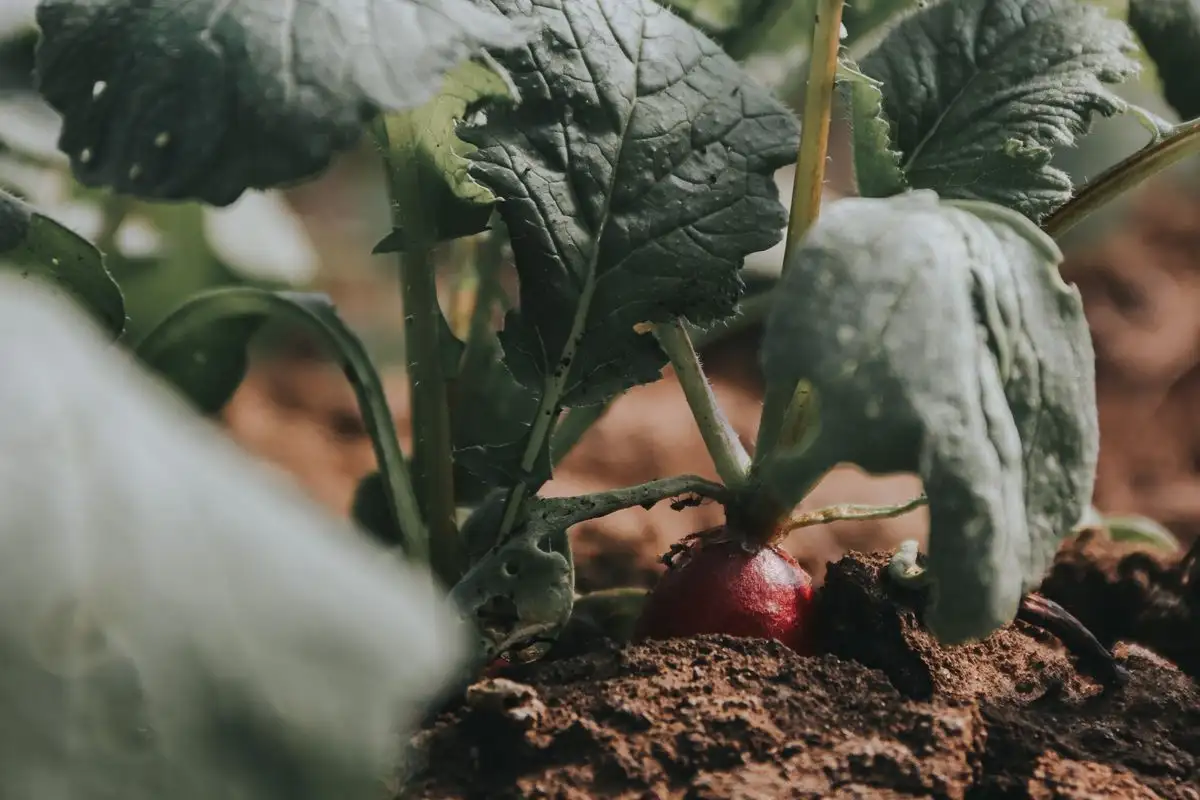
Rotating crops in containers does not mean moving plants between beds, because there are no beds. It means three things a balcony can actually support: replace or heat-treat the potting mix, move the pots themselves to a different position each season, and keep the same plant family out of the same container two years in a row. The rotation happens in the mix and in the layout of the pots, not in the ground.
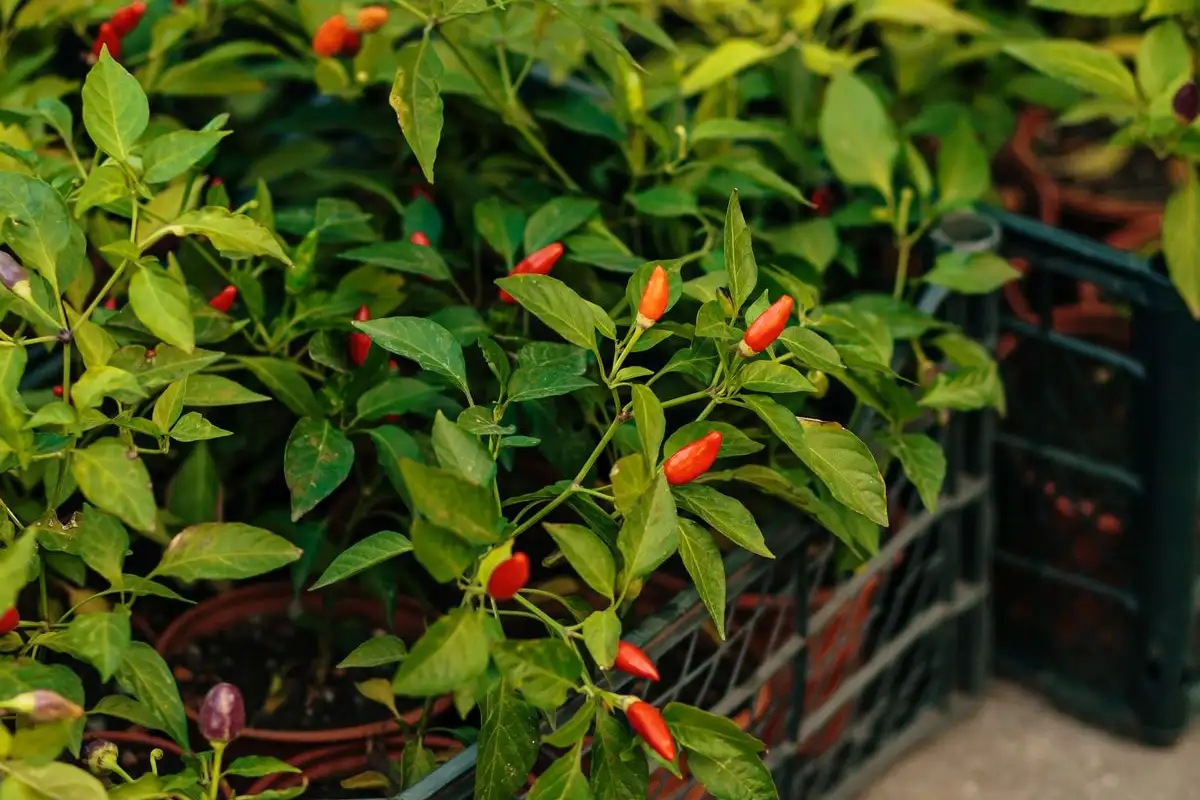
I learned that on a gray Sunday in November, sitting on cold concrete with a spent tomato pot tipped on its side, working my fingers under the root ball. The mix came away in one mat, pale roots woven through it like felt, and it smelled wrong. Sour. A little like a wet basement. That pot had held a cherry tomato and a basil plant from May to October, and it had been gorgeous the whole time — fed every ten days, watered every morning before work. Underneath, the roots had colonized the entire volume of the pot, and something in there had started blackening the lower stems in September. I cut the plant down, dumped the mix into a bag, and stood there on the balcony with my hands dirty, realizing I had been treating a five-gallon pot like a patch of ground that could just rest.
A pot is not a patch of ground. In a field, you rotate because pathogens build up in soil and a four-year gap starves them of host roots. In a container you have a few gallons of mix, and whatever got in there has nowhere to go. Fusarium and verticillium are the two names worth knowing — both produce resting structures that sit in potting mix for years, surviving drying, surviving a frozen winter on a balcony, surviving being bagged up in a storage closet. Pythium, rhizoctonia, phytophthora, sclerotinia: same story, different symptom. Freezing a pot solid in January does not sterilize it. That is the single most useful thing I know about container rotation, and it took me two lost tomato seasons to learn it.
The nutrient side gets talked about more than it deserves. Yes, a heavy tomato crop pulls a lot out of a small volume of mix, and yes, some mixes go sour, compact, and turn hydrophobic after a season. But I am feeding containers with liquid or slow-release fertilizer all season anyway, and that resets the nutrient picture in a way a garden bed never gets reset. So in a container, rotation is mostly a disease play. That reframes everything downstream.
Replacing the mix versus cooking it
Dumping the mix is the honest answer, and it is what I do with anything that had a sick plant. Potting mix is not expensive enough to justify gambling a whole season on it. But the volume adds up on a small balcony, and there is a middle path for mix that grew healthy plants.
If the plants in a pot finished the season clean — no wilting, no stem rot, no sudden collapse — that mix can go into a container growing something from a different family next year. Not back into a tomato. Not into a pepper, either, since they are the same family. Into lettuce, or herbs, or a bush bean.
Solarizing is the other option, and I want to be straight about its limits. You moisten the mix, seal it in a heavy black plastic bag, and leave it in the hottest spot you have — against a south-facing wall, on pavement, in the strongest weeks of summer. The mix has to actually get hot and stay hot; this is not a passive process, and a bag sitting in partial shade on a north-facing balcony in a cool coastal summer is just a clean-looking container of inoculum. When I lived in a place with real July heat, bags left out for several weeks came out smelling like cooked earth. On a north-facing balcony I have also had bags come out unchanged after a month. If you cannot commit to steady, brutal heat, replace the mix instead and stop second-guessing yourself.
One thing I am careful about: spent mix from a diseased container does not go into a community bed or a compost pile I plan to spread on vegetables. It goes in the trash.
Moving the pots, not just switching the plants
Switching what you plant is only half of it. The pot has to move.
On a balcony, position is not cosmetic. The railing edge dries out faster and takes the wind. The wall side holds heat and stays warmer overnight, which matters for peppers and eggplant. The corner nearest the building stays damp longer and gets less air. Aphids, whitefly, and spider mites do not distribute themselves evenly across that space either — they come in from somewhere, usually a neighbor's window box or one infested pot, and the plants in their path get hit first.
So the rotation I run is a clockwise shift. Six pots, grouped into three blocks of two by plant family. Every spring, block one moves to where block two was, block two moves where block three was, block three moves to block one's old spot. Each block gets a different microclimate, a different wind exposure, and a different set of pest pressure than it had the year before. It is not a four-year field rotation, and it does not pretend to be. What it does is break the relationship between a specific pot of mix and a specific family of roots.
I label the rim of every pot with a strip of masking tape and a paint pen — year and family. That sounds fussy until you are standing on the balcony in April with six pots of bare mix and no memory of which one had the potatoes.
How the families actually break down
- Tomato, pepper, eggplant, potato: same family. A potato grow bag is not a rotation partner for a tomato pot.
- Kale, broccoli, cabbage, arugula, radish, turnip: brassicas.
- Onion, garlic, leek, chives: alliums.
- Beans and peas: legumes. They fix nitrogen, but since you are fertilizing containers anyway, that benefit is small — what matters is that they are not tomatoes.
- Cucumber, squash, melon: cucurbits.
- Lettuce, and the leafy greens people forget are related. Chard, beet, and spinach are all one family, and carrot, dill, parsley, and cilantro are another. Basil and mint are both Lamiaceae, so basil-then-mint is not a rotation, it is the same rotation-shaped mistake.
Grow bags and self-watering containers need more than a shuffle
Fabric grow bags and self-watering planters rotate the same way in principle, but they hide more. A grow bag holds root hairs and fertilizer salts in the weave, and a bag folded damp into a closet over winter is a nice dark home for spores. Empty it completely, brush the inside walls, wash it, and let it dry bone-dry in the sun before it goes into storage.
Self-watering containers are the ones people overlook. The reservoir and the wick are the problem. Roots grow down into the wick and rot there, and the reservoir holds a warm, dark, wet film all season. Pull the wick, scrub the reservoir, check that the overflow hole is not clogged with roots. If the reservoir smells bad when you open it in spring, that tells you something. You cannot solarize a plastic reservoir, so hot soapy water and a thorough rinse is the practical approach, and fresh mix every time. Reusing mix in a self-watering pot is where I have seen the worst failures.
The same logic applies to vertical towers and railing planters: rotate the whole column's position, and do not put the same family in the same tier two years running. Stakes, cages, and trowels carry spores too. A ten-minute scrub of the stakes at the end of the season has saved me more than one spring.
Where container rotation stops helping
Two things it will not fix.
First, airborne disease. Late blight and powdery mildew arrive on the wind, not from your mix, and moving pots around does nothing about them. Rotation is a soilborne-disease tool.
Second, small balconies. If you have two pots and a railing box, you do not have a rotation — you have mix replacement, and that is fine. Replace the mix, plant what you want, and stop feeling like you are doing it wrong. And sometimes the pathogen is not in the mix at all but on the pot wall, the saucer, or the concrete underneath. Scrub the pot, wash the saucer, sweep the floor. Rotation is a habit of not letting the same roots meet the same problems in the same place, and on a balcony that habit lives in your hands and your layout, not in a field plan.