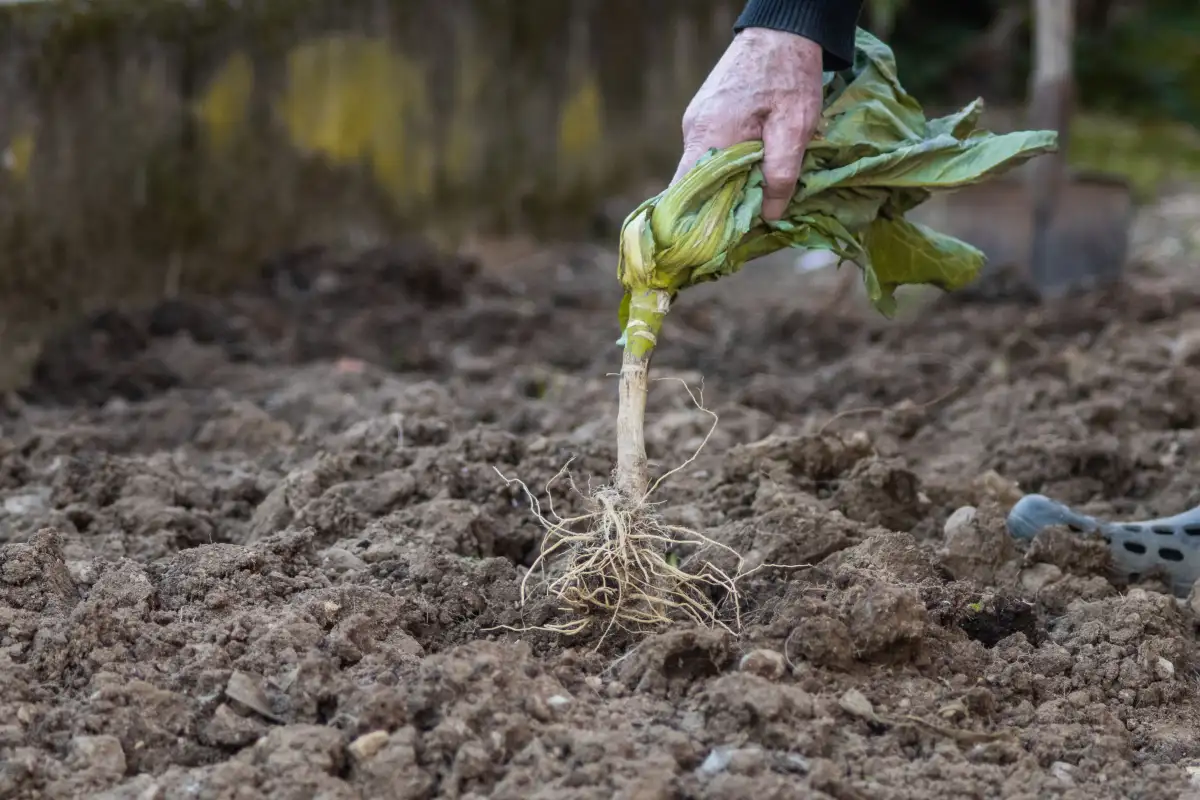
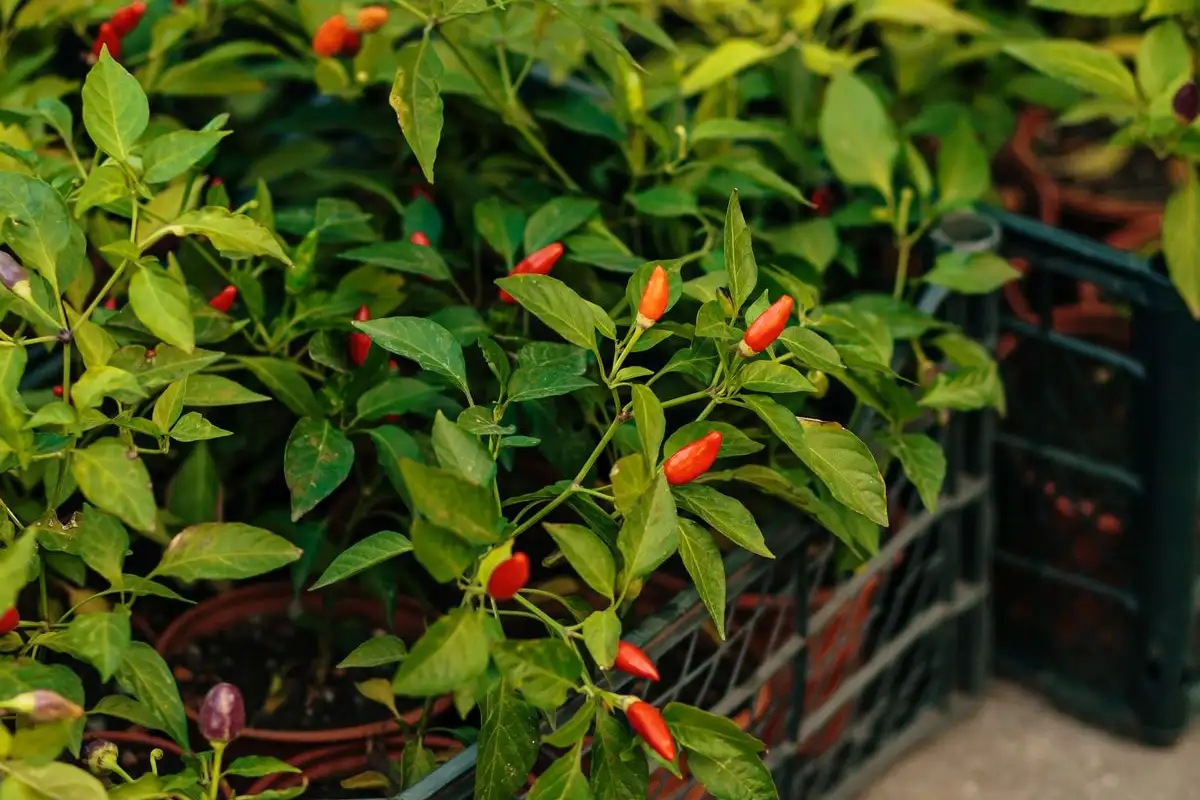
A four-year rotation for a small raised bed or a set of containers runs legumes, then brassicas, then roots and alliums, then fruiting crops, and then back to legumes. Each year the group in a bed moves one position forward, so no plant family and no feeding level sits in the same soil two years running. On ground this small, the bed is the unit that moves, not the crop, and a quarter of a bed or a single pot can stand in for a bed when you don't have four.
I keep the whole system on one sheet of paper taped inside the lid of the tote that holds my trowels. Four rectangles, drawn with a ruler, one per bed, and inside each rectangle the family that spent the last season there. In pencil. I have crossed out and rewritten that sheet enough times to know better than to use a pen.
Stand at the back step and the layout is obvious: the north bed, the two long ones along the fence, the short one by the gate, and the strawberry patch in the corner that never moves and never gets a rectangle. That corner is the first thing to settle, because perennials are not in the rotation at all. Asparagus, rhubarb, strawberries, and the chives that were there before I started keeping the sheet are permanent. They get marked off, and the cycle runs around them.
The order is a nutrient curve more than a disease trick
That part I had backwards for years. I assumed rotation was mostly about soil disease, that moving crops around kept pathogens from building up in one spot. It does some of that. But in a bed that's four feet by four feet, the more reliable payoff is the feeding sequence. Legumes put nitrogen in the ground. Brassicas take a lot of it. Roots and alliums take very little and generally resent rich soil. Fruiting crops take a lot again. The order is a curve: charge the bed, spend hard, spend light, spend hard, charge again.
Two details fall out of that. When the pea vines finish in June, cut them at the soil line instead of pulling them. The nitrogen lives in the roots and nodules, and yanking the plant takes some of it out of the bed with the vine. And the brassica year is where the legume nitrogen actually gets spent, which is why brassicas sit in position two and not position four.
What actually goes in each year
Legumes. Peas early, then bush or pole beans in the same ground once the peas are done. In a 4x4 bed a double row of peas and a block of bush beans fit without much arguing. Field peas and clover count here too if you're using the bed for cover rather than food.
Brassicas. Cabbage, broccoli, cauliflower, kale, collards, Brussels sprouts, bok choy, mustards, arugula. Heavy feeders, and they do better with a pH near neutral, so if you limed anything the season before, this is the year that collects on it.
Roots and alliums. Carrots, beets, parsnips, onions, garlic, leeks, shallots, scallions. Light feeders. The thing that trips people up is compost, because this is the year to skip the generous top-dress. Rich, fresh compost on carrots forks them and pushes leaf at the expense of root. A thin layer of finished material is plenty.
Fruiting crops. Tomatoes, peppers, eggplant, tomatillos, squash, cucumbers, melons, corn. Heavy feeders again, and the year the bed is hungriest.
The brassica-versus-root problem
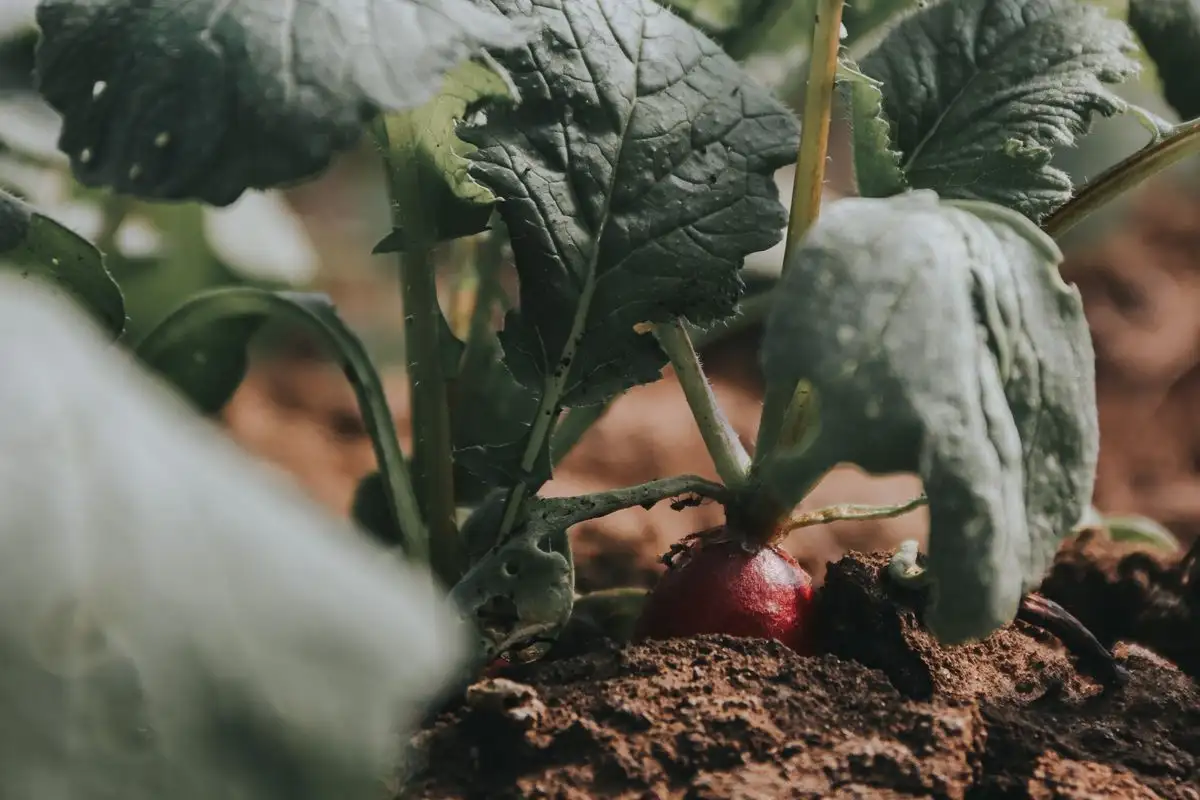
Radishes and turnips are brassicas. They also behave like roots, finish fast, and are exactly what you sow into a gap in June. The four-year grouping is by feeding level as much as by family, and radishes are where those two ideas collide.
My rule: long-season brassicas go in the brassica year and stay there. Radishes and turnips go wherever there's a gap, but never into a bed that held brassicas the year before. Nobody gets clubroot from a three-week radish crop. They might get it from dropping a radish crop in as a placeholder and then forgetting that the bed is now a brassica bed for the next three years.
The same collision happens with beets, chard, and spinach, which aren't roots at all but are light feeders that slot neatly into year three.
When you don't have four beds
Two beds is a two-position rotation, which is too short to mean much for brassicas or nightshades. Three ways out, roughly in order of how well they work.
Split the beds into halves. Two beds become four positions: A-north, A-south, B-north, B-south. The groups still move in a fixed circuit, one position per year, so every position sees a different family each season. The halves are only a few feet apart, so this does very little for anything that crawls. What it does protect is the feeding sequence, which is most of what you're buying anyway.
Use containers as extra positions. A 7-gallon pot or a fabric grow bag is a legitimate rotation slot. It works by a different mechanism, though, and that's worth being clear about. If you dump and refresh the growing medium between seasons, the container largely resets. Clubroot spores and root-rot organisms that overwinter in soil don't carry over in fresh mix. What you get from rotating containers is pest disruption and, honestly, a rule that stops you planting tomatoes in the same pot in the same corner every year out of habit. If you're reusing mix for three or four seasons, the pot is behaving like soil and rotation matters more.
Shrink the bed and move the quarters. A single 4x4 split into four blocks works, but the blocks are inches apart. Treat the disease value as close to zero and the nutrient value as fully intact.
Where the standard sequence quietly fails
The four-year order puts heavy feeders in year two, right after the legumes, which is correct. It also puts heavy feeders in year four, right after the light feeders, which is not. By the time tomatoes go in, the bed has been drawn down for a full season.
I fix that from the back end. When the carrots and onions come out in autumn, I sow a legume cover, field peas, or crimson clover where the winter is mild enough to carry it. It doesn't fix much nitrogen before the cold stops it, but what it does fix shows up by spring, and the roots do their own work over winter. Where that won't survive the winter, the answer is simpler and less elegant: two or three inches of compost forked into the fruiting bed before planting.
The other failure is the year-four group itself. Nightshades and cucurbits are different families sharing one slot. Growing tomatoes and cucumbers in the same season is fine, but split the bed and swap the halves the next time you land on year four. Otherwise one side gets nightshades every four years and the other side gets them too, and the break you thought you had isn't there.
And the honest limit: on a plot this small, rotation is a nutrient tool and a pest-disruption tool, and only a partial disease tool. If clubroot is already in a bed, no ordering of crops clears it in four years. Neither does rotating around Verticillium. At that point you're replacing soil or moving that family into containers permanently, and the rotation sheet turns into a map of what not to plant.
The map is the part that actually gets used
Write families, not crop names. Kale reads as a leafy green on a sheet of paper in March. Brassica does not. A map that says brassica catches the radishes you forgot about and the arugula that reseeded itself.
Label the beds twice: once on the map, once on a stake or the rim of the pot, in paint pen rather than marker, because marker fades to nothing by August. Then photograph the beds in late summer when everything is waist-high and the stakes are buried. I have more than one picture of a wall of leaves with no visible ground, and it has stopped me from repeating the same mistake twice.
Three years in, the sheet stops being a record and starts being a plan. That's the shift worth waiting for. You quit asking what was here before and start knowing what's coming next.