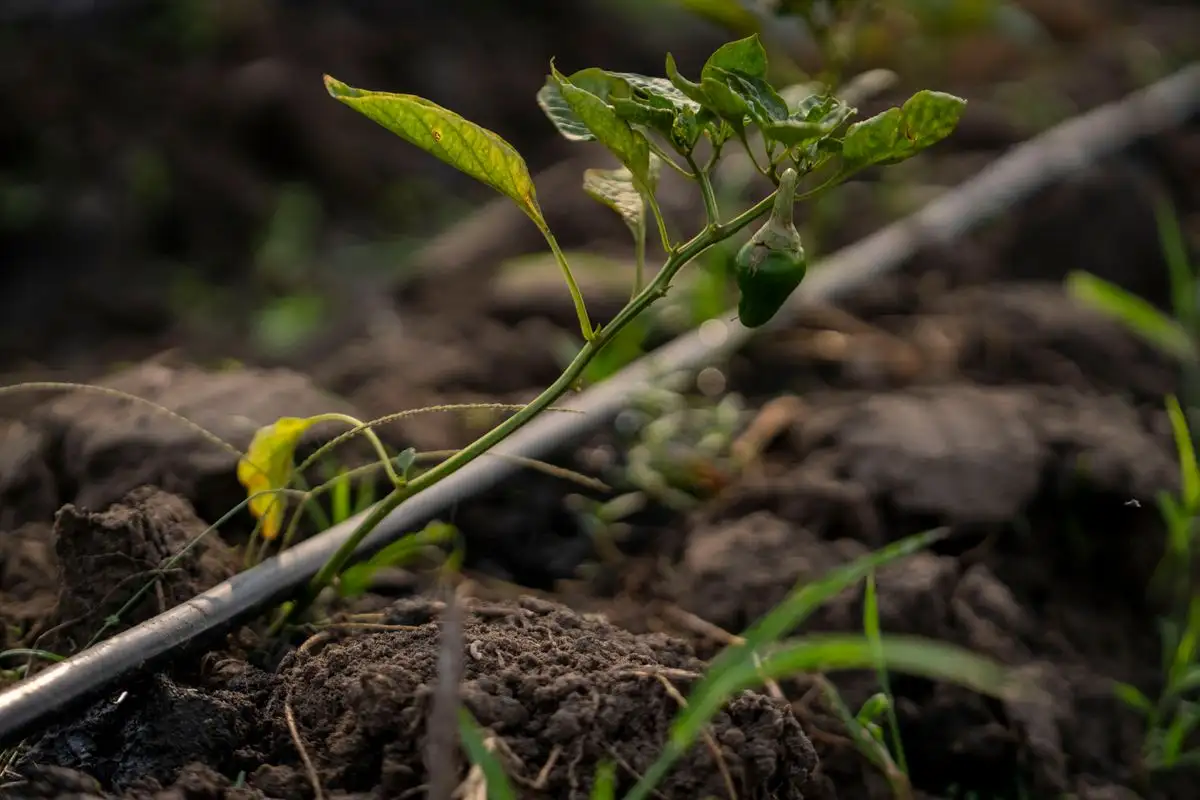
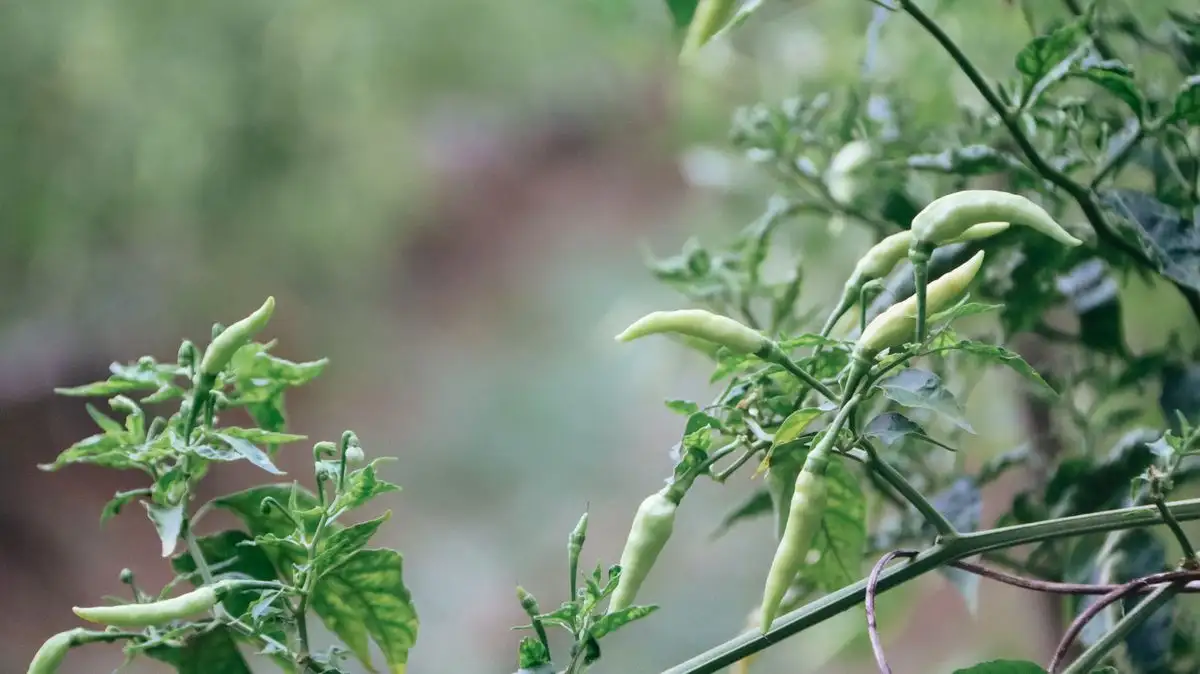
Run time is arithmetic before it is a schedule: add up the gallons per hour of every emitter in the zone, divide the gallons you want to apply by that total, and multiply by 60. Eight emitters rated at half a gallon per hour give you 4 gallons an hour, so 11 gallons takes 165 minutes. The division is the easy part. The hard part is deciding which gallons you actually want, because drip wets a band of soil and not the whole bed, and the usual inches-per-week figure only becomes a number of gallons after you pin it to the wetted area.
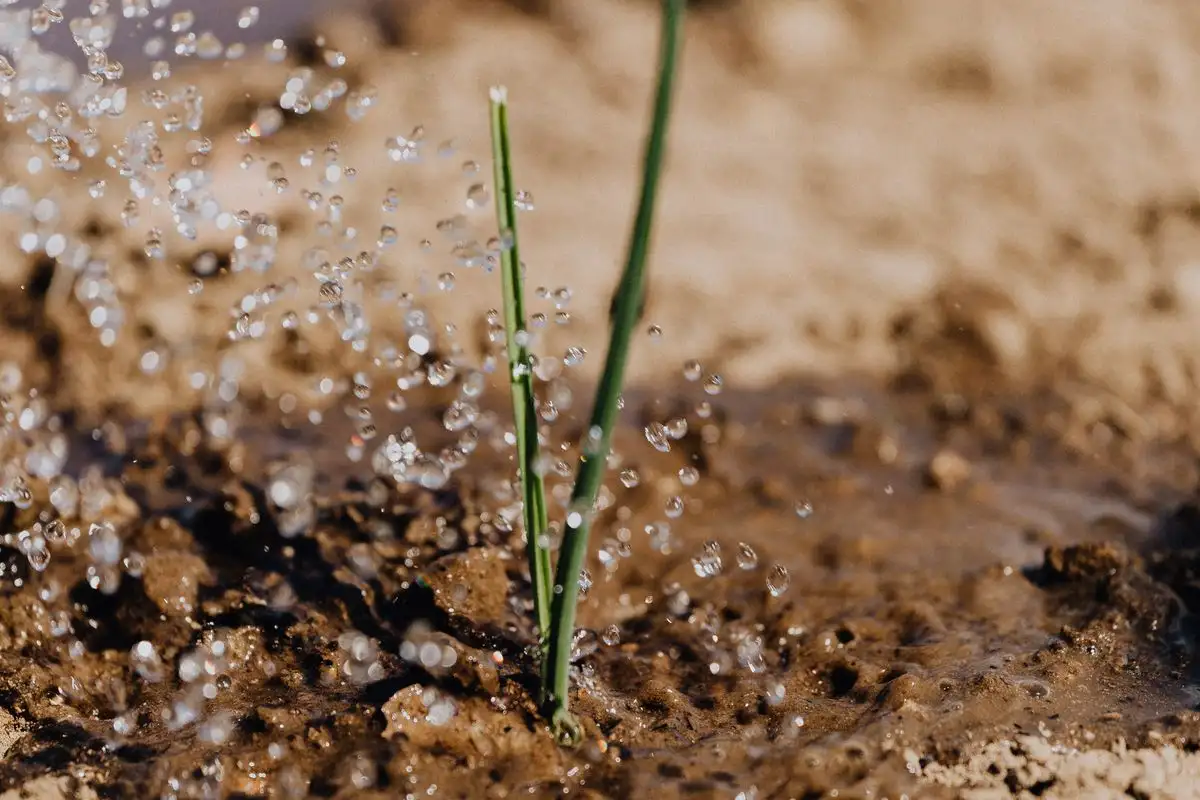
Come stand at my beds with me in the third week of July. The timer has just clicked off. The soil is dark in a strip about eighteen inches wide down the middle of the row and pale and dry two inches outside it. That strip is the whole problem, and it is also the whole answer. A run time borrowed from the gardener two streets over — different emitter spacing, different bed shape, different soil — has almost nothing to say about mine.
I kneel at the edge of the dark strip, push the trowel straight down, and lever up a plug. If the soil six inches down holds together when I squeeze it, the cycle did its job. If it powders apart at four inches, then nothing on the timer display matters, because the water never reached the roots. Everything below is in service of that plug of soil.
Start with the zone, not the clock
I count emitters the way I count anything else: out loud, twice. The tubing in my beds is printed 0.5 gallon per hour at 12-inch spacing, which means one emitter for every foot of line. An 8-foot row is 8 emitters. Two lines in one bed is 16. The 1-gph button emitters I push in beside the peppers and the eggplant count double, and it is easy to forget them. I write the zone total on the back of the shed door, because I will want it again in August and I will not remember.
Then I check whether the label is telling the truth. Hold a measuring cup under one emitter for exactly one minute. A half-gallon-per-hour emitter should give you about two tablespoons; a one-gallon emitter, roughly four. If the cup comes up half empty, the pressure at the end of the run is low, the printed rating is fiction, and every minute calculated from it is fiction too. Pressure-compensating emitters hold their rating better across a long run than the cheaper non-compensating kind, which is worth knowing before you build a whole season's schedule on a number printed in small type.
The square footage of the bed is the wrong number
This is where most schedules go wrong. A 4-by-8 bed is 32 square feet, but a single line down the middle wets a band maybe a foot and a half wide — call it 12 square feet of actual watered ground. Vegetables generally want somewhere around 1 to 1.5 inches of water a week, and one inch spread over one square foot is about 0.62 gallons. So a tomato planting in midsummer on that bed wants roughly 12 x 1.5 x 0.62, which lands near 11 gallons a week. With a zone that puts out 4 gallons an hour, that is 2.8 hours — about 165 minutes — spread however I like across the week.
Had I multiplied by the full 32 square feet instead, I would have arrived at 30 gallons and a run time close to seven and a half hours. That is the number that convinces people drip irrigation is useless: the bed goes soupy, water runs off the sides, and the plants look worse than they did under a hose. The wetted-area conversion is not a refinement. It is the difference between a schedule and a guess.
One honest caveat. By late August the tomato roots have long since left that eighteen-inch band behind and filled the bed. The plant is drinking from soil the emitters never touch, and I nudge the number up by about a third during the heaviest fruiting stretch. The arithmetic gives me a floor; the trowel tells me whether the floor is enough.
Split the weekly total, and expect the split to follow your soil
On my clay the 165 minutes cannot go on in one shot. The surface goes glossy in twenty minutes and the rest sheets away down the row. Three cycles of about 55 minutes, spaced a day or two apart, put noticeably more water into the root zone than one long soak — same weekly total, very different result. Sandy ground behaves the opposite way: it takes water fast and holds almost none, so a long run pushes moisture below the roots. There I would use five or six shorter sessions across the week rather than three long ones.
The number you set in April will be wrong in July
Reference evapotranspiration — the combined loss of water from soil and leaves — commonly runs two to three times higher in midsummer than it does in spring. The 40-minute cycle that was generous on cool, damp April soil can be a third of what the same bed needs once the heat settles in. Same emitters, same bed, different number. I reset the timer at least twice a season: once when fruit starts setting, and once more when the real heat arrives and stays.
Seedlings run on a different clock entirely
A new transplant has roots the size of a fist. The emitters are wetting six inches down; the seedling is living in the top two. Running the zone long enough for a mature plant simply drowns it, which is why new transplants get short, frequent cycles — 15 or 20 minutes, more often — or a cup of water by hand until their roots reach down into soil the drip is already keeping damp. Once the roots arrive where the water is, the regular schedule takes over.
The trowel check, a few hours later
Go out a few hours after the cycle, not during it, when the water has had time to move. Push the trowel in six inches — that is the depth most vegetable crops are feeding at — and squeeze the soil from the bottom of the hole. It should hold together in your hand without dripping. Crumbly and dry means add minutes. Soggy and sour-smelling means cut them.
Soil texture decides how far water spreads sideways, and no timer can see that. In sand, water drops nearly straight down and the wet band stays narrow, which is why closely spaced emitters matter more there. In clay it spreads wider but moves slower, and the band you dug into in April will look different by July. That is why I recheck every couple of weeks instead of setting a number in spring and walking away from it.
The timer is a clock, not a gauge. It counts minutes faithfully and knows nothing about your soil, your emitters, or how deep the water went. Do the arithmetic once, honestly, using the wetted band rather than the whole bed — and then let a trowel and a squeeze tell you whether the arithmetic was right.