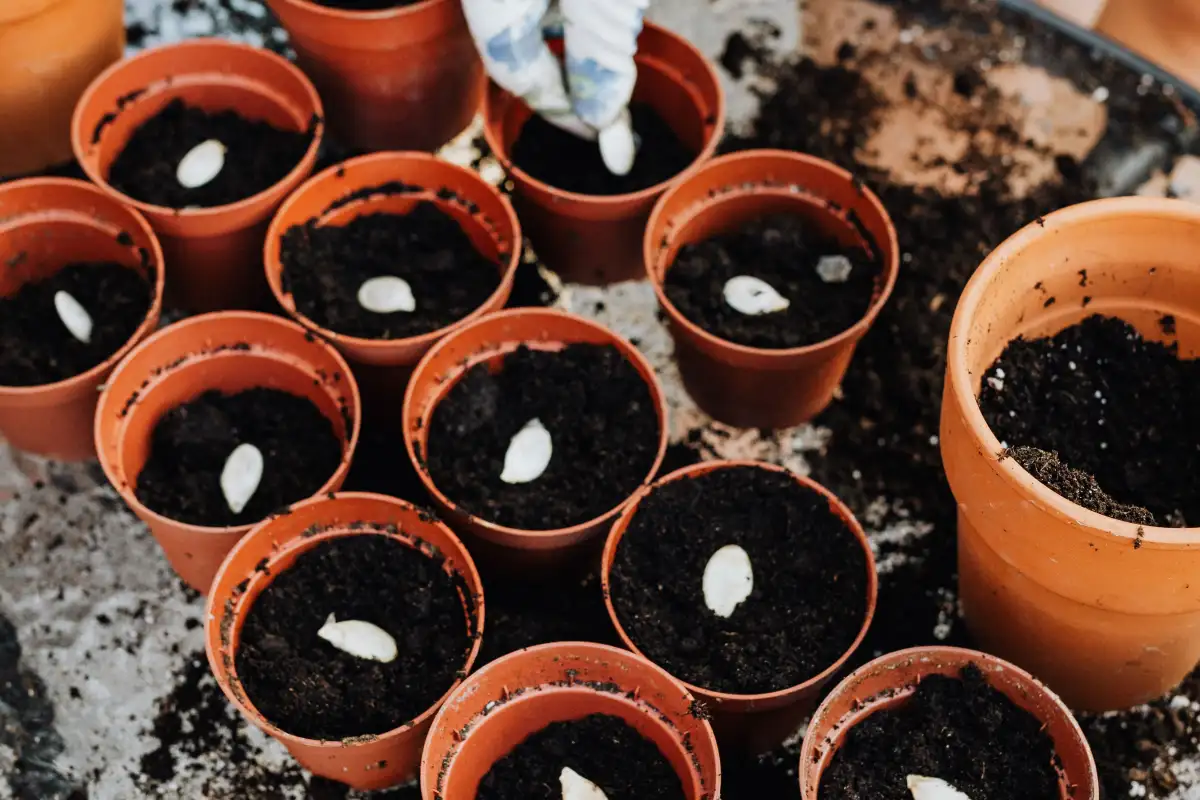
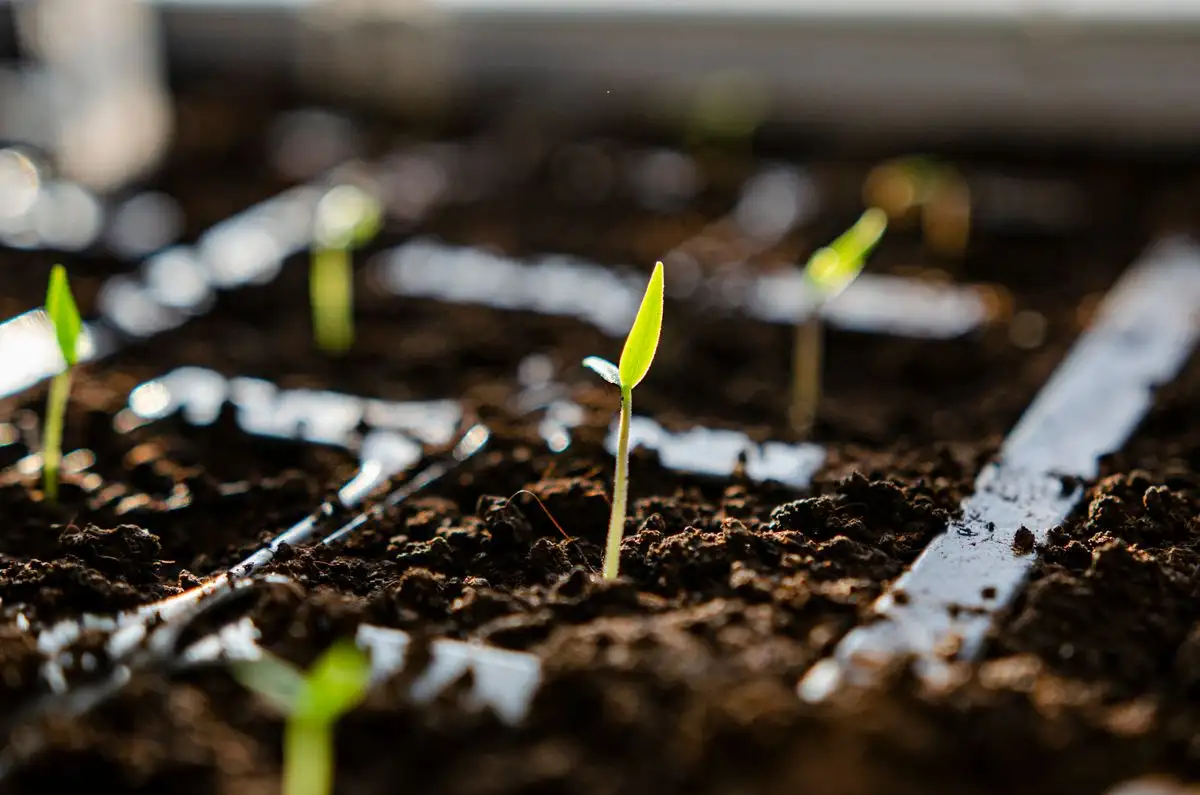
Hardening off takes seven to fourteen days of measured, hour-by-hour exposure, not one afternoon on the porch. Seedlings grown indoors carry leaves with thin cuticles and few protective hairs, and those tissues thicken only in response to real sun and real air movement, a little more each day. Seven days is the floor, and it holds only when the nights are warm enough for the crop in question: roughly 50°F for tomatoes and peppers, about 40°F for lettuce and brassicas. Below that, the plants come back inside at dusk no matter what day of the schedule you are on.
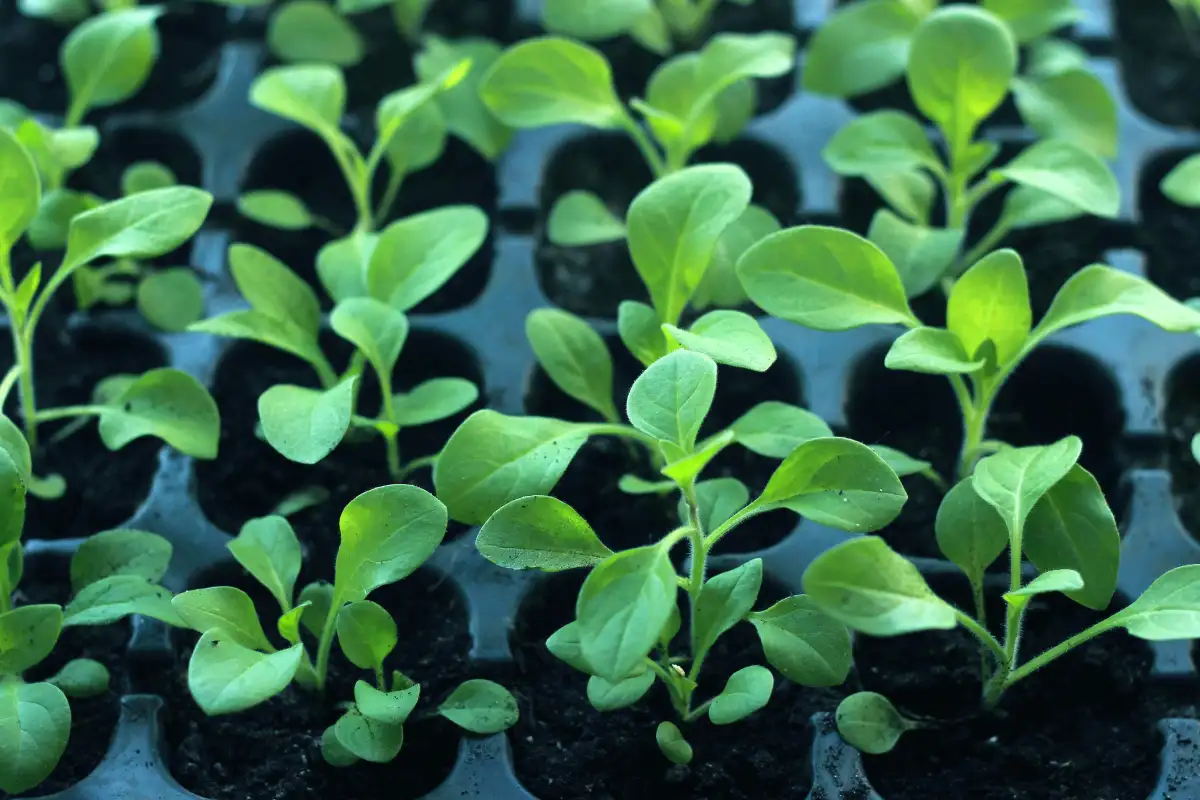
I started counting hours instead of days after a tray of tomatoes I set out on a bright April afternoon turned the color of paper between the veins by four o'clock. Not the whole leaf, just the tissue between the midrib and the edges, bleached out like something left in a copy machine. It never greened back. The plant lived, but those leaves stayed a dead cream color for the rest of the season, and I spent six weeks looking at them.
That was the year I stopped thinking of hardening off as a thing plants do and started thinking of it as a thing I build into them, an hour at a time.
What is actually changing in the leaf
A leaf that unfurled under a shop light in a 70-degree room is a soft, thin thing. It has a waxy outer layer, the cuticle, that never thickened because nothing indoors ever demanded it. It has fewer trichomes, the tiny hairs on the surface, because there was no wind to break up the still air right above the leaf. Both of those are physical structures. The plant builds them in response to light intensity and air movement, and building them takes days, the same way it takes days for you to get calluses on your hands.
So when I say a seedling gets used to the outdoors, I mean it literally lays down more wax and thicker epidermal walls. That is why day one in full sun does damage. There is no defense layer yet. There is only the unprotected surface of a leaf that has never seen UV or felt moving air, and it burns the way your shoulders burn on the first beach day of the year.
Seven days, counted in hours
Here is the shape of the week I actually run on a balcony with a north wall, a stairwell corner, and one tall rosemary pot that does duty as a windbreak. Your spot names will differ. The progression should not.
Days one through three
Day one is one hour, in shade, in the most sheltered spot you have. For me that is the concrete floor of the balcony behind the railing, next to the downspout, where the building blocks the light until nearly noon. Not the ledge. The floor, because concrete holds a little warmth overnight and the air down there moves less.
Day two is two hours in the same place. Day three is three hours, still shaded, or with thirty minutes of early morning sun, which is the weakest light of the day. I watch the leaves on day three for any dulling of color. A slight flattening of the green is fine and expected. Distinct pale patches are not.
Days four and five
Day four I give them four hours, moving into morning sun and back into shade by mid-morning. This is usually the day the first real reaction shows up if I have pushed too hard, and it shows on the upper leaves, the ones that faced the light.
Day five is five to six hours, and I move the tray out of the wind shadow for the first time. Not into the open. Out of the dead zone. There is a difference between a spot that is protected and a spot that is airless, and the plant needs the second kind less every day.
Days six and seven
Day six is a full day outside, back in at dusk. Day seven is another full day, and then the first night out, if the forecast allows it.
Every one of those days adds an hour of light and a bit more moving air. That is the entire mechanism. There is nothing else to it, and there is no shortcut through it.
Wind does as much damage as sun
A new transplant on a rooftop can be shredded in a single afternoon without any sun damage at all. The leaves abrade against each other, the stems bend and stay bent, and the plant spends its first week in the ground repairing instead of rooting. I have lost more seedlings to a windy day than to a hot one.
So use the building. A stairwell corner. The leeward side of a balcony wall. A row of taller pots set a foot in front of the tray. None of this costs anything and none of it has to be bought. On days five through seven I walk the tray a little further out of that cover each morning, and by day seven it is standing in the open air with nothing in front of it.
The last week indoors is part of it
The acclimation does not only happen outside. During the final week, before and alongside the outdoor sessions, I cut watering back by about a quarter. Not to the point of wilting, just enough that the pots feel light and the plants are working a little for their water. Drier tissue is denser tissue, and it moves into the ground with less shock.
I also drop the indoor temperature a few degrees if the space allows it, and stop babying them under the lights around the clock. Warm, humid, still indoor air is the opposite of what they are about to meet. Every degree and every still hour you remove before transplant day is one less jolt on the day itself.
The first night out
This is the part where personal opinion is useless and the numbers matter. Cooperative Extension guidance for these crops puts the practical floor around 50°F for tomatoes, peppers, basil, and the rest of the warm-season group, and around 40°F for lettuce, kale, broccoli, and the brassicas generally. Those are the thresholds I plan against, not the low I hope for.
If the overnight forecast is within a few degrees of the floor, the tray comes in. A tomato held at 45°F for one night will purple, stall, and lose more than a week of growth. That is a worse trade than carrying a tray in one more time.
Cold plus wind is worse than either one alone, and a rooftop or an exposed balcony is where that combination does its damage. A sheltered balcony floor may buy you three or four degrees over the official low for your area, which is real but not something to bet a whole tray on.
When seven days is not enough
Seven days works when the nights cooperate and the crop is not a warm-season one going into a cool spell.
If the overnight lows are not going to reach the threshold for another ten days, do not force the schedule to end early. Keep them out longer each day and bring them in each night. A plant that spends a full two weeks going out at dawn and in at dusk is better off than one that got planted on night seven into a 44°F night because the calendar said so.
If you truly cannot manage seven days, a compressed version is possible: four days, morning sun only, back inside by noon, with the last two days out of the wind shadow. It produces a plant that will transplant, but it will sulk for a week and you should expect a few scorched leaves. That is the honest cost, and I have paid it.
And if you have more trays than you have sheltered space, spend the careful schedule on the ones headed for the most exposed spot. A sheltered courtyard planting can absorb a rougher hardening off. A rooftop cannot.
What hardening off does not fix
It does not fix leggy seedlings. A spindly plant that gets hardened off becomes a spindly plant with a thicker cuticle. It also does not replace soil temperature. If the ground or the container mix is still in the mid-50s, a well-hardened tomato will sit there and do nothing regardless.
What it does do, when you count it in hours, is give you a clear signal for when to stop. It is the morning the leaf does not change color when you move the tray into full sun. When that happens, the plant is ready, and usually you are a day or two closer to planting than you thought.