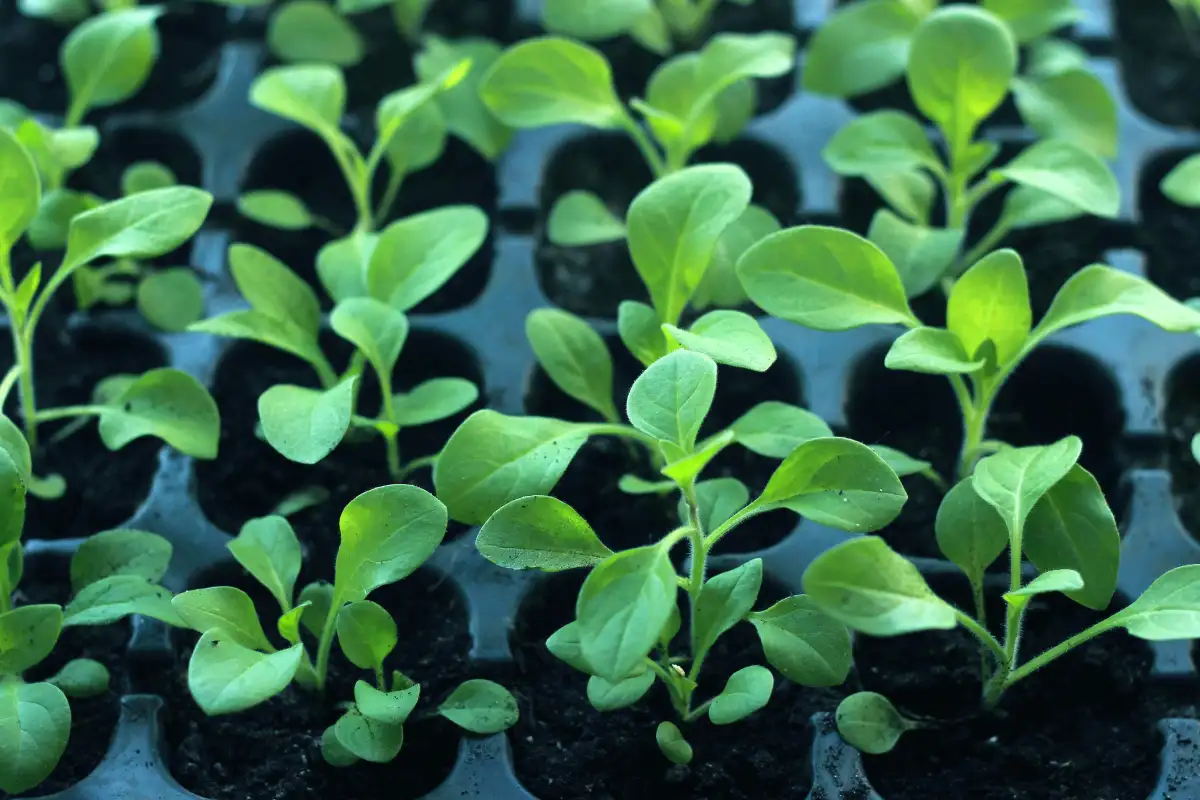
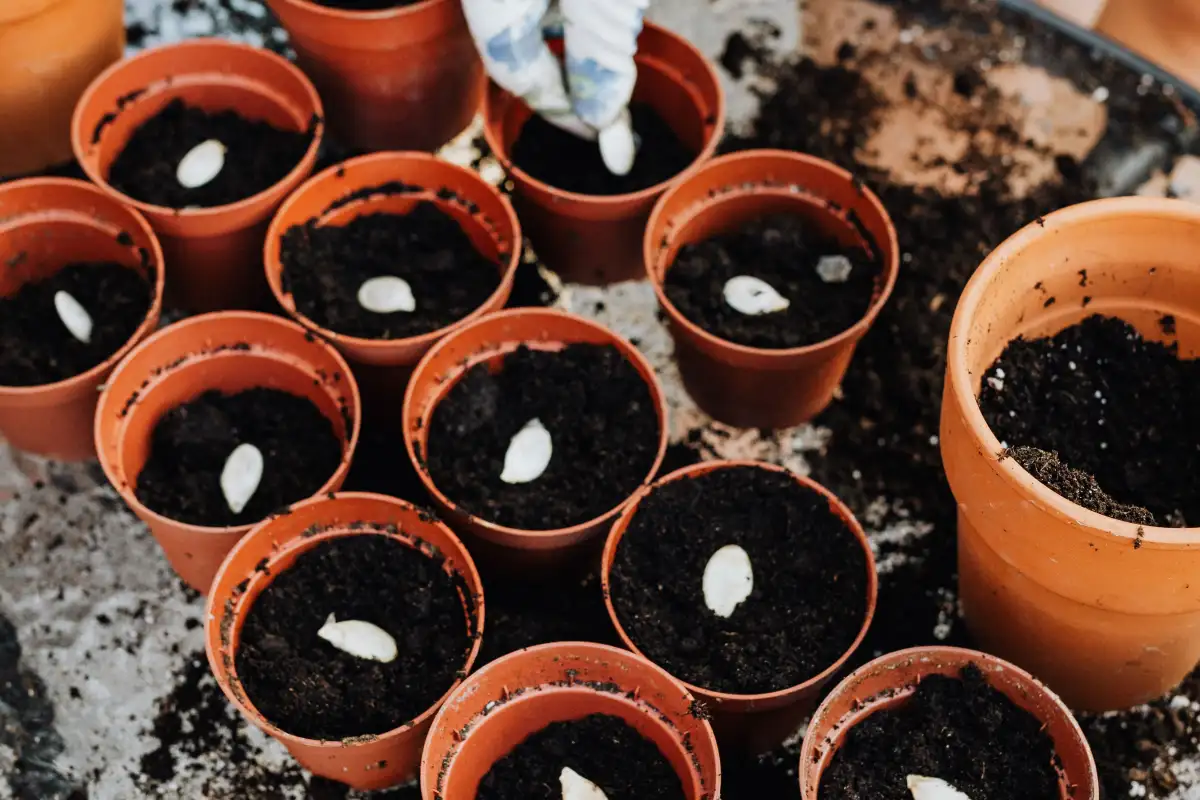
The water sitting in the tray under the flat, and the water hanging in the air under the dome, are two different problems that get blamed on one watering schedule. Standing water keeps the root zone saturated; a closed dome keeps the air above it saturated; between the two, the surface of the mix never dries, and that is what actually kills seedlings. Bottom watering fixes the first half — set the flat in a shallow pan, lift it out once the surface of the mix darkens, and pour off whatever it did not drink. The dome comes off the day most seeds have sprouted, not the day the last straggler shows up. After that, moisture is a weight-and-fingertip call, not a Tuesday-and-Friday one.
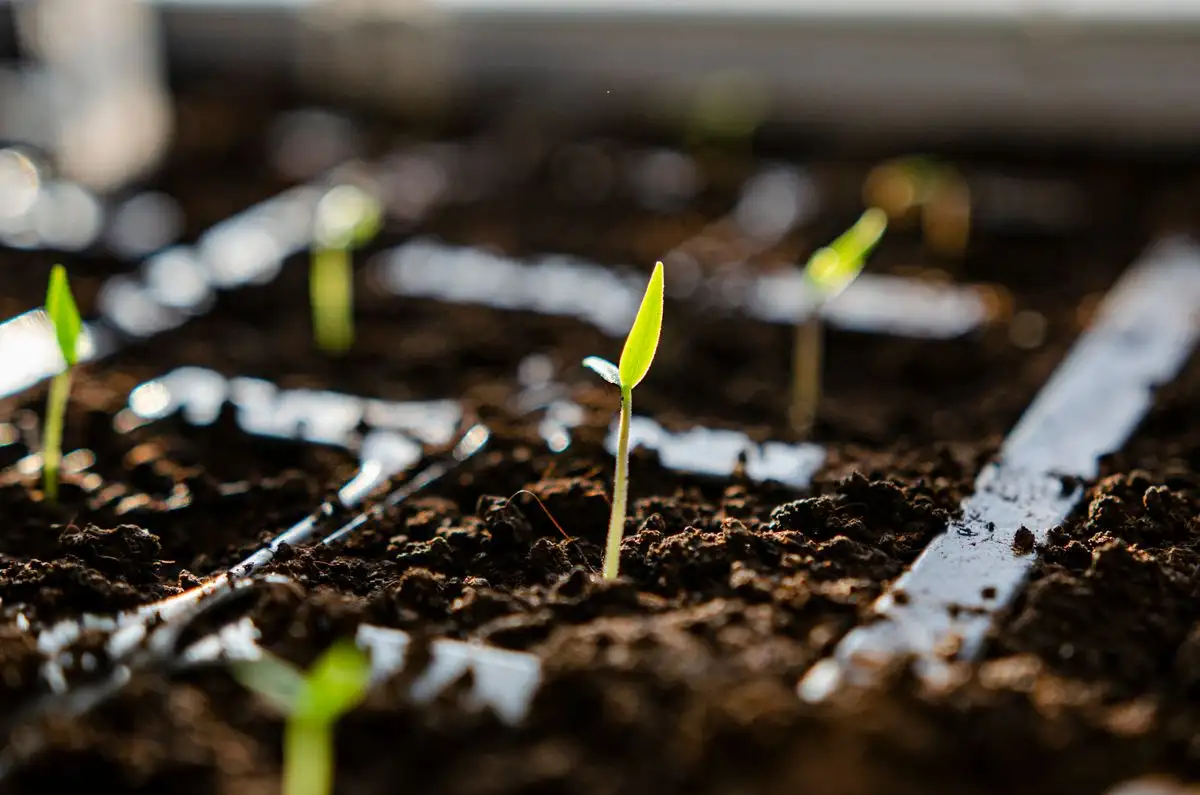
Come stand at my rack for a minute. Wire shelf, corner of a spare room, one four-foot shop light on chain, two 1020 flats side by side. Lift the left one by a single corner and you feel it immediately — the mix shifts, the whole thing sags, and there is a slosh you can hear if the room is quiet. That is a flat that has been sitting in its own drainage water since yesterday. Pick up the right one and it is maybe two-thirds that weight, and nothing moves inside it.
That weight difference is the entire article. Everything else is detail.
Bottom watering done as fill-and-drain, not as a soak
When people say water seedlings from below, most of them picture leaving the flat in the pan. That is not what it means. The pan is a delivery method, not a reservoir.
Here is the sequence I use. Shallow pan, an inch or so of water, flat goes in. Wait ten to twenty minutes depending on how dry the mix started and how deep the cells are. Watch the surface of the mix in the corner cells — the ones that dry first. The moment the surface goes from pale and dusty to dark and even, the flat comes out. Then it drains somewhere it can actually drain: on the rack, tilted, over a sink, anywhere but back in standing water.
The reason to water from below in the first place is not that it is gentler or more virtuous. It is that it keeps water off the foliage and off the surface of the mix. Splashing from above moves soil-borne pathogens up onto leaves and stems, and it knocks loose seeds that have just germinated and have a root barely the length of an eyelash. Watering from below leaves that fragile surface alone and lets capillary action do the work.
There is a catch, and I have hit it more than once. A peat-heavy mix that has gone bone dry stops wicking. You can set that flat in a pan and come back an hour later to a still-dry surface and a pan of water that never moved. If that happens, the answer is one pass of water from above to rewet the surface, then back to bottom watering. It feels like breaking the rule. It is not — it is recognizing that the rule assumed wet mix in the first place.
One more tradeoff worth knowing: if there is soluble fertilizer in your mix and you bottom water forever, salts accumulate near the surface where the mix dries. The fix is occasional top watering that runs through and out. Rare in a seed flat, real in a flat you have been holding for eight weeks.
The dome has one job, and it ends at germination
A humidity dome is not a lid. It is a germination aid, and its usefulness expires on a specific morning.
I check the dome the way I check the flat — hands first. Lift one edge. If the inside of the plastic is beaded with condensation and warm air rolls out at you, the air under it has been still and saturated for a while. That stillness is the point early on: seeds need constant moisture at the surface to germinate, and a dome delivers it without you touching the flat twice a day.
Once most of the seeds have sprouted, that same stillness stops being helpful. Seedlings need air moving across them. They need the surface of the mix to dry between waterings so the stems can harden off and the mix surface stops being a wet, warm film. A dome left on past germination gives fungal growth exactly what it wants: no air exchange, high humidity, and a mix surface that never dries. That is where damping off comes from — the stem pinches at the soil line and the seedling tips over, and there is nothing to do about it after the fact.
So the moment is: the morning you lift the dome and count sprouts. If most cells have something green in them, the dome comes off, that day. Not when the last slow cell catches up. Not after a weekend. Waiting for stragglers to save the flat is how you lose the flat.
Here is what surprises people. The day the dome comes off, the watering interval collapses. That same flat that went three or four days under cover now wants checking daily, sometimes twice, because you just removed the thing that was trapping every bit of moisture the mix gave off. Plenty of growers pull the dome, keep watering on the old rhythm, and then find wilted seedlings a day later and assume something else went wrong. Nothing went wrong. You changed the environment and did not change your habits with it.
What the flat tells you before the leaves do
Yellowing lower leaves, growth that stalls at the same size for a week, a slick green film on the surface of the mix — those three show up together, and they get read as a nutrient problem almost every time.
It is almost never a nutrient problem in a fresh seed starting mix. If the surface of the mix is green with algae, that surface has been wet and lit for days. Algae need light and constant moisture. You are looking at a moisture record, not a deficiency. And a seedling whose roots are sitting in saturated mix cannot take up what is already there — the roots need air as much as water. Adding fertilizer to that flat makes the problem sharper, not softer.
Fungus gnats hovering over the flat say the same thing. They are not the disease. They are a symptom of a surface that never dries.
Stop counting days and start lifting the flat
Nobody can hand you a schedule for this, and anyone who does is guessing about a room they have never stood in. Tray volume, cell size, room temperature, whether the flat is on a heat mat, how close the light is, whether there is any airflow in the room, how big the seedlings have gotten — every one of those changes how fast a flat dries. A 72-cell flat on a heat mat in a warm room under a shop light can go from damp to dust in a day. A 50-cell flat on a cool windowsill in March might sit for four.
The check takes five seconds and it has three steps. Lift one corner of the flat and feel the weight — you will learn your own flats' dry weight within a week, and after that your hands know before your eyes do. Feel the bottom of a cell; if it is heavy and cold, there is water down there still. Then push a fingertip into a corner cell, the one that always dries first, down to the first knuckle. Dry on top and barely damp below is the target. Damp all the way up means wait.
Corner cells matter more than they sound. They have more exposed surface and less mass around them, so they dry first and they dry fastest. If the corners are still wet, the middle of the flat is soaked, and the water sitting in that tray is not going anywhere.
The hardest part of this is trusting your hands over your memory of what you did last Tuesday. But the flat is telling you what it needs every single day, in weight and in touch, and it never once checks the calendar.