The way to have fewer weeds next year is to stop the soil seed bank from being refilled this year, and then deliberately drain the part of it that is already there. That means two jobs running at once: nothing in the beds, the paths, or along the fence gets to set seed, and the seeds already sitting in the top few inches get germinated and killed on purpose using heat, darkness, and rotation. Everything else is secondary.
I learned that arithmetic on a Tuesday in July, crouched over the fourth bed with a trowel in one hand, when I finally stopped pulling weeds and started counting.
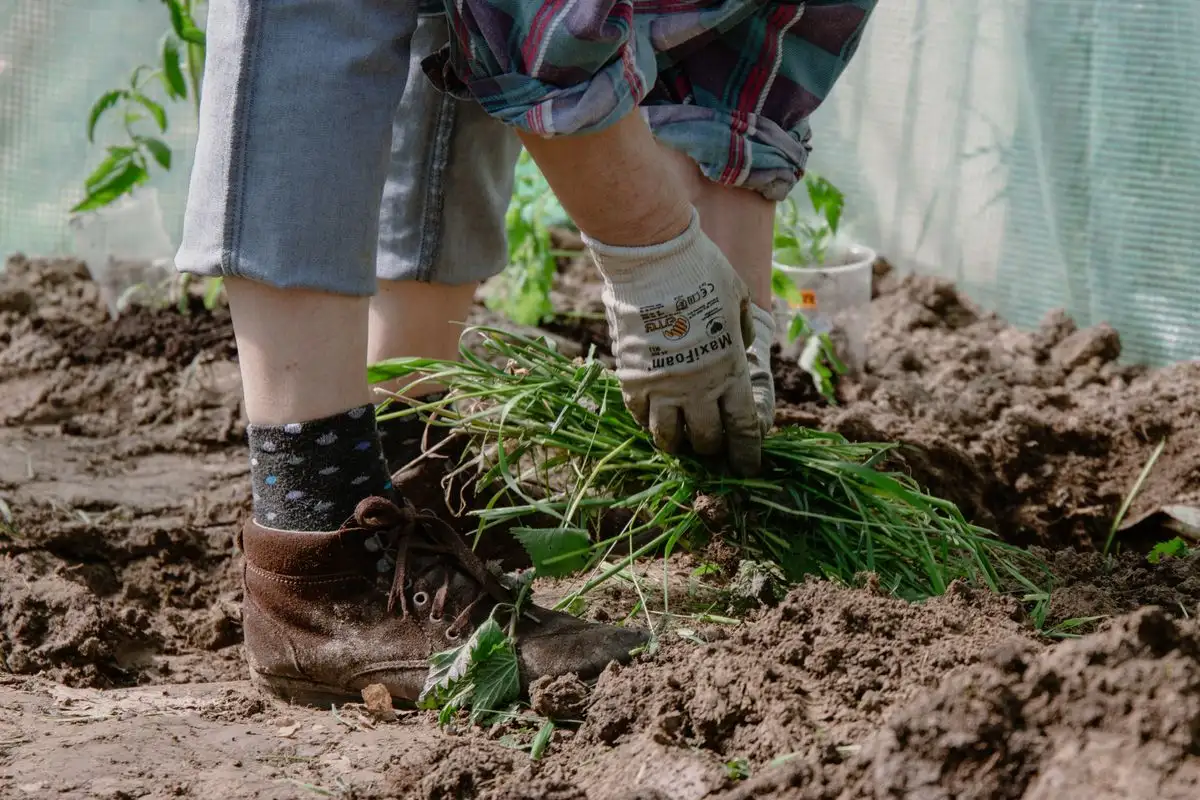
The bed had been fine in May. Then the pigweed arrived, and the lambsquarters, and whatever the third thing is that keeps coming back along the drip line. Every time I turned my back for four days there was another green carpet, and I had been treating it like dishes. Pull, water, pull, water. Then I pulled one lambsquarters that had already gone to seed, and the seed head came apart in my palm like a pinch of dust. That plant was standing in the exact soil I planned to plant spinach into in September, and it had quietly spent the summer stocking that soil for me.
Once you see it that way, the whole job rearranges itself. The weeds you pull this season are not this season's problem. They are the harvest of decisions made a year or two earlier. And the weeds you don't pull are next season's problem, already paid for.
The seed bank is a depth problem, not a surface problem
A weed seed bank is just the reservoir of viable weed seeds held in your soil. It is not a thin film on top. It is a column, and it has structure.
The seeds that actually germinate in any given spring are mostly in the top inch or two, because that is where light reaches, where temperature swings hardest, and where moisture cycles fastest. Those are the triggers. Seeds sitting four or five inches down are largely dormant, not dead. Some species stay viable for years. Some stay viable for decades. That second group is why anyone who tells you they have permanently "cleared" a seed bank is describing a longer project than they realize.
Which brings me to the thing that took me too long to change. If you rototill or dig your beds deep every spring, you are running a lift-and-bury cycle. You bring a fresh slice of dormant seed up into the germination zone and you tuck the about-to-sprout seed safely underground. It feels like work. It is also manufacturing next year's weeds.
I stopped deep turning almost everything. On the beds where I did, my August weed pressure dropped within two seasons. Not to zero. Noticeably enough that I noticed.
The rule that does most of the work: nothing sets seed
If you only do one thing, do this. A seedling that gets hoed at two inches contributes nothing. A seedling you miss by ten days can contribute the equivalent of a whole season of your labor in reverse.
The practical version is a walk-through with a hoe, and it matters more in certain windows than others. Twice a week in June and July, when everything bolts fast and the beds are full. Then once a week in September, because the fall flush is the one that overwinters. Those fall plants drop seed that sits in cold soil all winter and has a head start you can't compete with in April. I have lost more ground to a lazy September than to any spring.
For the little stuff in tight rows, a stirrup hoe worked shallow is faster than pulling and cuts roots below the crown. For anything already flowering, don't drop it in the bed. It goes in the bucket and out.
The ground you forget about
Here is the part that makes people give up. You can run a perfect zero-seed-set campaign inside your beds and still see weeds return, because the bank is being recharged from outside it. The alley behind the garage. The strip between the fence and the pavement. The neighbor's yard, where nobody is on duty. The crack at the base of the downspout.
Wind moves seed. Birds move seed. Mowers throw seed.
So the perimeter isn't a side project. It's part of the bank. If the strip of gravel along your fence line grows a seed-producing colony every August, you have a permanent injection system pointed at your beds, and no amount of careful hoeing will outrun it. I now spend more time on about thirty feet of edge and path than on some of the beds themselves, and it has paid better.
Measure your own seed bank with a tray and a warm windowsill
You don't have to guess how bad it is. There's a low-tech way to get a number that means something to you, even if it means nothing to anyone else.
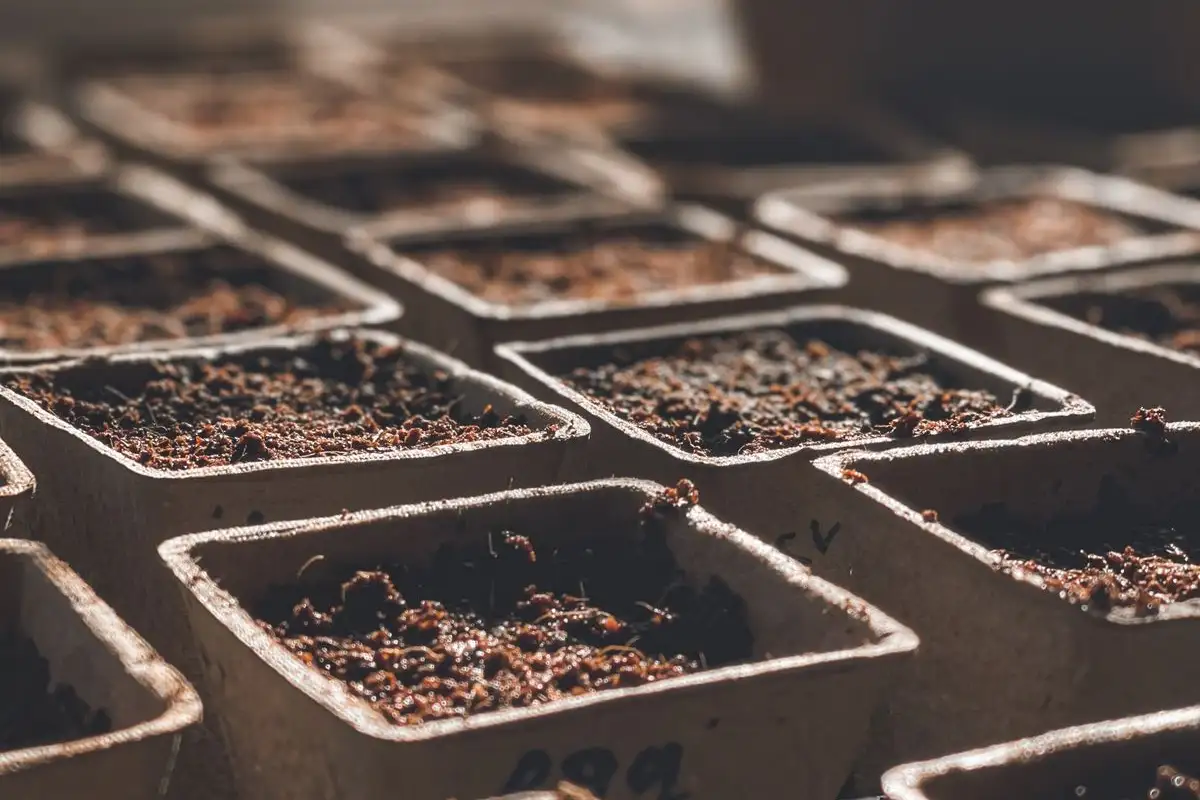
Take a couple of inches of soil from the bed you care about, spread it in a shallow tray, keep it moist and warm somewhere indoors, and count what comes up over two or three weeks. Then stir the top inch or so to expose a fresh layer and count again. What you're seeing is the shallow, ready-to-go fraction, which is the fraction that actually matters for next season. It won't tell you what's down at eight inches and it won't tell you the species composition until things are big enough to identify, but it gives you a baseline you can repeat next year.
When I did this the first time, the tray became a small forest and I stopped feeling confused about where the weeds were coming from.
Solarization: clear plastic, wet soil, the hottest six weeks
Soil solarization uses clear plastic and summer sun to cook the top few inches of soil. Clear, not black. Clear lets solar radiation through to the soil surface; black absorbs the heat at the plastic and sheds a lot of it to the air.
The steps that actually determine whether it works:
Water the bed deeply first. Moist soil conducts heat far better than dry soil, and a dry solarization bed is mostly a very expensive sunshade.
Work the surface reasonably smooth so the plastic sits in contact with the soil rather than floating over air pockets.
Lay the clear film tight and bury the edges in a trench or weight them so it doesn't lift. Even a modest breeze turning the plastic into a sail for an afternoon undoes days of accumulation.
Leave it for four to six weeks across the hottest stretch you have. My probe at two inches has read in the range that extension guidance generally describes, roughly 110 to 125 F on full-sun afternoons, with the top inch hotter than that.
What that buys you is not sterilization. It's a hard reset of the shallow layer, which happens to be the layer that was going to produce most of your spring weeds anyway. That's why solarization overdelivers relative to its actual depth of kill.
What solarization cannot do
It will not touch deep seed. It will not touch perennial weeds that spread by root or rhizome, and I'd put bindweed at the top of that list, along with nutsedge and quackgrass. Cook the top four inches all you want; the rhizome is below that and it comes back angrier.
It also costs you biology. Six weeks of near-lethal heat in the top layer takes out a lot of the soil life that was living there, not just weed seeds. That's a real trade, and it's the reason I treat solarization as something I do to one bed in a rotation, not something I do everywhere every year.
Occultation: the opaque tarp that tricks seeds into dying
Occultation is the opposite mechanism, and it's the one more people should know about. You cover the bed with an opaque, light-blocking tarp. Silage tarps are the usual choice because they're heavy and truly opaque.
Under the tarp, soil warms and stays moist, and a portion of the seed bank is triggered to germinate. But there's no light, so those seedlings come up pale, yellow, and stretched, burning through their stored reserves to reach a sun that isn't there. Then they die. When you pull the tarp, whatever flush is still standing gets scraped off or hoed at the thread stage, and then you tarp again for another round.
Three to four weeks per cycle in warm soil is a reasonable working number. Two cycles in a summer is better than one, because each cycle spends a cohort.
The honest limitation: occultation only reaches seeds shallow enough to germinate under those conditions. It doesn't cook anything, so it is gentler on soil life than solarization, and slower. If your problem is a shallow, light-triggered annual bank and you want to keep your worms, this is the tool. If your problem is a summer reset of the top layer and you can accept the cost, that's solarization. I use both, in different beds, for different reasons.
Where rotation and cover crops actually fit
Rotation and cover cropping don't empty the bank. What they do is change which weeds get a chance.
Weeds are adapted to conditions. A sprawling, unmulched squash bed leaves bare soil and open light for weeks; a tightly spaced, mulched crop that closes canopy by mid-June doesn't. Move those two through the same spot in successive years and the pigweed that was winning loses its window. It doesn't vanish. It stops being the dominant thing you're fighting.
Cover crops work the same way, with the added benefit that a dense winter rye or a quick summer buckwheat smother shades out and outcompetes what's trying to come up, provided you mow or terminate it before it sets its own seed. That last part is not optional. A cover crop you let go to seed is just a weed you planted on purpose.
And be honest about the limits. If you rotate between two crops that both leave bare soil in June, you haven't disrupted anything. Rotation only helps when it changes the light and the timing.
The third piece is the stale seedbed. Two to three weeks before you plant, prepare the surface, irrigate it, and let the weeds come. Then kill that flush at the thread stage, with a shallow hoe or a flame weeder, and plant into the bed without turning the soil again. Every flush you kill before planting is a flush that never competes with your crop.
The quiet refills
Two things refill a seed bank while you're feeling good about yourself.
The first is compost. A home pile that never got genuinely hot can carry viable seed straight into your beds. I keep seed-bearing material out of the pile when I can, and when I can't, I accept that the compost goes where I'm going to hoe anyway, not into a bed I'm trying to bring down.
The second is mulch. Hay and straw can arrive with seed heads intact. Leaves, wood chips, or a woven barrier under the straw avoids the problem entirely, and I'd rather give up the look of straw than spend August pulling grass out of it.
What shrinking actually looks like
Some species are short-lived in soil. They drop off fast if you cut off their seed production, often within two or three seasons. Others are long-lived, and with those you are managing a population, not eliminating it.
So the goal isn't weed-free. It's a bank small enough that the work stays small.
My measure is how long the July hoe pass takes. Three years ago it was forty minutes and a bad mood. Last July it was about twelve, and I did it with a coffee in the other hand. That's the number I actually track, and it's the one that tells me whether I've been winning.