Before you pull anything, identify two things: the weed's life cycle and its leaf shape. An annual weed — purslane, lambsquarters, pigweed, chickweed, crabgrass — finishes its entire life in a single season, so one clean removal before the first flower opens genuinely ends that plant's line. A perennial weed — yellow nutsedge, field bindweed, quackgrass, dandelion — keeps its life underground in rhizomes, tubers, or a thick taproot, so a single pull mostly just prunes it, and the real work becomes a schedule of repeated cuts aimed at draining the storage structure before it can set seed. Leaf shape tells you what you're holding and how the timing goes. Life cycle tells you how many passes you just signed up for.
I keep a hori hori wedged in the bed frame and a five-gallon bucket at the corner, and honestly the bucket does more work than the knife.
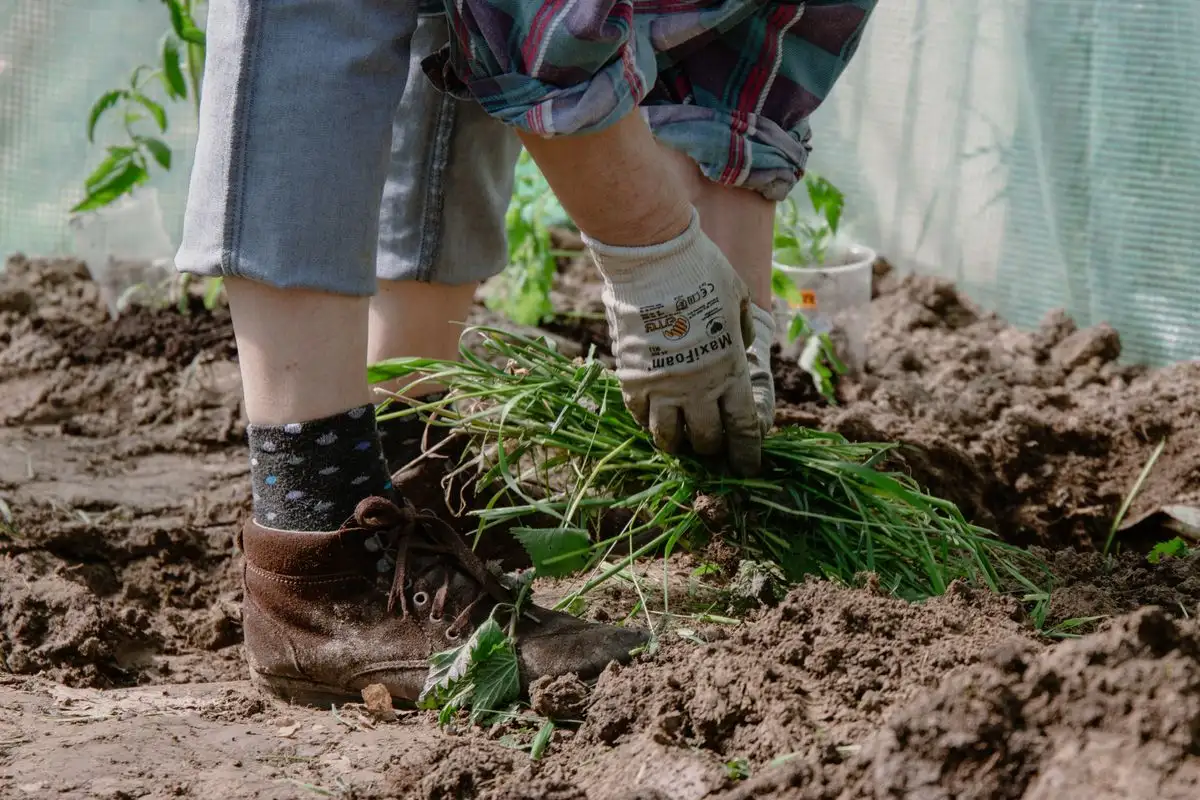
It's a warm morning in the second week of June, two days after a real rain. The soil is dark, crumbly, still cool an inch down. You kneel at the edge of the bed, put your hand down flat, and the first thing you touch is a mat of something with reddish, prostrate stems and thick rounded leaves the size of a thumbnail, cool and watery when you press them. You snap a stem and it cracks like a green bean. Purslane.
The snap is the whole lesson. It's an annual, which sounds like good news — one removal and it's finished — but every broken section with a node on it can root into that damp soil within days. So the piece in your hand doesn't go down on the ground next to you. It goes in the bucket. That one habit, moving the plant to a bucket instead of flicking it aside, is worth more than any tool I've bought.
Read the stem first, then the leaf
Before the flower, before anything, I look at the stem and the veins. It takes three seconds and it sorts the bed into two piles.
Grass-like weeds — crabgrass, foxtail, quackgrass — have rounded stems, usually hollow, with parallel veins running the length of the blade, and they come up as a single blade. They're monocots, one seed leaf. Broadleaf weeds have netted veins branching off a midrib, two seed leaves when they emerge, and stems that are anything but uniform — square, hairy, ridged, winged.
Then there's the third group that fools people, and it's the one that matters most in a vegetable bed: the sedges. Yellow nutsedge is not a grass. Roll the stem between your fingers and you'll feel three flat sides, a triangle. "Sedges have edges" is the only mnemonic I've kept from twenty-odd years of gardening. Get that one wrong and you'll spend the rest of the summer wondering why your grass weed keeps coming back.
Annuals: the deadline is a flower, not a size
Here's the part that took me the longest to internalize. For an annual, the trigger for pulling isn't height and it isn't the calendar. It's the moment just before the first flower opens. Once you can see the flower, in a lot of species you're already late, because some of the earliest capsules or heads mature seed fast, and some can finish ripening on a plant you've already pulled if you leave it lying on the soil.
Purslane tells you. Look into the leaf axils — the notch where the leaf meets the stem. The flowers are tiny, five yellow petals, and they open in bright morning sun and shut by early afternoon. Most people never see them, which is exactly why purslane gets ahead of them. When you start finding the closed ones, you're one warm week from a seed drop. Pull that day, in the morning, while the soil still holds some moisture, and the shallow root system comes up with almost no effort.
Lambsquarters has the same deadline but a different failure mode. The seedlings carry a mealy, gray-white film on the underside of the leaves and a leaf outline like a goose foot — wavy, irregularly toothed. Under about six inches, you can pinch the stem at the soil line and the whole thing lifts with two fingers. At two feet, the stem has gone fibrous and the base is anchored; you'll tear it at the crown and it will push new shoots from the stub. So my trigger for lambsquarters is height. Underneath my hand span, by hand. Taller than that, a stirrup hoe run just below the surface.
Redroot pigweed is the annual that punishes yanking. Hairy stem, oval leaves with a small notch at the tip, and a taproot that's bright orange-red when you expose it. Grab it at the crown and lean it over rather than pulling straight up. Pulling straight up on damp soil snaps the taproot several inches down and you'll see that plant again in ten days.
Chickweed is the cool-weather one — mats of small opposite leaves and star flowers that look like ten petals but are five, each one cleft almost to the base. It behaves as a winter annual across most of the country, which flips the schedule. The effective pass is in late fall, when you can drag a whole mat off the surface of a pot or bed in one piece, not in April when it's already flowering and dropping.
Crabgrass is the annual grass. It grows out from a single central crown, sprawls, and then sends those finger-like seed heads. Once the fingers are out, the crown is anchored and hand pulling shears it. The move is to catch it as a young whorl, when a hoe run a quarter inch under the surface on a dry day slices the crown clean off. In containers it's easier — it comes out of potting mix with barely a tug.
Perennials: the pull is the problem
Everything changes with the underground-structure plants. This is where people who are very good at pulling annuals do real damage.
Yellow nutsedge is the clearest case. It comes up faster than anything else in the bed, yellow-green and shiny, and beneath it is a chain of small brown nutlets strung along rhizomes. Pull it in wet soil and the chain snaps. Every nutlet left behind is a new plant, so one careless afternoon can turn a patch of twelve into a patch of forty. This is where my moisture rule flips. Some gardeners wait for wet soil so the chain slides out whole, but in my raised beds the opposite has worked better — I go after nutsedge when the mix is on the dry side and I can lift a whole section of chain out still attached to the top growth. And the top growth has to come off again and again, every couple of weeks, right up to the point where the seed head starts forming. Removing the leaves is what drains the tuber. Do it once and you've fed it.
Field bindweed and quackgrass are rhizome plants and they get the same treatment, with one addition: don't pull. Those white, brittle rhizomes fragment, and every fragment is a clone. I dig them, or I lay cardboard and mulch over the patch, then walk the edge every week and pull whatever shoots out from under it. It takes a season. There's no clever version of this. The plant has stored energy and you're spending it.
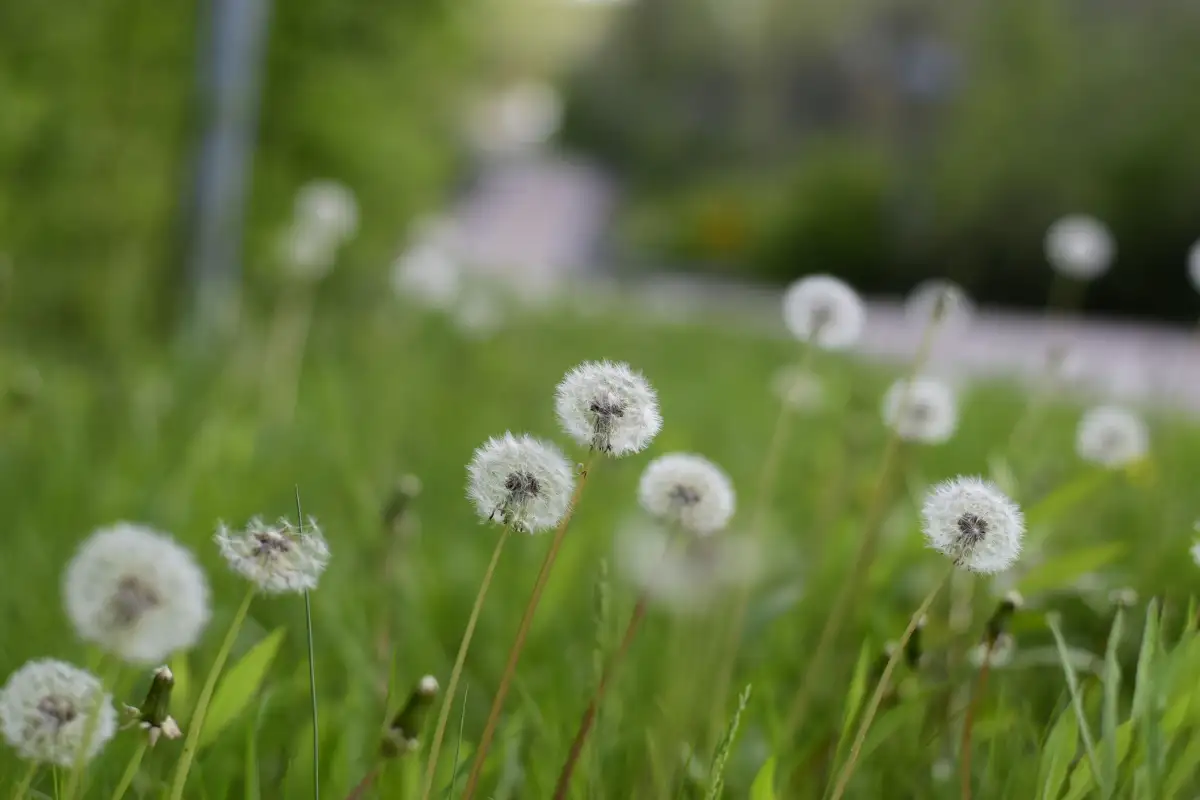
Dandelion is the taproot case. It's a perennial, and the pull either takes the whole root or it doesn't. If the root snaps partway down, the crown regrows. If you cut the crown off at the soil surface repeatedly through the season you can starve it out, but it's slow. For a dandelion sitting in the middle of a lettuce bed, I usually just keep cutting and accept that it's a two-month project, not an afternoon's.
Triggers you can see, instead of dates
Dates don't work, because soil temperature doesn't know what month it is. What works is picking a stage you can actually look at:
- Annual, upright (lambsquarters, pigweed): pre-flower, under a hand span. Pull by hand.
- Annual, prostrate (purslane): pre-flower, before the little yellow buds in the axils open. Pull into a bucket, never onto the soil.
- Annual, cool-season (chickweed): remove whole mats in late fall or very early spring, while they're still flat and unflowered.
- Annual grass (crabgrass): young whorl, before the seed heads. Slice under the crown with a hoe on a dry day.
- Perennial with rhizomes or tubers (nutsedge, bindweed, quackgrass): repeated removal every two to three weeks all season, never let the seed head form, never leave fragments in the ground.
- Perennial with a taproot (dandelion): repeated crown cuts, or dig the whole root in one go when the soil is right.
The shape of the season
If you get the life cycle right, the rest of the decisions fall into place. Annuals get scheduled passes: one before flowering, and often a second to catch the late emergers out of the seed bank — which is the reason a clean bed stops being clean two weeks after you finish. Perennials get a season-long campaign, and each removal is less about the plant you can see and more about what you're starving underneath it.
| Weed | Life cycle | Fast ID | Control trigger |
|---|---|---|---|
| Purslane | Annual | Reddish prostrate stems, fleshy paddle leaves, watery snap | Before the tiny yellow axillary flowers open; pull into a bucket |
| Lambsquarters | Annual | Mealy white film under young leaves, goose-foot shape | Under a hand span; otherwise hoe the crown |
| Redroot pigweed | Annual | Hairy stem, notched leaf tip, orange-red taproot | While small, on damp soil, leaned rather than yanked |
| Chickweed | Winter annual | Opposite leaves, mat-forming, deeply cleft star flowers | Late fall, whole mats, before flowering |
| Crabgrass | Annual grass | Central crown, sprawling habit, finger seed heads | Young whorl, hoe just under the surface |
| Yellow nutsedge | Perennial | Triangular solid stem, shiny yellow-green, three-ranked leaves | Repeated removal every 2 to 3 weeks; lift the tuber chain |
| Field bindweed | Perennial | Arrowhead leaves, twining growth, white rhizomes | Dig or smother; never pull |
| Dandelion | Perennial | Deep taproot, lobed basal rosette | Whole-root dig or repeated crown cuts |
Two mistakes that undo perfect timing
The first is leaving the pulled plant where it fell. Purslane sections re-root. Nutsedge nutlets that come loose in your hand will grow. Bindweed fragments will too. And a flower on a plant that's already out of the ground can still finish ripening seed. Bucket, every time.
The second is applying one moisture rule to the whole bed. For shallow-rooted annuals, moist soil is your friend — the roots slide out and you get the whole plant. For the storage-root perennials, wet soil is the enemy, because everything snaps in the wrong place. Same bed, same morning, two different answers. That's why the ID has to come first.