Crispy brown leaf edges on a vegetable plant mean the root zone is holding too much fertilizer salt, not too little, and the correction is subtraction: flush the excess out with plain water and stop feeding until new growth proves the roots have rebuilt. The burn you can see is the last stage of damage that started underground, where soluble salts pulled water out of the fine feeder roots and killed them. Another dose of fertilizer is the one thing that cannot help.
I found it on a Roma tomato in a five-gallon nursery pot, second week of July, on a south-facing balcony that runs hot by ten in the morning. Pinch one of those leaves and it doesn't fold, it cracks, and the brown rim crumbles off between your fingers like dried oregano. The middle of the leaf is still green. That contrast is the whole diagnosis: living tissue in the center, dead tissue at the edge, and a clear line between them.
Then check the pot itself. Run a thumb around the inside wall where the soil meets the plastic. If there's a pale, chalky ring there, and a matching crust dusting the soil surface, you're looking at dried fertilizer salts. The pot also feels lighter than a plant that size should, and the thing wilts by mid-afternoon even on mornings you watered it.
That wilting is what sends most people running for the bottle. It looks exactly like thirst. It is not thirst.
The test that tells you which problem you have
Soak the pot thoroughly, until water runs out the bottom, and then watch it for two hours. A plant that was genuinely dry stands back up and stays up. A plant with salt-burned roots either doesn't move at all or lifts slightly and collapses again by evening. It can't recover from a good watering because the roots that would have absorbed that water are gone. The water passes through soil the plant can no longer drink from.
Once you've seen those two responses side by side, you stop guessing. Wilting plus a rim crust plus crispy margins is overfeeding. Wilting plus a light, dry pot and no crust is actual drought. They need opposite responses.
Why the rim crusts and the leaf edge burns
These are the same event happening in two places. Water moves up through the plant and evaporates off the leaf margins and tips, the thinnest, most exposed tissue. Whatever was dissolved in that water stays behind, and over weeks it concentrates right where the burn shows up. The same thing happens at the pot wall, where water evaporates from the soil surface and leaves its dissolved load as a crust. The leaf edge and the pot rim are both telling you the concentration in the root zone got too high.
A caveat I've had to learn the hard way: a white film can also be calcium carbonate from hard tap water. It's usually more of a flat, even dusting across the whole surface. The fertilizer crust tends to ring the rim and sit heavier where evaporation is fastest. If the plant is also burning at the margins, treat it as salts.
Flushing a pot without making it worse
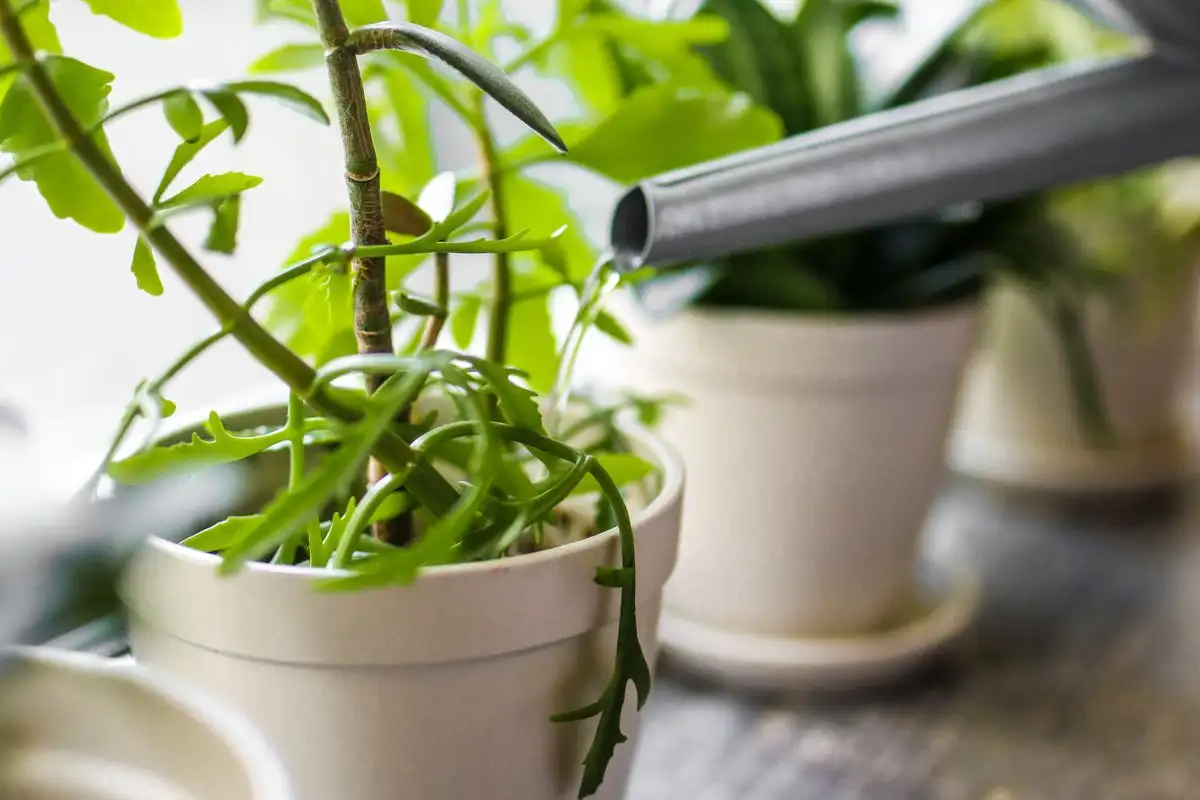
Plain water, no fertilizer, at roughly two to three times the volume of the container. A five-gallon pot gets ten to fifteen gallons. The trick is doing it in stages rather than dumping it all at once. Pour through a few gallons, let it drain completely, and repeat three or four times. One fast flood tends to channel down a single path and leave most of the root ball untouched. Staged flushes actually move salts down and out.
Do it somewhere the runoff can leave: a sink, a grate, a saucer you empty. A pot sitting in its own drainage water just re-absorbs what you were trying to remove.
Pre-moisten before you start. Bone-dry potting mix is hydrophobic and water tunnels straight through it without touching most of the pore spaces. And don't flush into a heat wave. Move the plant to shade for the day, because you're asking stressed roots to handle a lot of water at once.
In garden soil the fix is slower
You can't flush a garden bed. There, the sequence is stop feeding completely, water deeply and slowly so the water moves below the root zone rather than sitting in it, and work organic matter into the top few inches to improve drainage and give the soil biology something to rebuild structure around. Compost does the work that flushing does in a pot, only over weeks instead of an afternoon.
Don't resume feeding just because the plant looks stable. Wait for new growth. When you do start again, start well below where you were, and if the crispy margins come back, you know the soil is still loaded.
When the leaves are lush and there's no fruit
Salt burn is one failure mode. The other one looks healthier and fools more people. That's nitrogen excess: dark green, oversized leaves, thick stems, and almost no flowers. Whatever blossoms do open drop off. You get a tomato plant that's all vine and no tomatoes, a pepper with a canopy and nothing on it, a squash that runs everywhere and sets nothing.
Late in the season this is especially costly, because nitrogen pushes leafy growth at exactly the moment the plant should be shifting into fruit. If you've been running a regular feed plus something labeled for blooms, stop both. Not reduce. Stop. The plant has more nitrogen in it than it can use, and adding phosphorus on top won't redirect it.
Yellow new leaves in soil that has plenty
Excess phosphorus is quieter. It interferes with zinc and iron uptake, so the newest leaves come in yellow between green veins even though a soil test would say there's no shortage of anything. The instinct is to spray a micronutrient mix on top. That treats the symptom. The cause is a nutrient imbalance you created by overfeeding, and the fix is the same as before: stop adding, flush what you can, and give the plant time to find a new equilibrium.
What recovery actually looks like
A moderately burned plant needs two to four weeks before it starts pushing clean new leaves. A badly burned one may not recover within the season at all, and that's a real outcome you should plan around rather than fight. If it's late July and the plant is mostly crisp, you're better off starting something short-season in that pot after you flush it than nursing a plant that won't finish.
Those dead margins will never turn green again. That tissue is gone. Trim it if it bothers you, but judge recovery by new growth only, and keep the soil evenly moist, not soggy, while you wait. No food until you see two or three sets of clean leaves with intact edges. When you do feed again, go half strength and stretch the interval, and check the pot rim before you check the leaves.
An overfed plant isn't sitting at the wrong number on a dial. It's injured. You don't adjust a rate, you treat a wound, and the treatment is water, patience, and the willingness to do nothing for a few weeks.