Feeding container vegetables is a leaching problem, not a calendar problem. Because every watering that runs out the bottom of a pot carries dissolved nutrients with it, the feeding interval has to be built from two things you can actually watch — how often that container dries out, and how much mix it holds — rather than from a date on a wall chart. The working version I use: during active growth, a five-gallon vegetable pot gets soluble fertilizer at half to full label strength about every one to two weeks, and that interval tightens as the pot gets smaller or the weather gets hotter. Slow-release granules cover roughly six to eight weeks, not a whole season. And the feed always goes onto damp mix, never onto dry.
The chalky ring is the receipt
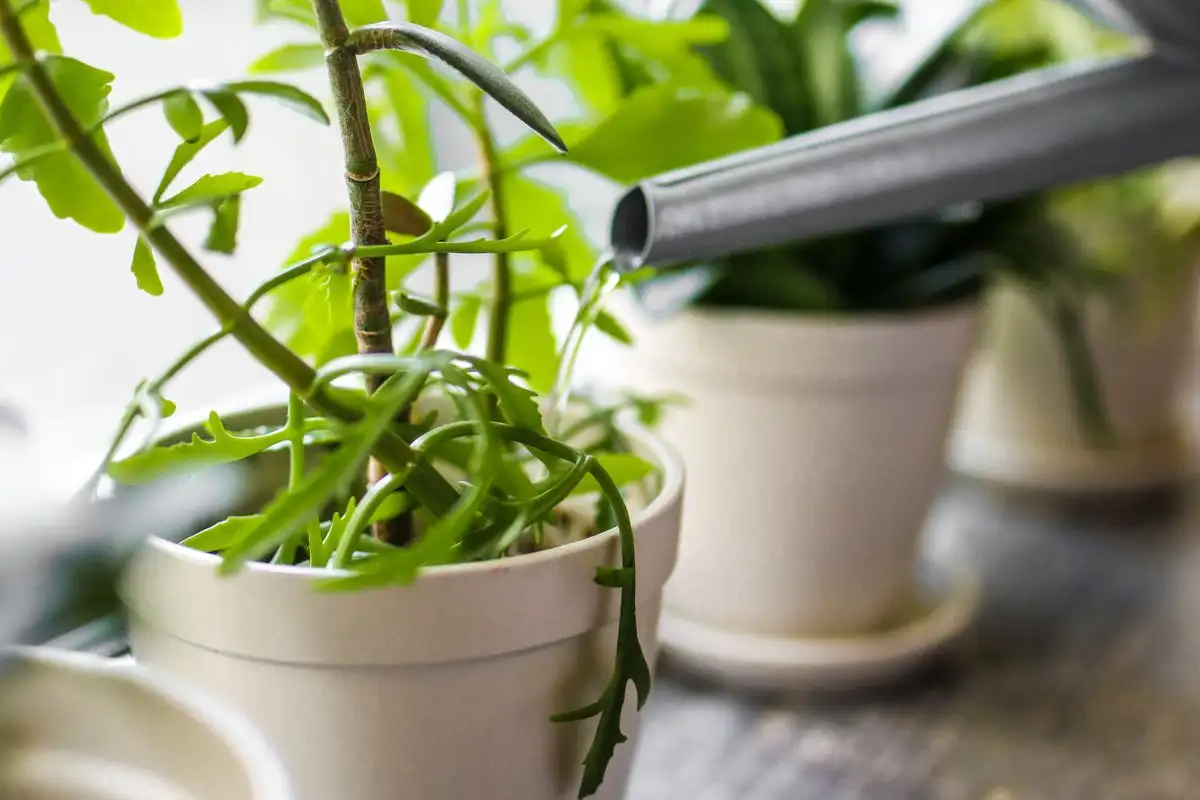
There's a moment every July when I heft a five-gallon tomato pot out of the afternoon sun and my thumb drags across a rough white band at the rim. Chalky. A little crusty around the drainage holes too. The mix has pulled back from the plastic by an eighth of an inch, and when I pour a quart of water across the surface, it's running out the bottom almost before I finish pouring.
That quart went in carrying fertilizer. What comes out the other end is not the same quart.
Some growers scrape that band off and assume it's mold or hard water. It's neither, really. It's the mineral residue of everything the plant didn't take up — and it happens in a pot far faster than in a bed, because a pot has almost nowhere to store food. Field soil has clay and organic matter whose charged surfaces hold nutrient ions and hand them back slowly. A bag of potting mix is mostly bark, peat or coir, and perlite: engineered to hold air and water, with very little appetite for holding fertilizer. The roots sit in maybe four gallons of that mix, and every flush through the drainage holes takes another slice of the reserve with it.
That's the whole reason a container feeding schedule copied from a garden bed runs out of road. A bed has a bank account. A pot has a wallet.
Count waterings, not days
Once I stopped asking "what day do I feed" and started asking "how many times has this pot been watered since the last feed," the plants got easier to read.
Think about what that difference looks like. In June, a five-gallon tomato on my balcony holds moisture two or three days and gets watered maybe three times a week. By the second week of August it's dry again every morning, sometimes twice on a ninety-five-degree day. Same pot, same plant, and the number of flushes per week has gone from three to ten. If I feed on a fixed every-fourteen-days calendar, that plant starves through the hottest stretch of the year and then gets a full-strength dose on top of a mix that's already salt-heavy.
So I count waterings and let the strength do the adjusting. In a big pot in moderate weather — say three waterings a week — a full-strength feed every tenth day or so holds fine. In a small pot in July being flushed twice a day, full strength every two weeks is too rough in both directions: a spike of salts, then a long empty stretch. That pot gets fed dilute, at a quarter to half strength, every third or fourth watering. Same total fertilizer over the month, delivered in smaller deposits that a fast-draining mix can actually keep up with.
There's a trade-off worth naming: if you never water to runoff, you slow the leaching but salts accumulate at the root zone instead of leaving. I'd rather flush the pot and feed more often than let the mix go salty.
Small pots live in a different regime
Anything under about three gallons changes the math, and it's not only about volume. In a two-gallon pot, the roots fill the entire mix. There's no reservoir of untouched soil sitting below the root zone, no pocket where nutrients sit in reserve — every flush passes through roots. A cherry tomato in a two-gallon container can be a perfectly healthy plant and still want feeding close to every week in midsummer, at dilute strength, because the plant is emptying the pot faster than the pot can hold anything.
The three-gallon line isn't magic. It's just the point where I start noticing the difference. Below it, I treat feeding as a near-continuous background task. Above it, especially at seven or ten gallons, the mix holds enough buffering that a two-week interval works and I can relax a little.
Water first, then feed
A dry container is the one time a fertilizer solution does real damage. When a mix has gone bone dry, it's often gone hydrophobic too — the first water you pour beads up and channels down the sides instead of soaking in. Pour a concentrated feed into that and you get salts sitting against dry roots at full strength instead of diluted through the mix. That's how you get scorched root tips and a plant that stalls for two weeks.
What I do instead: water the pot thoroughly, wait until it's damp through and drained, then apply the feed solution. If I'm in a hurry, I water, make coffee, and come back. Morning or evening, not the middle of a hot afternoon, since a plant under heat stress isn't taking up much of anything anyway.
Granules buy weeks, not a season
Slow-release granules blended into container mixes are genuinely useful — I keep a pot of basil going on them alone most of the summer — but they aren't a season-long answer. The release rate is temperature-driven, so a coating that meters out nutrients across six to eight weeks in mild weather empties considerably faster in a heat wave. The hotter the pot, the shorter the runway, and a black container in full sun is the worst case.
That's why I stop trusting the granules somewhere around the six-week mark and start watching leaves, which is more reliable than any interval I could write down anyway.
When the first fruit sets, the menu changes
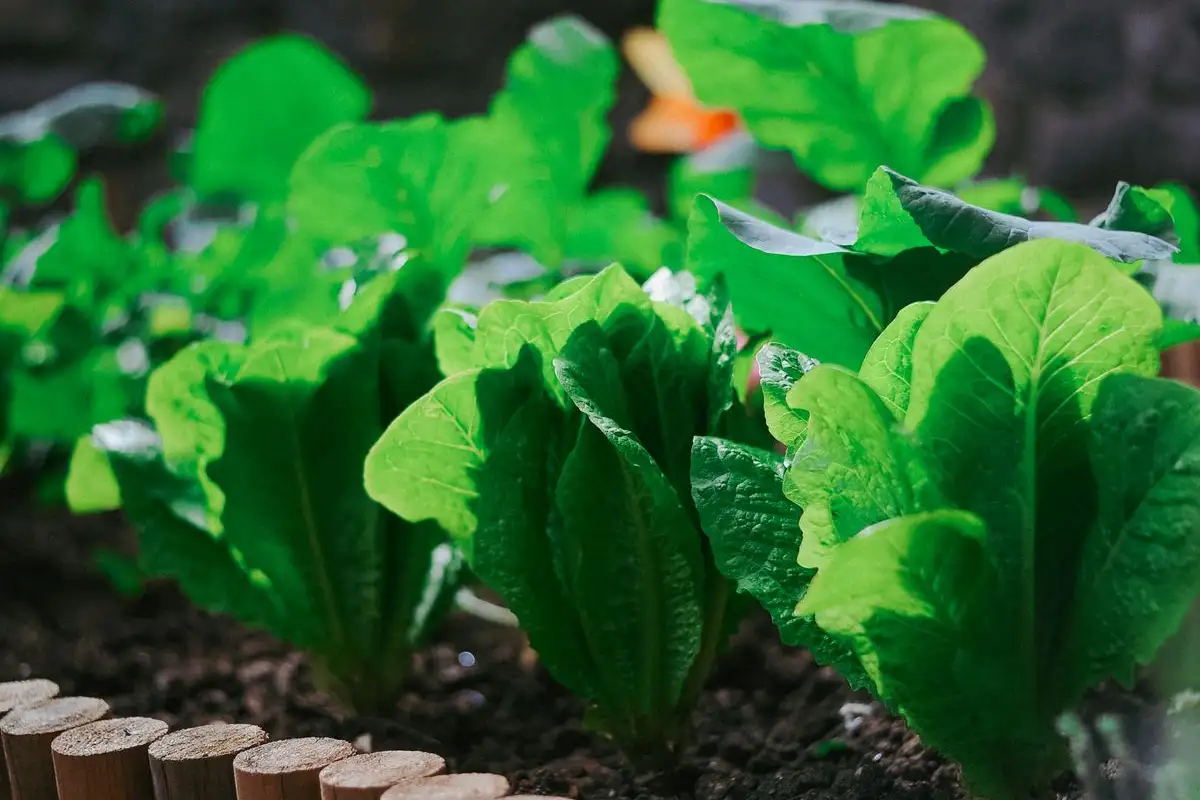
This is the part that surprises people who feed everything the same way all season. Leafy crops — lettuce, kale, chard, herbs grown for their leaves — stay on a nitrogen-forward feed the whole time, because leaves are what you're harvesting.
Fruiting crops don't. Once a tomato or pepper or cucumber sets its first fruit, the plant's demand shifts toward potassium. Keep pushing nitrogen at that point and you tend to get a big, dark, leafy plant that flowers and ripens a modest crop. Moving the feed toward a potassium-leaning formula when that first fruit is marble-sized is a small change that shows up later as a heavier set and better fruit.
Reading the plant and the runoff
Two signals do most of the work for me.
The first is the drain water. If I want a number instead of a guess, a cheap EC pen settles it: measure what goes in, then measure what comes out of the drainage holes. If the runoff reads much higher than the input, salts are building up in the mix, and that pot needs a plain-water flush before anything else goes in. If the runoff reads low, the plant is pulling hard and the next feed can come sooner. That one comparison replaces a lot of guessing.
The second is the leaves, read carefully. Uniformly pale lower leaves plus slow growth is hunger. Crisp brown edges on otherwise healthy leaves, or a white crust forming fast, is too much salt — and the fix is water, not more fertilizer. It's worth saying plainly that yellowing lower leaves are also what root trouble and overwatering look like. If the mix has been wet for a week and the leaves are yellow, don't reach for the bottle.
By early September on my balcony the light drops, the pots hold moisture longer, and the whole rhythm slows down. I cut the fruiting feeds back as the plants finish and let the small pots coast on what's left in them. None of that transition comes off a calendar either. It comes from picking up the pot, feeling the weight, watching the water leave the bottom, and knowing that this is the same water that just carried some of the food away with it.