Fertilizing vegetables is three separate decisions — rate, timing, and nutrient form — and extension publications keep them separate because each one is governed by something different. The rate comes off a soil test. The timing comes from what the crop is doing that week. The form is set by how soil water and roots handle concentrated salts. Treat all three as one "feed the plants" step and the season goes wrong in a predictable way: too much in May, not enough in July.
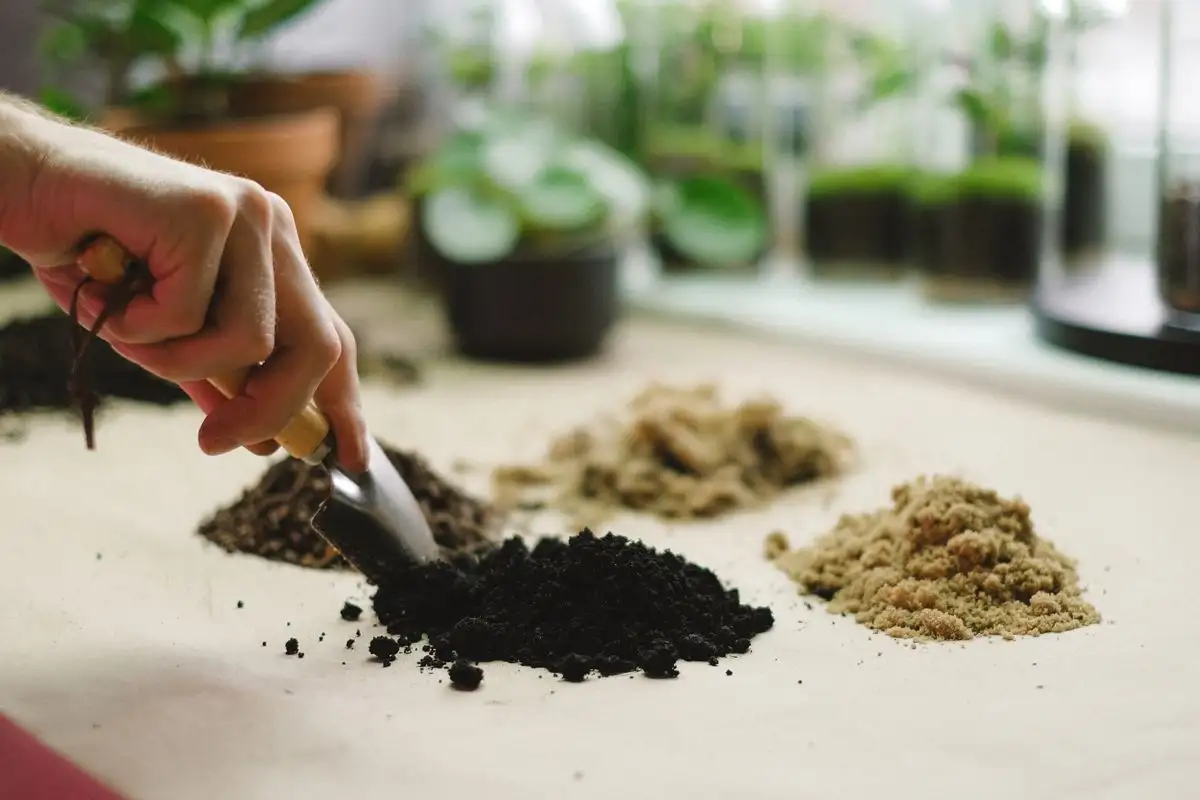
I do the rate arithmetic sitting on the balcony concrete in early May, with a soil test report, a phone calculator, and a quart container of granular fertilizer lined up on the pavers in front of me. The report comes back in pounds of nutrient per 1,000 square feet. That is the unit extension soil labs work in, and it is never the unit my garden speaks. My raised beds are 4 by 8. My biggest pot holds five gallons of mix. So the first task of the season isn't gardening. It's conversion.
Rate begins as a unit conversion
Round numbers make the arithmetic visible. Suppose the report calls for 2 pounds of actual nitrogen per 1,000 square feet — that sits in the range garden recommendations commonly land in. My bed is 32 square feet, which is 0.032 of 1,000. Multiply it out and the bed is owed about 0.064 pounds of actual nitrogen, a hair over an ounce. If the fertilizer on the shelf is a 10-10-10, ten percent of its weight is nitrogen, so I need roughly ten times that weight in product: about 10 ounces, a little over half a pound of granules, scattered across the whole 32 square feet and scratched into the top inch.
The first few years, I looked at that number and assumed I'd made a mistake. I hadn't. Ten ounces of 10-10-10 over a 4-by-8 bed is a light application, and light is what a soil test recommendation usually is. The second and third numbers on the report work the same way for phosphate and potash — and on plenty of urban beds, the correct answer for those two is "none this year," because a decade of compost and leaf mulch has already pushed soil phosphorus and potassium into the high range. When the recommendation says nitrogen only, the bag you carry home should say the same thing.
Then there's the pot, where the same conversion produces a useless answer. A twelve-inch pot has roughly eight-tenths of a square foot of surface, about 2.5 percent of the bed's area. Scale the nitrogen by area and you get a pinch of granules, which is not how container feeding works at all. A five-gallon pot has no subsoil to draw from, and every watering pushes dissolved nutrients straight out the drainage holes. Nothing accumulates the way it does in a bed.
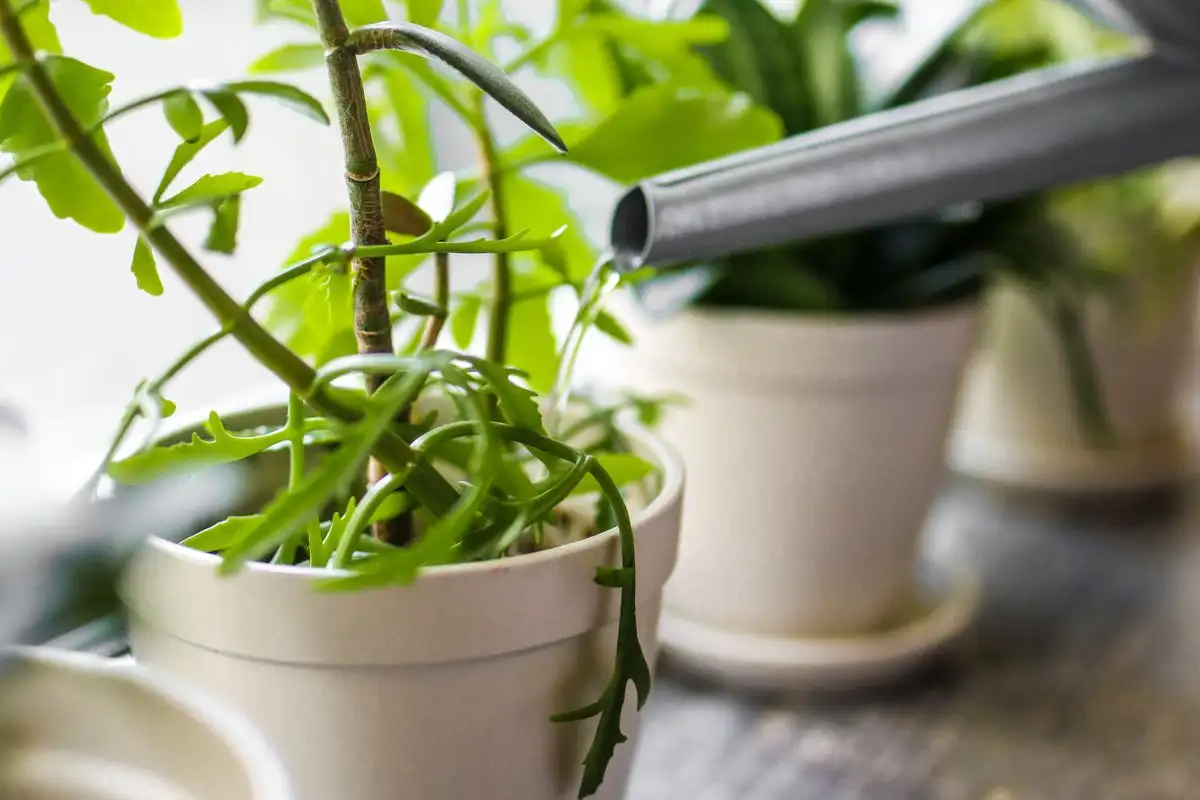
Extension container guides handle this differently. Fertilizer goes into the potting mix at planting so the plant has something from day one, and then you feed regularly through the season with a dilute soluble fertilizer instead of one big dose. Soil test numbers barely transfer to that situation, because a lab test is calibrated for mineral soil and potting mix is mostly bark, peat or coir, and perlite. Sending a sample of potting mix to a soil lab and expecting a usable recommendation is one of those mistakes that costs a whole season before you figure out what happened.
Split the nitrogen, put the phosphate in early
Timing isn't a calendar question. It's a mobility question, and once you see it that way the schedule writes itself.
Phosphate barely moves in soil. It binds to soil particles and creeps along by millimeters, so there is no point spreading it on the surface in July and hoping it reaches the roots. It has to be incorporated at planting, in the root zone, before the plant needs it. Potassium moves more than phosphorus but still not far. Nitrogen is the opposite — nitrate travels with water, straight down and out of reach. That contrast is the whole reason the recommendation splits: most of what the crop needs goes down at or before planting, and the nitrogen gets a lighter second pass later.
The side-dress is that smaller, later piece. For fruiting crops the trigger is the shift from building a plant to making fruit: first flowers opening on tomatoes and peppers, first female blossoms on squash and cucumbers. That's when demand tilts toward phosphorus and potassium relative to nitrogen. Keep pushing nitrogen past that point and you get the classic over-fed tomato — a big, dark, floppy plant with clusters of leaves where the fruit should be, because excess nitrogen delays flowering and cuts fruit set.
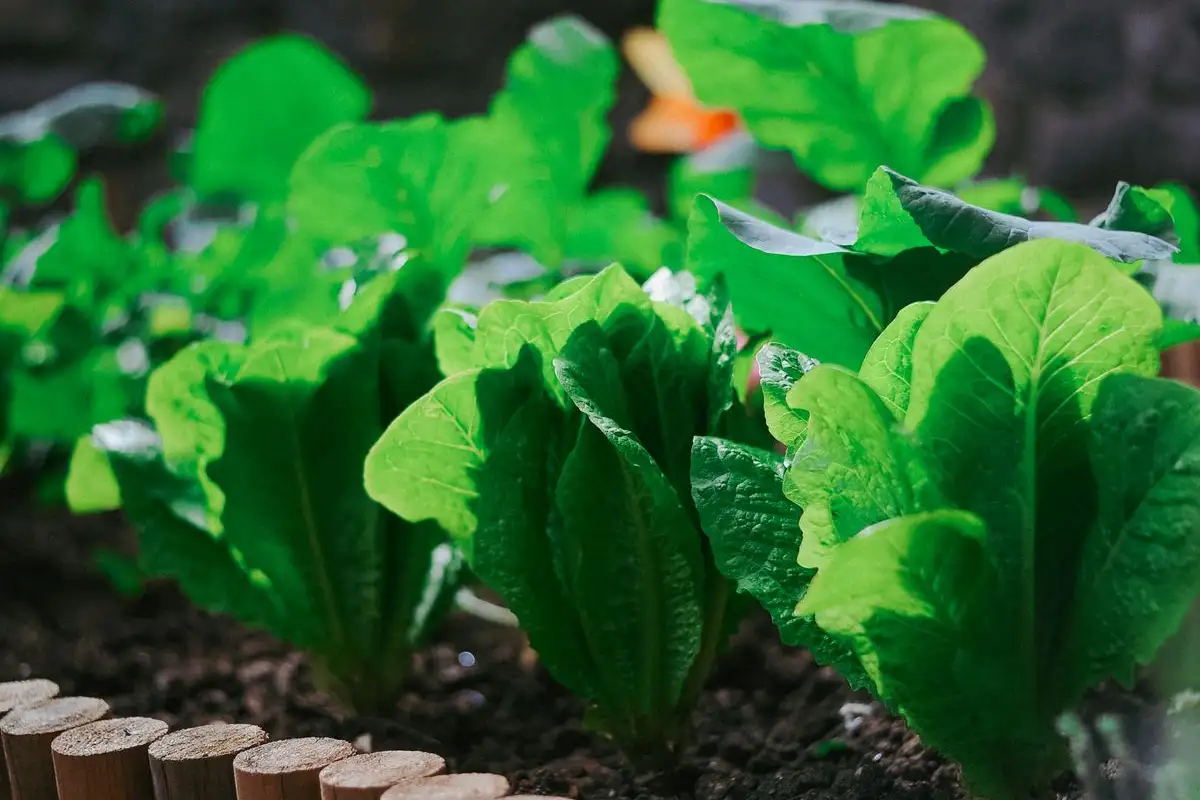
Cool-season leafy crops run the other direction. Kale, spinach, lettuce, Asian greens: the harvest is leaves, the plants never set fruit, the season is short. Their nitrogen demand is proportionally much higher than a fruiting crop's, and a mid-season nitrogen top-dress will do more for them than anything containing phosphorus. Planted into a bed that got a full pre-plant application, they usually coast on that alone. If they've been in the ground six weeks and the lower leaves are going pale while growth has stalled, that's the moment for a nitrogen side-dress.
Sitting it in the row, not on the stem
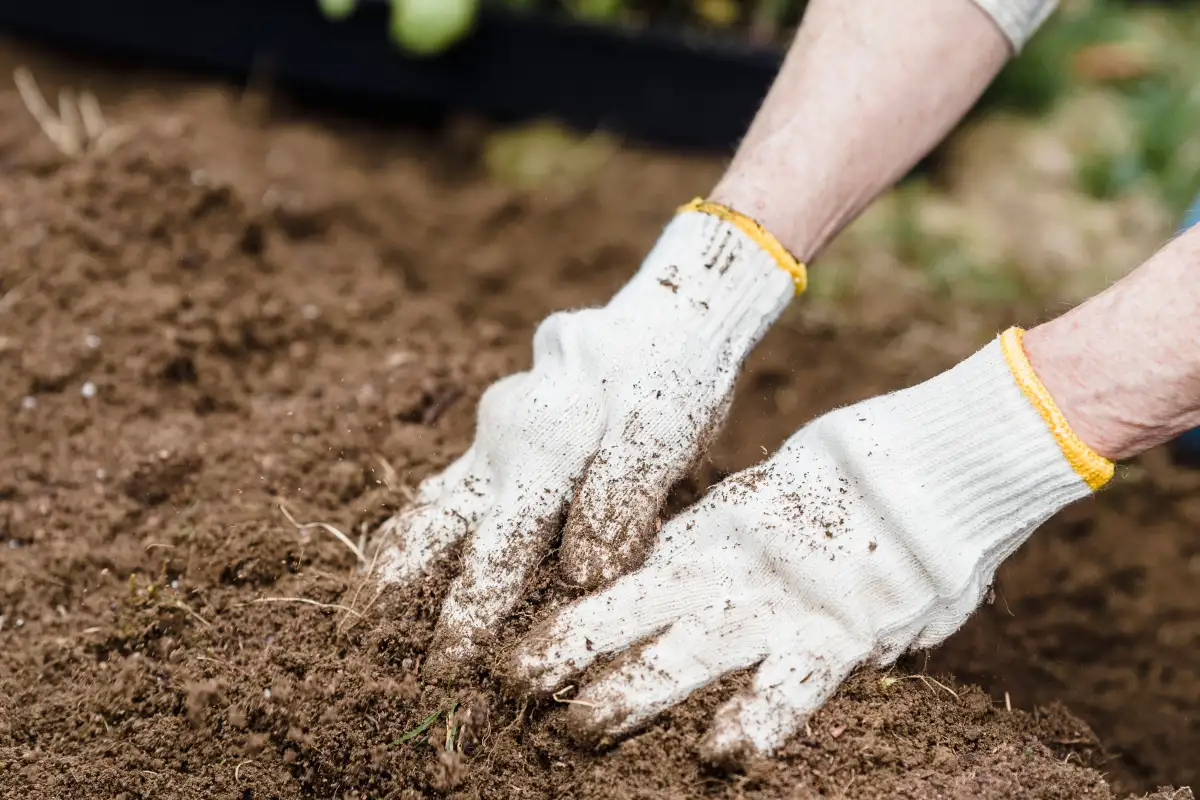
A side-dress is a band of granular fertilizer scratched into the top inch of soil a few inches out from the stem, where the feeder roots actually are, then watered in. Broadcasting across the whole bed works too, but you're spending fertilizer on the paths between plants. Throwing a handful right against the base of the stem does nothing useful — that's where concentrated salts sit closest to the crown, and it's the fastest way to kill a plant with fertilizer.
The form decides how fast it works and how risky it is
The three numbers on the bag are always in the same order: percent nitrogen, percent available phosphate, percent soluble potash, by weight. A 10-10-10 is ten percent of each. Two details are worth holding onto. First, those are percentages by weight, not volume, so a scoop of one product and a scoop of another don't carry the same amount of nutrient. Second, the phosphate and potash figures are reported as oxides rather than as elemental phosphorus and potassium — actual P is about 44 percent of the phosphate number, actual K about 83 percent of the potash number. That's part of why the middle numbers look so large on a bag.
The nitrogen source matters as much as the nitrogen number. Nitrate is available to the root immediately and leaches just as immediately. Ammonium and urea have to be converted by soil microbes first, and that conversion slows in cold soil, so a nitrate-heavy product moves faster in April while a urea product catches up by June once the ground has warmed. Coated and slow-release granules release on a temperature-and-moisture curve rather than a date, which is why they earn a place in a container but are largely wasted in a compost-rich bed that's already feeding the plant steadily.
Soluble fertilizer is the form with the narrowest margin for error, and the rule that matters most is the one people skip. Mix at the label rate, apply it to soil that is already moist, and follow with plain water. Never pour it onto dry soil, and never onto a plant that's wilted from heat. The mechanism is straightforward chemistry. Dry soil holds only a film of water, so the fertilizer dissolves into a very small volume and creates a concentrated salt solution pressed right against the feeder roots. Water then moves out of the root cells toward the salt rather than the other way around, and the fine white root tips doing all the uptake die. Two days later the plant looks worse than it did before you fed it.
If the bed is dry, water first and come back in the evening. If the plant is wilting at two in the afternoon in July, the shortage is water, not nutrients, and no fertilizer fixes that. And if you realize you've overdone it, volume of plain water is the correction — flush the salts down past the root zone and wait.
The three questions I ask before opening the container
What did the test say the soil is owed, and have I converted that into something I can measure with a scoop? What is this crop doing right now — building leaves, opening flowers, filling fruit? And how does this nutrient move once it's in the ground, or how concentrated will it get in a five-gallon pot that dries out by noon?
When I can't answer the first one, I stay at the low end of the label rate and feed smaller amounts more often. That's the most forgiving way to run a container, and an under-fed plant is a lot easier to bring back than a burned one.